
Hangzhou, China--(Newsfile Corp. - October 22, 2026) - At the 9th China Robot Summit, Harvest Praxis officially launched the "Hyper AI Brain," an advanced Physical AI on-device computing platform built on MediaTek's 3nm System-on-Chip (SoC), and announced the world's first fusion of a robot's "brain" (perception and decision-making) and "cerebellum" (motion control) onto a single SoC. Developed through deep strategic collaboration with MediaTek, the platform introduces a "dual-brain single-chip fusion" architecture, marking the first time a scalable 3nm process has been applied to edge robotics — a direct answer to the critical compute, latency, and power bottlenecks in embodied intelligence.
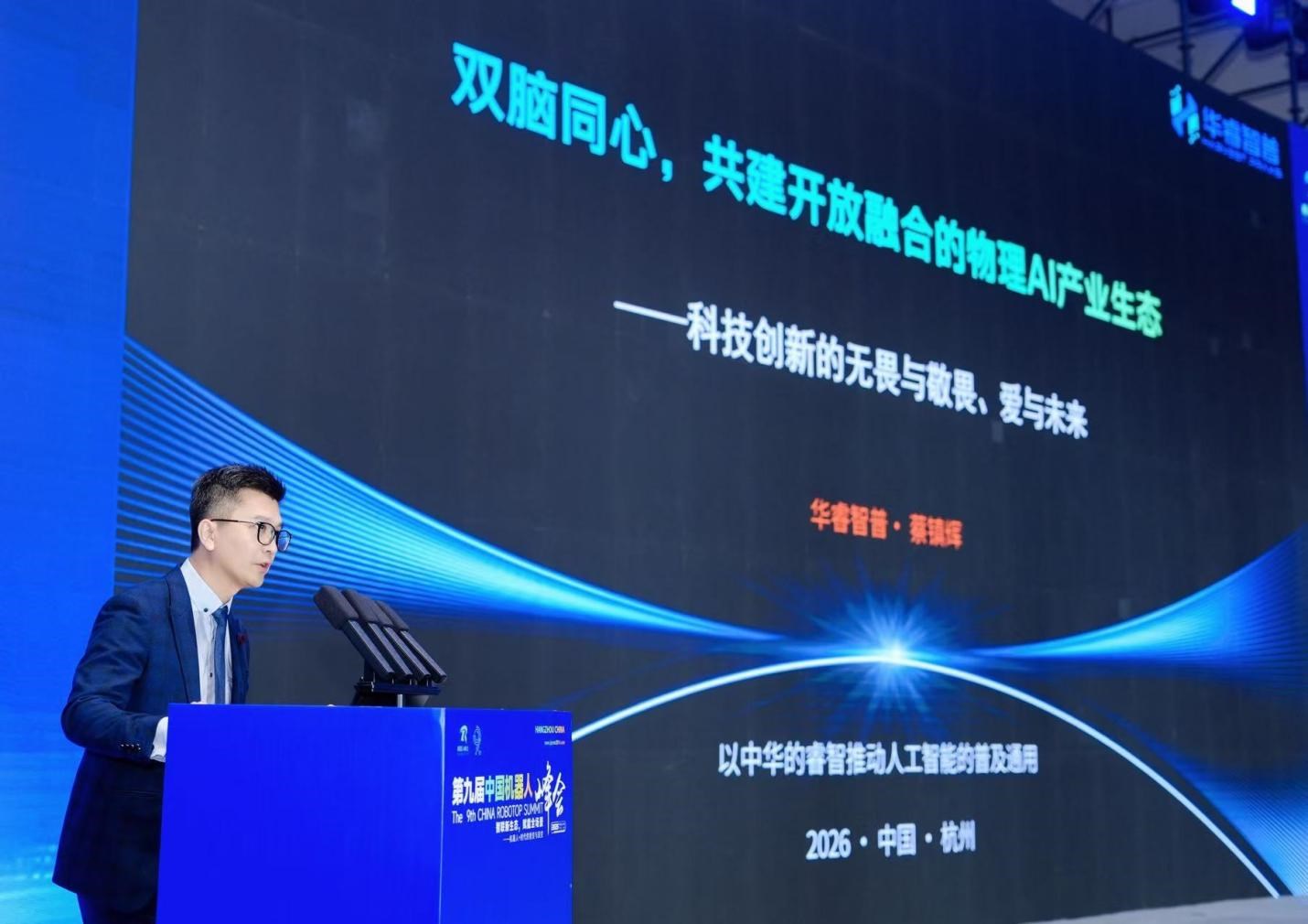
Philip Cai Zhenhui, Founder and CEO of Harvest Praxis advocates building an open, integrated Physical AI industry ecosystem at the China Robotics Summit
To view an enhanced version of this graphic, please visit:
https://images.newsfilecorp.com/files/12089/320166_dd69d832d4bc0b0a_001full.jpg
"The industrialization of embodied intelligence relies on three critical pillars: large models, real-world data, and on-device computing," said Philip Cai Zhenhui, Founder and CEO of Harvest Praxis. "On-device computing is the most fundamental yet the weakest link — the intelligent sensing and computing system that supports a robot's real-time perception, computation, and feedback. Most robots today still rely on 8nm or older chips using fragmented dual-chip architectures — one for high-level reasoning (the 'brain') and another for motion control (the 'cerebellum') — which lead to communication latency, data decoding loss and power inefficiencies."
Harvest Praxis addresses these challenges with its proprietary "dual-brain single-chip fusion" technology built on the MediaTek Genio Pro 5100 3nm SoC, delivering the Hyper AI Brain — this marks the first-ever use of mass-produced 3-nm chips in the global embodied-intelligence domain, with the robot's "brain" and "cerebellum" deeply integrated into a single SoC.
Why MediaTek: A Synergistic Compute Partnership
This is a two-way choice: Harvest Praxis needs an advanced-process chip that can support industrialized mass production, while MediaTek needs a partner that can genuinely bring its flagship SoC into embodied intelligence.
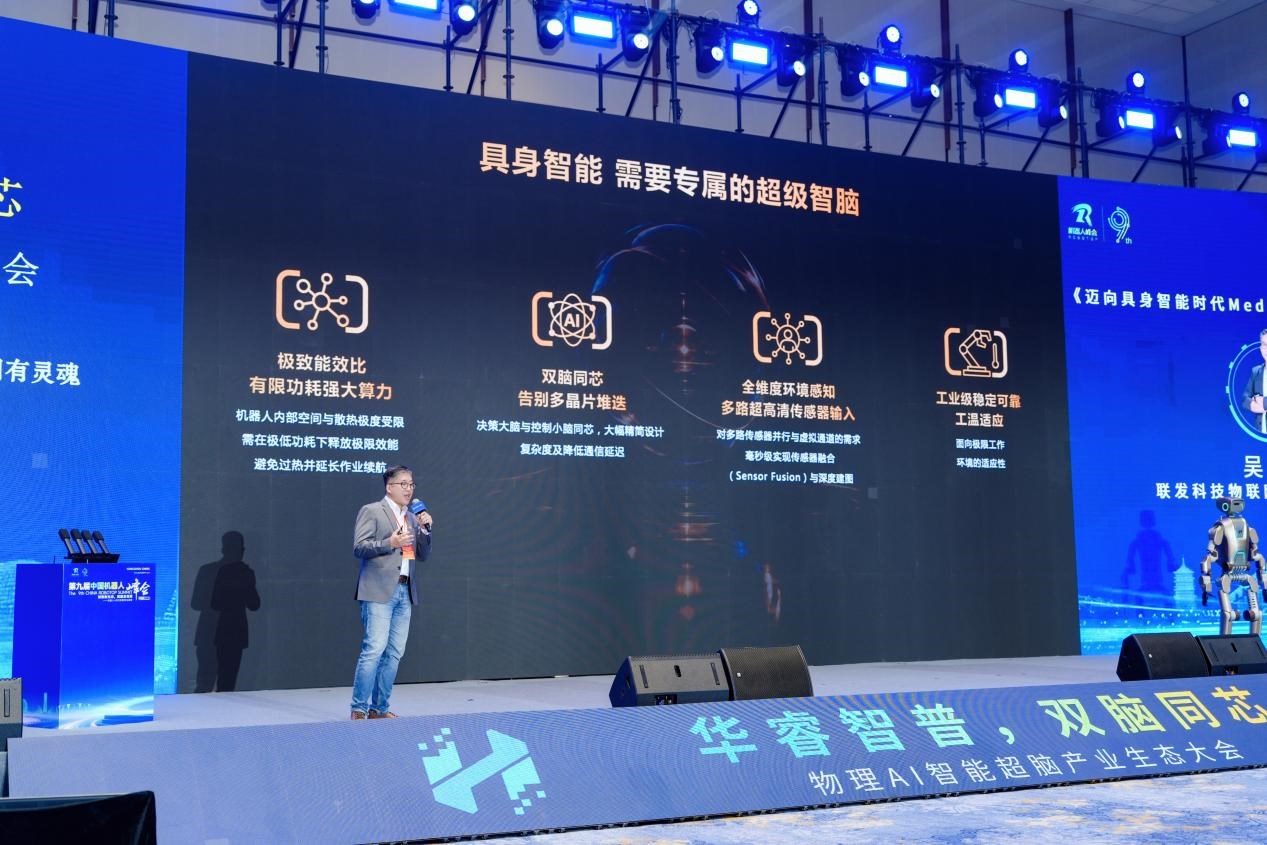
MediaTek IoT BU Marketing Director Nelson Wu delivers a keynote on MediaTek empowering the new era of Physical AI
To view an enhanced version of this graphic, please visit:
https://images.newsfilecorp.com/files/12089/320166_dd69d832d4bc0b0a_002full.jpg
As a semiconductor company whose chips power more than 2 billion terminal devices shipped every year, MediaTek combines advanced-process development, high computing performance with low power consumption, industrial rollout and ultra-large-scale manufacturing, and stable supply-chain delivery — capabilities that underpin the Hyper AI Brain. In MediaTek's view, embodied intelligence needs an excellent ecosystem partner to build a Hyper AI Brian for robots — one that is highly energy efficient, packs both the "brain" and "cerebellum" onto a single chip, perceives the world around it, and runs reliably on the factory floor — so that a robot can sense, decide and act within milliseconds, right at the device itself.
Underpinning this view is MediaTek's complete technology matrix — from the cloud to the edge, spanning intelligent IoT, AI PCs, smartphones, and intelligent mobility, anchored by advancements in Wi-Fi 8, 6G, and high-performance cloud AI infrastructure. "Embodied intelligence brings together the best of these cutting-edge technologies. MediaTek is exactly such a pioneer, able to empower the whole chain from edge to cloud," said Nelson Wu, Marketing Director of MediaTek's IoT Business Unit.
The Genio Pro 5100 at the heart of this collaboration is a 3nm SoC for next-generation intelligent terminals: an 8-big-core CPU (260K DMIPS), an 8th-generation NPU 890 delivering 106 TOPS, a flagship ISP, native Wi-Fi 7/5G, industrial-grade wide-temperature support, and ROS2 ecosystem compatibility. These capabilities form the hardware foundation of Harvest Praxis's self-developed "dual-brain single-chip fusion" technology. "Through this partnership, Harvest Praxis has become the first partner to bring the Genio Pro 5100 into embodied intelligence," said Nelson Wu.
Co-Definition: From Chip to Product
"Harvest Praxis values its deep collaboration with MediaTek — the chip is the core of the industry," said Philip Cai Zhenhui. At the product level, this deep collaboration takes the form of co-design: the Praxis series is built on the Genio Pro platform. Combined with Harvest Praxis's self-developed "dual-brain single-chip" technology, it delivers Praxis One (the first Hyper AI Brain) — a single SoC that can run on-device LLM/ VLA/ World Models and control every joint at the same time.
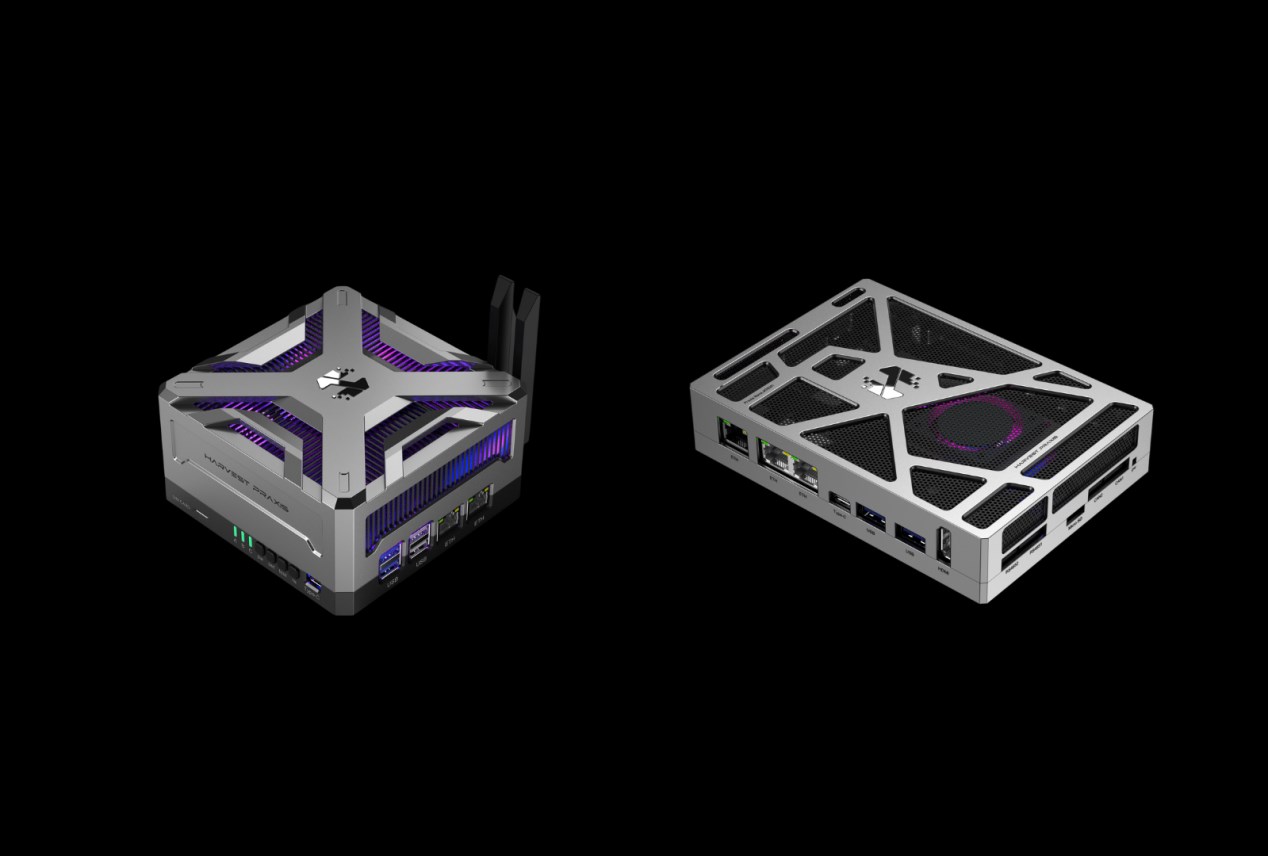
Praxis One and Praxis Nano 'Hyper AI Brain' platforms, powered by MediaTek's 3nm Genio Pro 5100 SoC and Harvest Praxis's proprietary dual-brain single-chip fusion architecture
To view an enhanced version of this graphic, please visit:
https://images.newsfilecorp.com/files/12089/320166_dd69d832d4bc0b0a_003full.jpg
At the launch, Adrian Chiu, COO of Harvest Praxis and President of its Chip-Computing Business Unit, unveiled the first fruits of the collaboration: one platform: the Praxis Physical AI Platform, and two product lines: Praxis One (MediaTek Genio Pro 5100, 3nm, 120 TOPS system compute) targets high-performance scenarios such as heavy-duty humanoid robots; Praxis Nano (MediaTek Genio 720, 23 TOPS) targets motion-control robots and lightweight devices. In addition, Harvest Praxis's self-developed ecosystem tool, the Praxis Deployment Studio, automates the entire flow of model compilation, deployment, and debugging — after automatic compilation, YOLOv8 runs at about 114 fps on the NPU, nearly 4x faster than the standard NPU path and about 38x faster than the CPU path. From collaborating on chips to jointly defining physical AI edge products, the partnership between MediaTek and Harvest Praxis has been interpreted by the market as a deep collaboration akin to a "strategic partner" — a significant milestone for the embodied intelligence industry.
"Backed by our profound technological expertise and a complete edge-to-cloud strategic footprint, MediaTek is delighted to join hands with Harvest Praxis," said CK Wang, VP and General Manager of the IoT Business Group at MediaTek. "Together, we look forward to developing a highly integrated platform for the future of Physical AI robots."
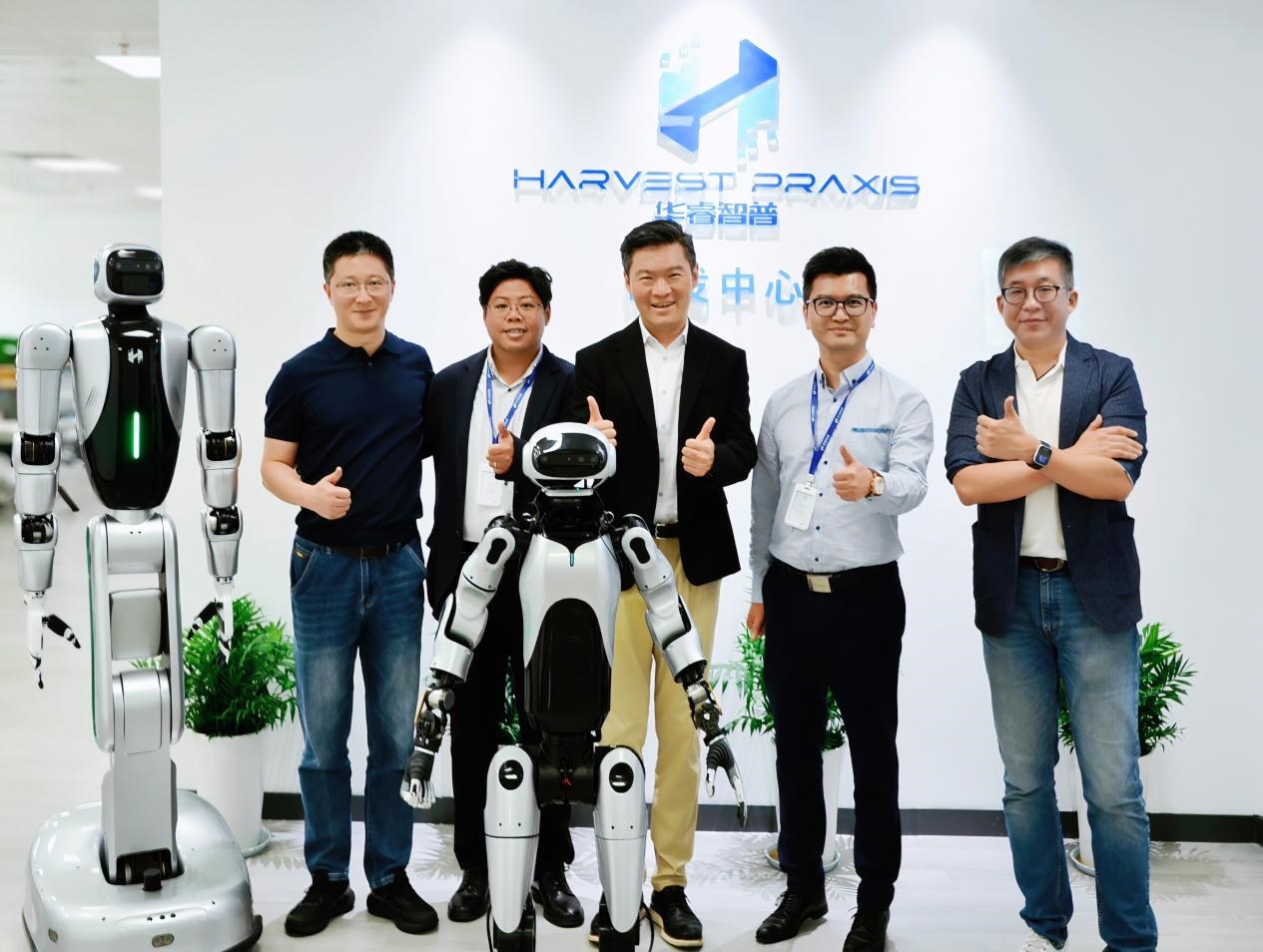
Leadership from MediaTek and Harvest Praxis. From left to right: Brant Wang (MediaTek), Adrian Chiu, CK Wang (MediaTek), Philip Cai Zhenhui, and Nelson Wu (MediaTek).
To view an enhanced version of this graphic, please visit:
https://images.newsfilecorp.com/files/12089/320166_dd69d832d4bc0b0a_004full.jpg
Full-Stack Innovation: Data, Models, and Physical Hardware
Beyond the Hyper AI Brain, Harvest Praxis unveiled several supporting pillars at the conference. He Jian, CTO of Harvest Praxis and a PhD graduate of Northwestern Polytechnical University, introduced two business segments: Data Acquisition and Scenario-based Robots. On the data side, the fully self-developed Raymou Stellar Data-acquisition Ecosystem, powered by Harvest Praxis's proprietary algorithms, achieves depth-camera-level results using ordinary dual cameras, with a single device collecting more than 5,000 validated, real-world data samples — 300-400 hours — per month.
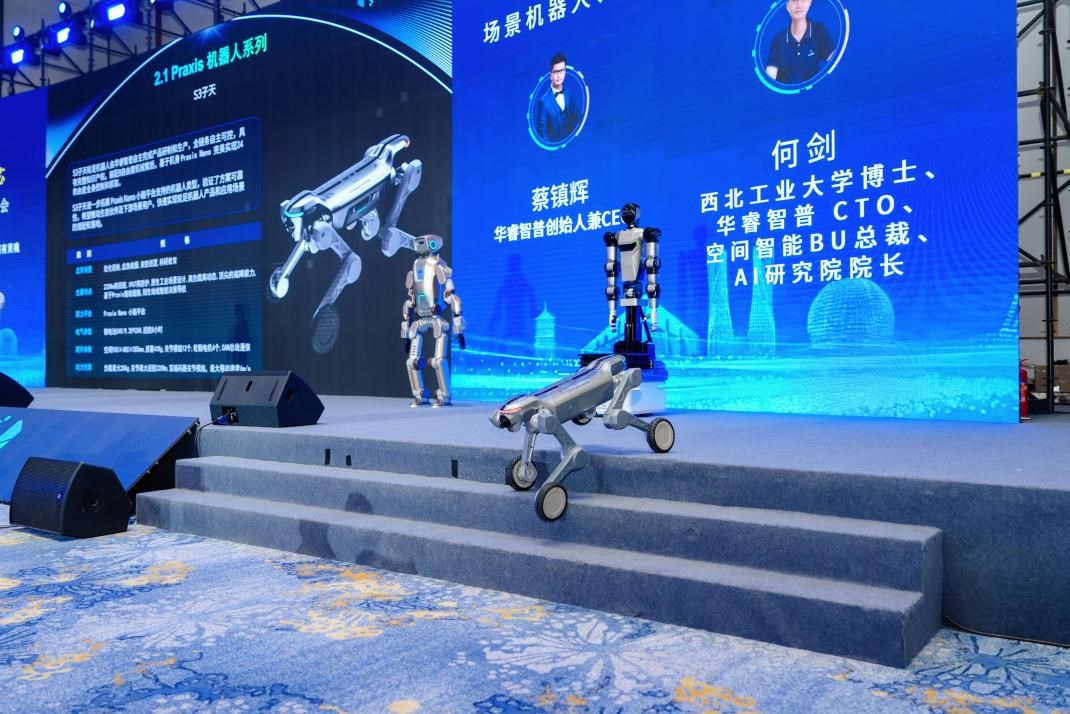
Harvest Praxis's self-developed scenario-specific robots S1, S3, and E3, powered by the Hyper AI Brain
To view an enhanced version of this graphic, please visit:
https://images.newsfilecorp.com/files/12089/320166_dd69d832d4bc0b0a_005full.jpg
At the robot-body level, the 1.85-meter industrial heavy-duty humanoid "S1 Zilong" is a fully self-developed product — from the underlying Hyper AI Brain and structural design to all sensor integration, completed independently by Harvest Praxis — powered by Praxis One. The quadruped robot "S3 Zitian," likewise fully self-developed, carries up to 20 kg and supports bidirectional locomotion, powered by Praxis Nano. The logistics wheeled-arm robot "E3 Ziyun" is designed by Harvest Praxis and manufactured by ecosystem OEM partners, powered by Praxis One.
Hang Jinting, CAIO of Harvest Praxis and a PhD graduate of New York University, presented the self-developed "Hugie Physical Latent-Space World Model" (Physical Kernel), which encodes observations into physical states and projects future states through physical laws such as dynamics, outputting early-warning signals. Experiments show that with visual input disabled and dynamics-based reasoning only, the block-stacking task achieved a 68.1% success rate, higher than the 35.6% achieved by per-step re-encoding.
Mass Production Roadmap and Open Ecosystem
The launch is not the end point. Philip Cai Zhenhui said that Harvest Praxis's focus is not on building robot bodies itself, but on validating the engineering capability of the Hyper AI Brain on-device computing platform through complete robots. Building on its deep collaboration with MediaTek, Harvest Praxis's strategic priority is to develop a world-leading Physical AI on-device computing platform and products — and its next-generation iterations — while providing open adaptation solutions for ecosystem partners. Following the ecosystem conference, the Hyper AI Brain's mass-production timeline is clear: internal testing begins in Q4 2026, with mass production and commercial delivery in January 2027.
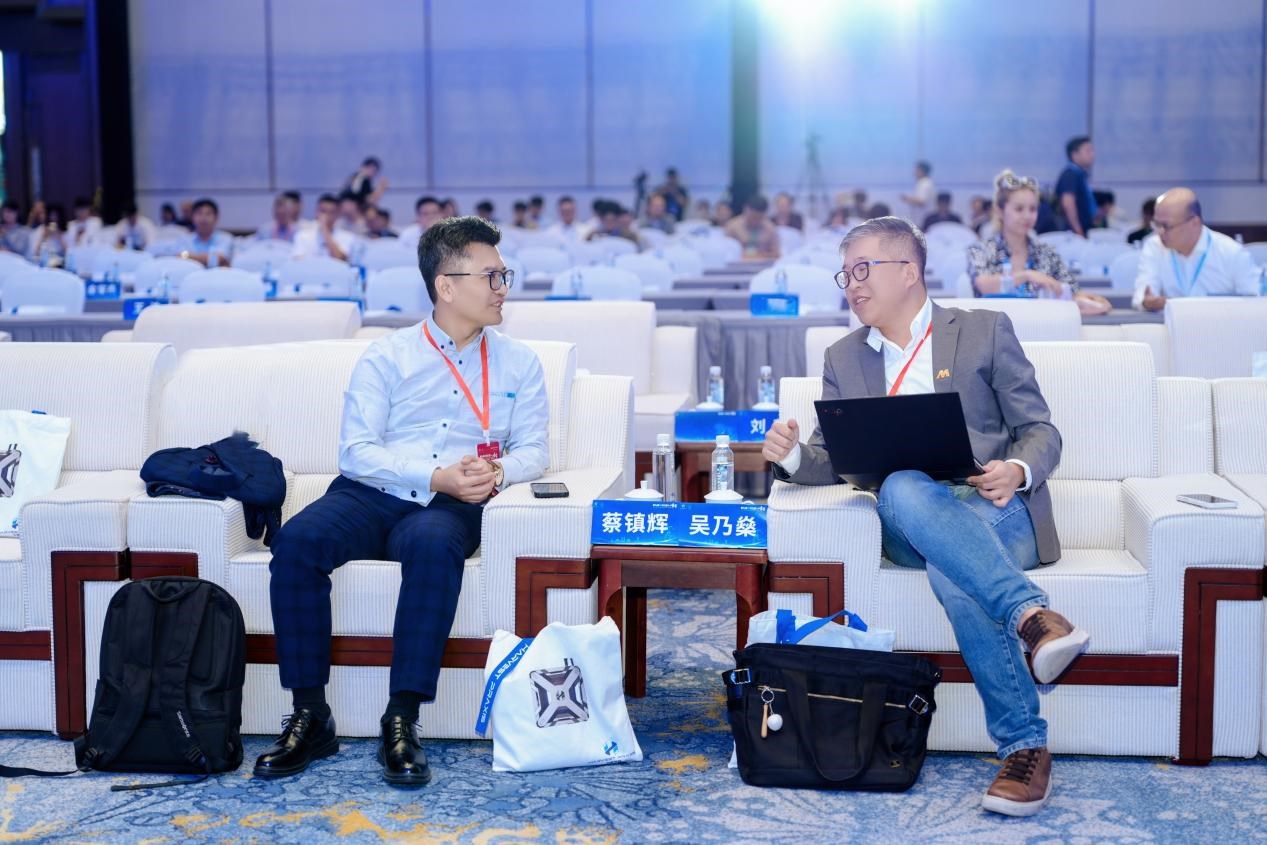
Senior executives from Harvest Praxis and MediaTek in an in-depth exchange at the China Robot Summit
To view an enhanced version of this graphic, please visit:
https://images.newsfilecorp.com/files/12089/320166_dd69d832d4bc0b0a_006full.jpg
"We would rather be the foundational bedrock of the industry than a wall that separates technologies," said Philip Cai Zhenhui, Founder and CEO of Harvest Praxis. From chip co-definition and the on-device computing foundation to an open ecosystem, Harvest Praxis is turning "dual-brain on a single chip" into a shared computing foundation for the Physical AI industry — and its deep collaboration with MediaTek provides this foundation with the dual support of advanced process and scale manufacturing.
About Harvest Praxis
Headquartered in Guangzhou, Harvest Praxis is a full-stack technology company focused on on-device compute for Physical AI and embodied intelligence, championing a China-developed "Physical AI on-device compute new infrastructure." Its fully self-developed on-device platform—the Praxis Hyper AI Brain—marks two industry breakthroughs: a pioneering 3nm SoC used in embodied intelligence (built around the MediaTek Genio Pro 5100), and a precedent- setting brain-and-cerebellum single-SoC fusion architecture, tackling the impossible triangle of high performance, low power, and low cost. Building on it, the company has rolled out a Hugie Physical Latent World Model, the RuiMou XingYuan data-acquisition ecosystem and devices, and scenario-specific robots, delivering turnkey hardware-plus-software solutions for industrial and commercial Physical AI terminals. Guided by "in-house innovation for core technology, open sharing for key breakthroughs," Harvest Praxis aims to build, with partners across the chain, an embodied-intelligence ecosystem centered on on-device Physical AI compute. For more information, visit https://www.harvest-praxis.com/.
Media Contact
For media inquiries, please contact: media@harvest-praxis.com
To view the source version of this press release, please visit https://www.newsfilecorp.com/release/320166
Source: ZekarNews