
KEY HIGHLIGHTS
- Drill design, contractor negotiations and the approval process for drilling in November 2026 have commenced.
- Rock sample geochemistry shows a strong correlation between the Robertson-style geochemical suite and Ecru's hornfels targets.
- Indicator element geochemistry also correlates to several large structural conduits emanating from the Ecru Intrusion.
"Our journey to explore the Robertson-style gold potential on Ecru has been very successful and has identified all the right geological, geophysical, geochemical and structural components to support the potential discovery of new gold mineralisation at Ecru.
We were committed to methodical, fact-based exploration from the outset, and this approach has allowed us to build a strong suite of Robertson-style targets on Ecru.
Drilling is now the next logical step, and we're excited to bring you along for this definitive step."
- Johan Lambrechts (CEO)
Vancouver, British Columbia--(Newsfile Corp. - September 21, 2026) - Aurbis Resources Corp. (CSE: AURR) (Aurbis, AURR or the Company) is excited to announce that its 100% owned Ecru Gold Project is drill-ready. The rock sample assay results closely correlate with the hornfels targets mapped and interpreted in earlier work, providing the final layer of evidence the Company needed to lock in drill targets for Robertson-style gold mineralisation on the Ecru Gold Project.
The rock samples were collected in two separate mapping and sampling programs (Phase 1: SCE-17 June 2026 and Phase 2: CSE-22 July 2026) and tested outcrops across the western high-lying section of the Ecru project. The mapping identified hornfels alteration, which is a defining characteristic of the Robertson-style gold mineralisation.
The Company also released the identification of several hornfels targets based on the interpretation of geophysical surveys completed on the Ecru project (CSE-September 2nd, 2026), culminating in a total of 14 targets mapped and interpreted as hornfels alteration within the contact aureole of the Ecru intrusion.
The results from the rock samples collected by the Company were reviewed in relation to the geochemical indicator element suite associated with Robertson-style gold mineralisation, and we're pleased to announce that the sample results correlate closely with the hornfels targets identified by the exploration activities on the Ecru Gold Project.
Aurbis commenced the approval documentation for drilling on the Ecru Gold Project in November 2026.
Systematic Exploration - Success
The Ecru rock sample assay results provided exactly the supportive data the Company was expecting by correlating closely with the hornfels targets identified by previous exploration steps, and thereby adding the final layer of support for drill targeting of Robertson-style gold mineralisation on the Ecru Gold Project. Several layers of exploration results combine to support the presence of Robertson-style gold mineralisation at Ecru. Aurbis has completed six phases of work on the Ecru Gold Project in the last six months, highlighting our drive for discovery. The combination of these activities is the systematic, data-focused methodology that drives our efforts and generates drill targets.
Mapping results support Robertson facts: Understanding the Robertson deposit and its defining characteristics allowed Aurbis to focus its exploration efforts and determine the success of each step. The Robertson deposit has a known set of geochemical indicators (primary: Au, As, Bi, Te, Cu; secondary: Se, Pb, Ag) associated with the mineralisation. The gold mineralisation at Robertson is associated with hornfels alteration, while one mineralised zone in the deposit is associated with the intrusion itself. This knowledge validated the mapping of hornfels alteration on the project and represented the first direct identification of a Robertson-style target on the Ecru gold project.
Geophysical facts: The processing and interpretation of the HD magnetic survey completed by Aurbis, and the re-interpretation of the historical gravity data for the project, led to the identification of additional hornfels targets around the edge of the Ecru intrusion. One of the mapped hornfels targets corresponds to one identified in the geophysical interpretation; thus, the two datasets support and validate each other.
Geochemical facts - Soil: With the physical mineralisation target (hornfels) identified and validated, the next step was to review the geochemical suite surrounding these targets to determine whether the correct mineralising fluids were present in the area. To achieve this, the historical soil sample results collected in 2022 by Moneghetti were used. The soil samples were collected on the western and south-western portion of the project. Aurbis generated a "heat map" for each indicator element, and the areas of anomalism were reviewed in combination by overlaying the anomalous areas for all indicator elements to assess correlation. The results were excellent.
The anomalous areas for Au, As, Bi, Te, and Cu overlapped well in the western and southwestern parts of the sample area, while the central portion showed good correlation among the indicator elements. When compared with the hornfels target areas, the soil geochemical results became more significant.
In the west, the three strongest soil geochemical anomalies closely correlate to the mapped hornfels targets, while the two strong central soil geochemical anomalies correspond closely to several interpreted hornfels targets identified by the geophysical interpretation. A northwest-trending linear zone corresponding to an interpreted hornfels zone and to structures identified in the geophysical review also stood out in the soil analytical data for gold and bismuth.
The combination of the mapping, geophysical, and soil geochemical data forms a strong corroborating dataset, supporting the potential for Robertson-style gold mineralisation.
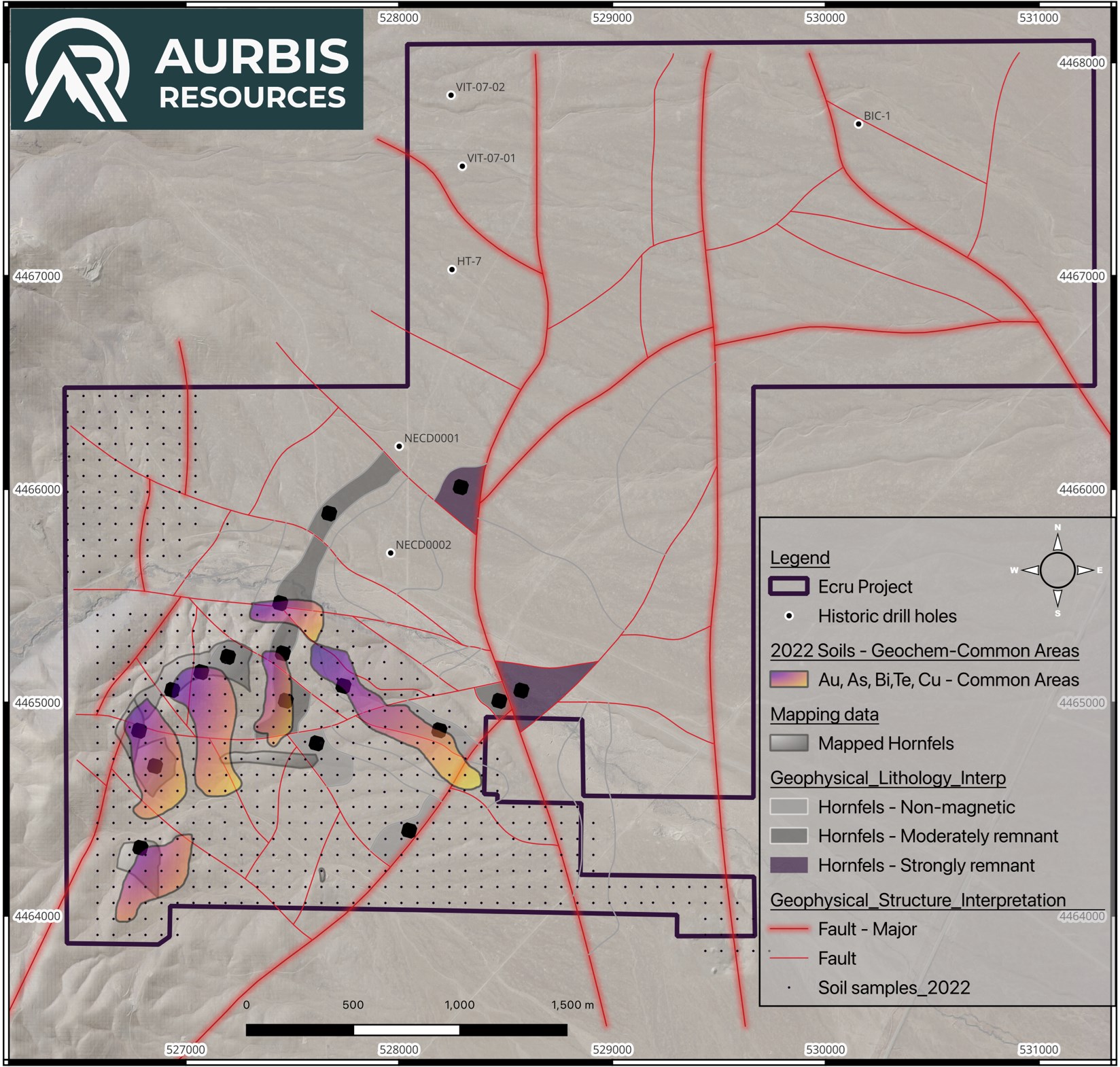
Figure 1: Image of the anomalous soil geochemical areas associated with the hornfels target areas and local structure.
To view an enhanced version of this graphic, please visit:
https://images.newsfilecorp.com/files/8152/315144_2bfad95a14af5891_004full.jpg
Geochemical facts - Rock: Roughly 150 rock samples were collected along the western high-lying part of the project where outcrop exists. The remainder of the project to the east is covered by transported material. The rock sample results were reviewed as described above, and when comparing the anomalism with that identified in the soil geochemical data, the correlation was striking. Anomalies identified by the rock sample results closely coincided with the hornfels and soil geochemical targets, and, as with previous datasets, this close correlation helped support and validate the previously generated data and associated targets.
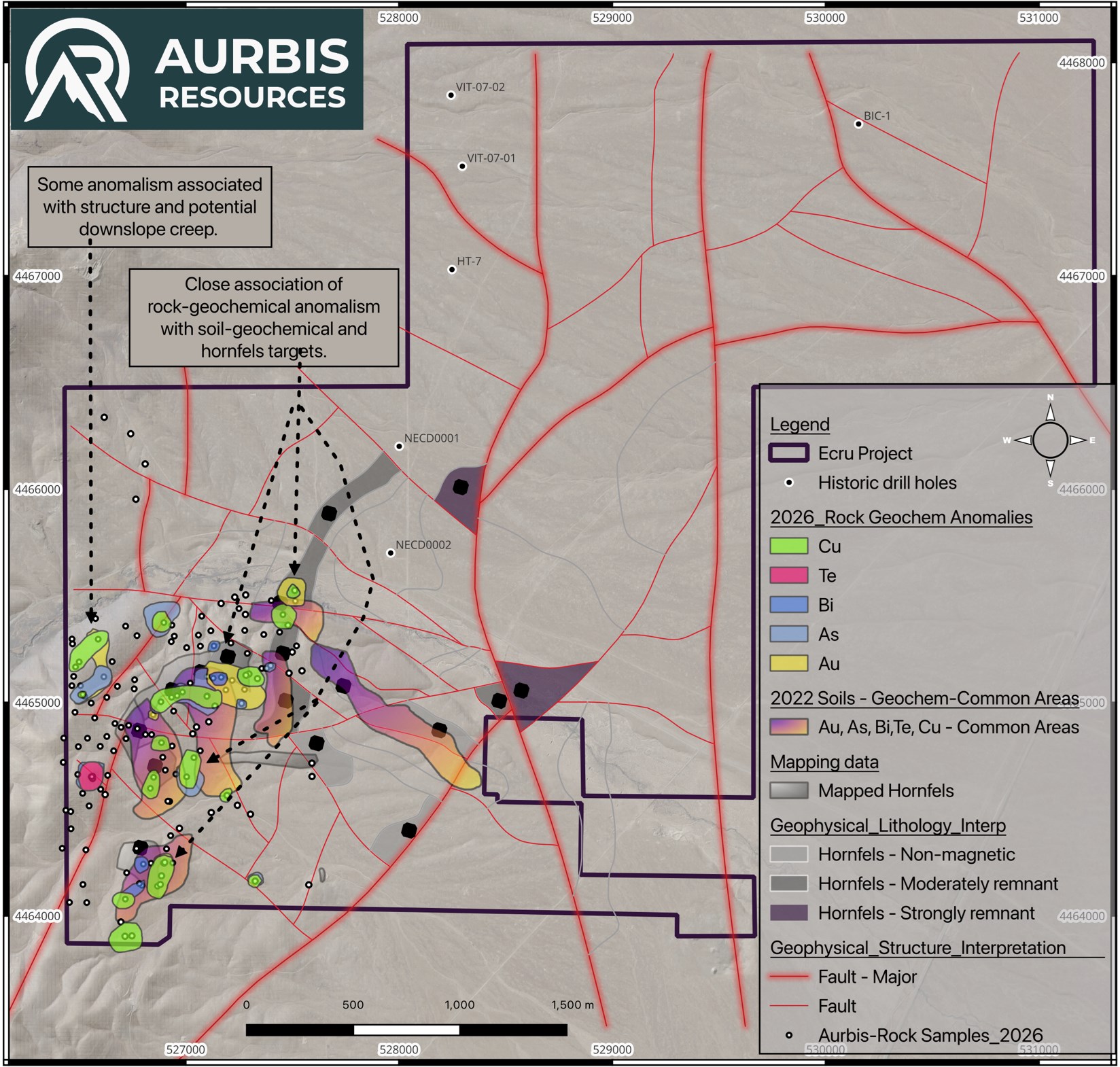
Figure 2: Image of the rock geochemical anomalism compared with the hornfels and soil geochemical targets.
To view an enhanced version of this graphic, please visit:
https://images.newsfilecorp.com/files/8152/315144_2bfad95a14af5891_005full.jpg
Final Targets identified
The targets generated from our exploration efforts and their combined datasets have been categorised into three groups.
The primary targets represent areas where all the data aligns. The hornfels targets were not completely covered by all sample grids due to the lack of outcrop and increased cover depth, but strong correlation exists where geochemical samples overlap with the interpreted hornfels. Hornfels remains a main target for Robertson-style gold mineralisation. Secondary targets are where two datasets overlap, but they are secondary to the primary and hornfels targets.
Drill targeting will focus on the primary and hornfels targets, and a few secondary targets may also be drill tested.
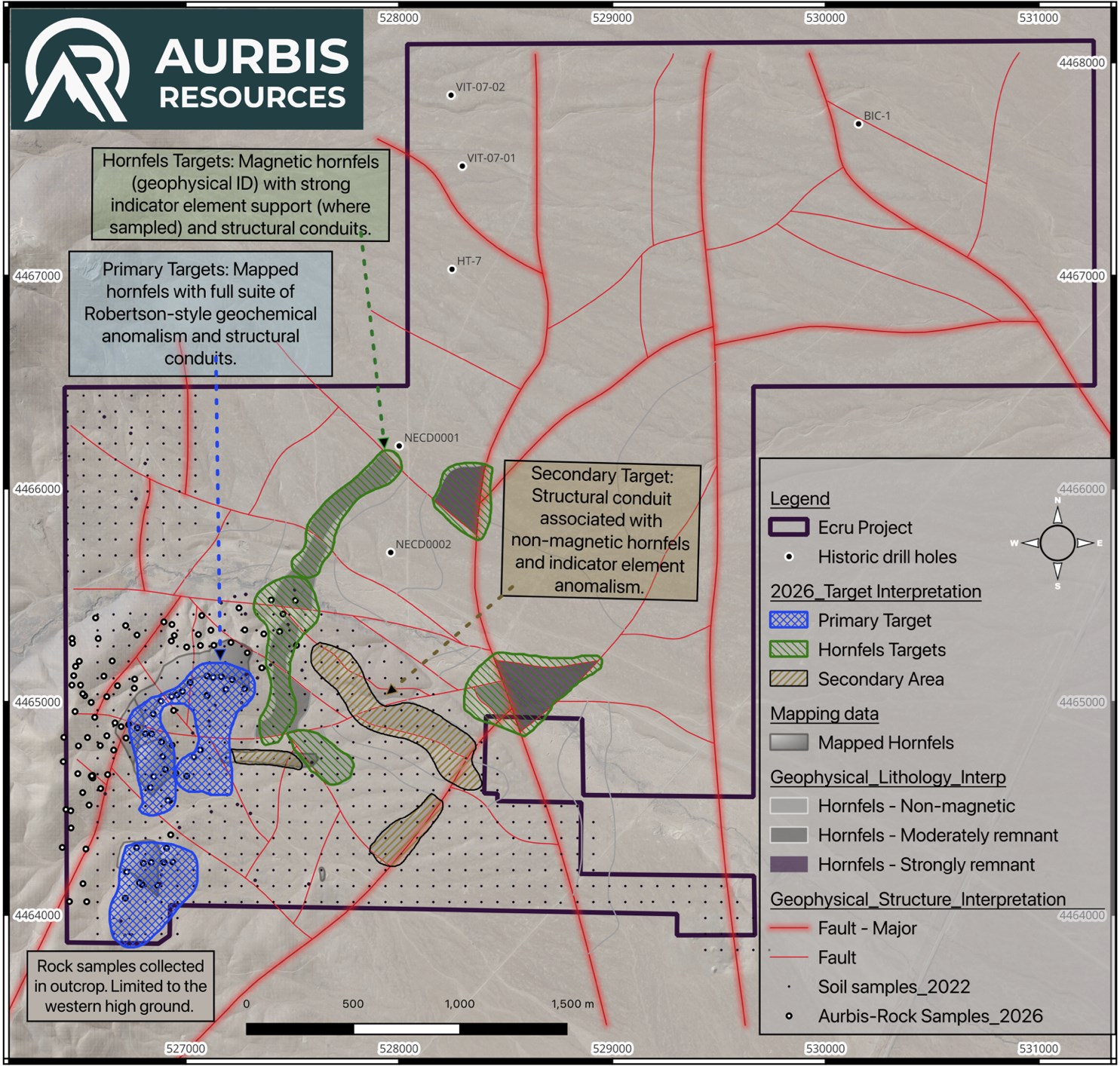
Figure 3: Figure representing the targets identified by the sum of the work programs on the Ecru Gold Project.
To view an enhanced version of this graphic, please visit:
https://images.newsfilecorp.com/files/8152/315144_2bfad95a14af5891_006full.jpg
Why is this important
The combined data discussed in this document indicate that several areas exhibit consistent patterns of anomalism across all datasets, which are closely associated with Robertson-style mineralisation. The Robertson deposit is less than 2km south of Ecru and is on slightly elevated ground where Prospectors identified gold mineralisation in outcrop, leading to historical gold mining. Ecru is next to Robertson but lies on lower ground with minimal outcrop for prospectors to explore, and thus it remained unnoticed.
The characteristics of the Robertson deposit, as discovered in modern times, include distinct alteration (hornfels), geochemical (indicator-element suite), and geophysical (low contrast with surrounding rocks, with a subtle gravity increase due to hornfelsing) signatures. Aurbis's exploration efforts have identified all these characteristics surrounding the Ecru intrusion, a mere 2km away but buried beneath transported cover, unseen and largely underexplored…until now.
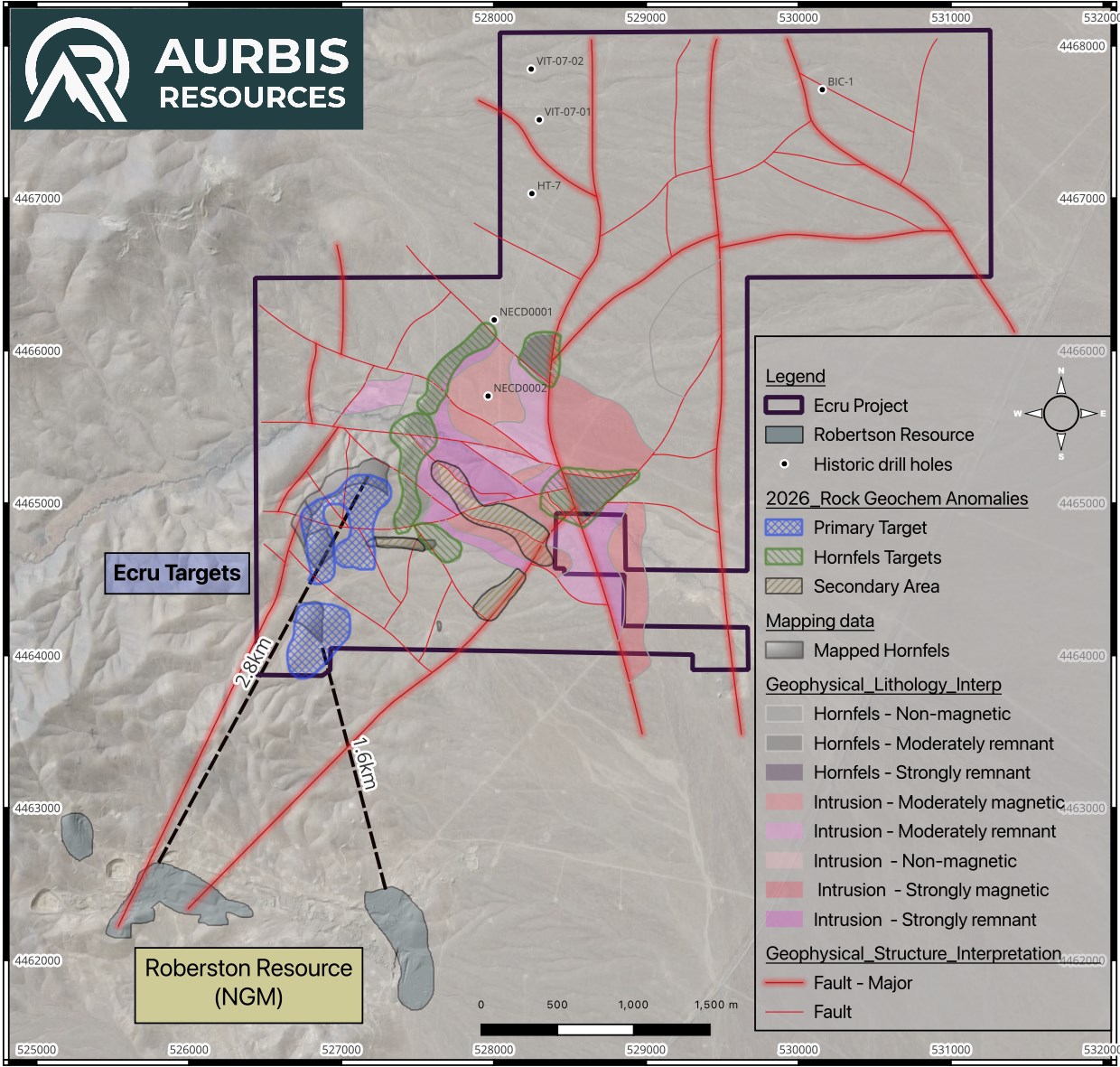
Figure 4: Image highlighting the proximity of the Ecru targets to the Robertson (Nevada Gold Mines: NGM) gold resource.
To view an enhanced version of this graphic, please visit:
https://images.newsfilecorp.com/files/8152/315144_2bfad95a14af5891_007full.jpg
Future Activities
The next step in the exploration story of the Ecru Gold Project is to drill-test the identified targets.
Aurbis has already begun preparing the documents for drilling approvals and will submit them to the BLM as soon as they are available.
Drill contractors have also been contacted, and the chosen contractor for the proposed 3,000m drill program planned for November 2026 will be announced as soon as all contracts are finalised.
Additional exploration activities may continue on Ecru to improve the Company's ability to target potential gold mineralisation, but drilling is the main focus at this stage.
Although the Company will focus on the Robertson-style intrusion-related gold targets in the short term, completed activities have identified the Northern Nevada Rift (NNR) as a target. The NNR represents a series of high-grade gold mines along its strike length to the north and south of Ecru. Deposits associated with the NNR near Ecru include Mule Canyon, Fire Creek and Buckhorn. The NNR is buried (beneath cover material) in the NE corner of the project and has never been explored. Aurbis will dedicate resources to this target once the first phase of drilling on the intrusion-related target has been completed.
Aurbis believes that Ecru also hosts Carlin-style gold potential, which will also be investigated further once our primary target has been initially tested.
We believe this is a robust exploration plan and gives the Company the best likelihood of success for discovery on the Ecru Gold Project.
We look forward to keeping our investors and followers informed of our progress.
On behalf of the Board of Directors
Johan Lambrechts
Chief Executive Officer and Director
1 (855) 764-2535
info@aurbisresources.com
The CSE has neither approved nor disapproved the contents of this news release. Neither the CSE nor its Market Regulator (as that term is defined in the policies of the CSE) accepts responsibility for the adequacy or accuracy of this release.
Qualified Person
Johan Lambrechts, QP, is the Company's qualified person as defined by NI 43-101 and has reviewed the scientific and technical information that forms the basis for portions of this news release. Mr Lambrechts is a member of the Australian Institute of Geoscientists (#5900). He has approved the disclosure herein. Mr Lambrechts is not independent of the Company, as he is a director of the Company.
CAUTIONARY AND FORWARD-LOOKING STATEMENTS
This news release includes certain statements that may be deemed "forward-looking statements". All statements in this news release, other than statements of historical facts that address events or developments that the Company expects to occur, are forward-looking statements.
Forward-looking statements are statements that are not historical facts and are generally, identified by the words "expects," "plans," "anticipates," "believes," "intends," "estimates," "projects," "potential" and similar expressions, or that events or conditions "will," "would," "may," "could" or "should" occur. Although the Company believes the expectations expressed in such forward-looking statements are based on reasonable assumptions, such statements are not guarantees of future performance, and actual results may differ materially from those in the forward-looking statements.
Forward-looking statements are based on the beliefs, estimates, and opinions of the Company's management on the date the statements are made. Except as required by applicable securities laws, the Company undertakes no obligation to update these forward-looking statements if management's beliefs, estimates, opinions, or other factors should change.

To view the source version of this press release, please visit https://www.newsfilecorp.com/release/315144
Source: Aurbis Resources Corp.