
Sao Paulo, Brazil--(Newsfile Corp. - March 4, 2026) - Dakila Pesquisas has just launched the Safari Brazil Project, a large-scale initiative that brings together the people of the Amazon itself to protect the forest, strengthen the local economy, and transform the region into a new global model for sustainable tourism. The project is already structured with a broad network formed by more than 180 Indigenous ethnic groups, as well as riverine communities, farmers, remnants of former rubber plantations, workers, and merchants who live throughout the Amazon region.
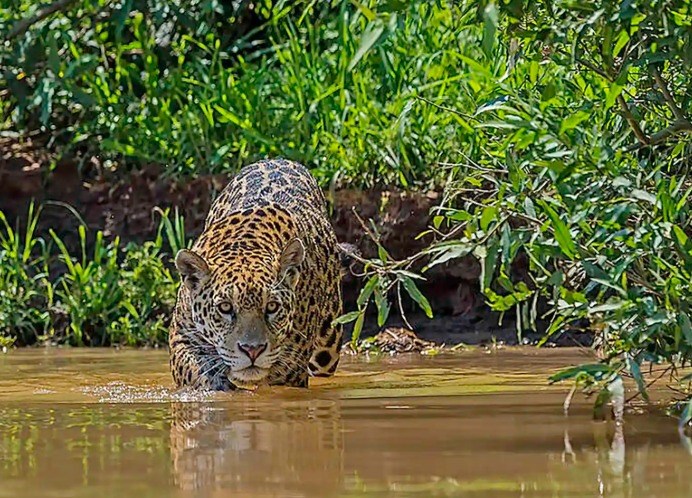
Safari Brazil, by Dakila Pesquisas, in protection of the Amazon.
To view an enhanced version of this graphic, please visit:
https://images.newsfilecorp.com/files/11143/286267_f488272794cf4a2f_001full.jpg
The initiative represents an unprecedented movement led by a Brazilian civil organization that has managed to unite so many local leaders from the forest itself around the same goal: protecting the Amazon from interests that have historically contributed to its destruction while generating jobs, income, and new opportunities for those who live in the region.
The Amazon is currently going through a critical moment. The largest tropical forest on the planet, responsible for one of the greatest biodiversities in the world and fundamental to global climate balance, faces constant pressure caused by illegal deforestation, predatory exploitation of natural resources, and the growing presence of foreign interests advancing over strategic areas.
While large operations obtain licenses and infrastructure to exploit natural resources, many communities that live in the forest struggle even to maintain basic subsistence activities.
The president of Dakila Pesquisas, Urandir Fernandes de Oliveira, says this inequality is evident. According to him, many foreign companies are able to operate in the Amazon with broad political, logistical, and even military support, while Brazilians living in the region often "cannot even plant a cassava plant in their own backyard."
The Safari Brazil Project emerges precisely as an organized response to this scenario. The proposal brings together local populations and different Amazonian leaders to form a network dedicated to protecting the forest and building a new model of sustainable development based on valuing the Amazon itself.
The project did not arise recently. It was structured over a long period by Dakila Pesquisas, which decided to present the initiative to the public only once the entire structure was organized and ready to operate. Today, Safari Brazil is already a reality.
The project currently has 80 bases installed in different areas of the Amazon, functioning as support centers for local communities and as strategic structures for the development of Safari Brazil's activities. Several of these bases are already operational.
The project's work also extends beyond Brazil's borders. Partnerships are already being established with neighboring countries, creating an international cooperation network aimed at protecting the Amazon rainforest.
Safari Brazil was not created to cut down trees or exploit the forest in a predatory way. Its central objective is to protect the Amazon and value the populations who live within it. The region hosts extraordinary biodiversity and sustains communities that depend on extractive activities as their primary means of subsistence.
The initiative seeks to integrate these realities through the strengthening of sustainable tourism. The proposal is to transform the forest itself into a structured tourist destination capable of generating income and expanding economic opportunities for local communities.
As part of this plan, Dakila Pesquisas is preparing the creation of a major tourism route that will connect all Safari Brazil bases. The expectation is that this route will begin operating within six months, allowing visitors to travel through different areas of the Amazon and experience firsthand the region's natural and cultural richness.
The next phase of the project also involves a technological advancement that could transform mobility within the forest. Dakila intends to introduce a piloted flying car to the Amazon. The vehicle is expected to expand mobility between the project's bases, reduce logistical costs, and offer farmers a modern, non-polluting means of transportation.
The new technology is also expected to strengthen tourism activities and facilitate travel in hard-to-reach areas of the forest.
With the union of local communities, technology, and an economic model based on preservation, the Safari Brazil Project emerges as one of the most ambitious Brazilian initiatives focused on protecting the Amazon. Dakila Pesquisas' proposal relies on the strength of the forest's own populations to protect one of the most important natural heritages on the planet and build a future in which the Amazon remains alive and in the hands of those who live there.
Contact:
Luciana Faria - São Paulo, SP
+55 11 97152-8323
lucianacanuto@uol.com.br

To view the source version of this press release, please visit https://www.newsfilecorp.com/release/286267
Source: Evertise AI PR