
Beijing, China--(Newsfile Corp. - November 11, 2026) - On November 8, 2026, Humanitas Ark hosted an academic exchange in Beijing between its Founder and Chairman, Hu Jiaqi, and Professor Morten Meldal of the University of Copenhagen, Denmark, who was awarded the 2022 Nobel Prize in Chemistry. The discussion focused on technological risks, the challenges facing humanity amid rapid scientific and technological development, and approaches to safeguarding humanity's long-term future.
Cannot view this video? Visit:
https://www.youtube.com/watch?v=ZIGkrF-32oE
Professor Meldal is one of the most influential scholars in contemporary organic chemistry. The copper-catalyzed azide-alkyne cycloaddition reaction, which he discovered, enables molecular modules to be coupled efficiently and precisely like building blocks, with almost no byproducts. The technology is widely used in drug development, DNA mapping, and new materials synthesis, and has had a profound impact on modern chemistry and biomedical research.
Hu Jiaqi, Founder and Chairman of Humanitas Ark, has devoted nearly five decades to studying major challenges facing humanity, particularly technological risks. He advocates the coordinated management of high-risk technologies through international cooperation. His publications include Saving Humanity, The Greatest Problem, and On Human Extinction. He has also written twelve times to international leaders on issues concerning humanity's future, with cumulative mailings exceeding one million letters.
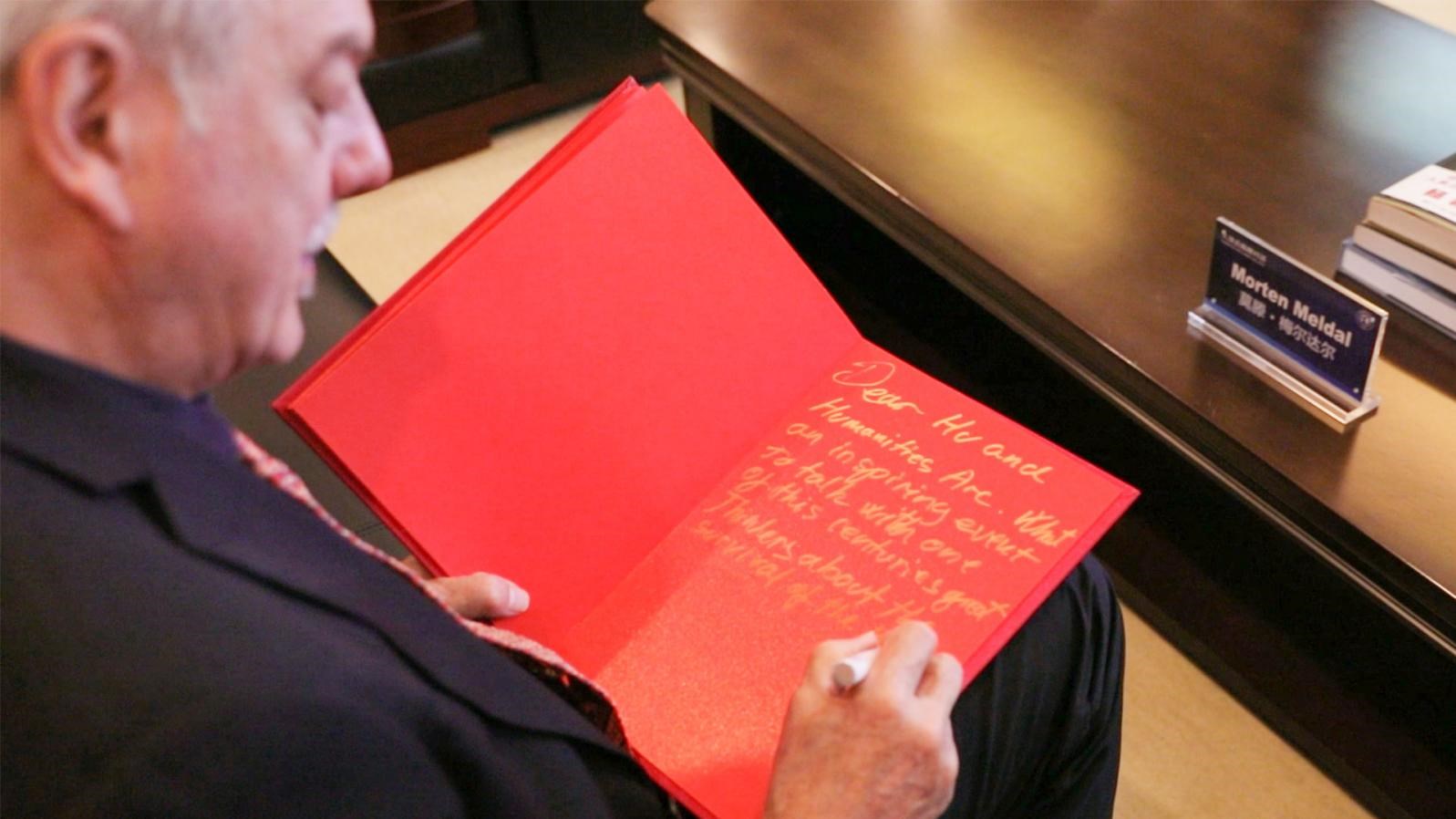
During the exchange, Hu Jiaqi introduced his theoretical framework, which uses three major principles as its methodology. He also explained his analytical approach, known as "Extinction Path Analysis + Defense Limit Testing," which takes axioms as its evidence. Hu Jiaqi discussed the limitations of mainstream academic approaches that rely on subjective assumptions and mathematical modeling to estimate the probability of human extinction. He argued that such methods may overlook potential pathways to extinction and the limits of existing safeguards, potentially affecting the direction of global science and technology governance and public awareness of technological risks.
The discussion also addressed the relationship between scientific and technological progress and the risks it may create. Advances in fields such as chemistry, medicine, and materials science bring significant benefits, while also highlighting the importance of assessing potential consequences and developing appropriate risk-management approaches. These challenges require continued research and consideration from multiple academic disciplines.
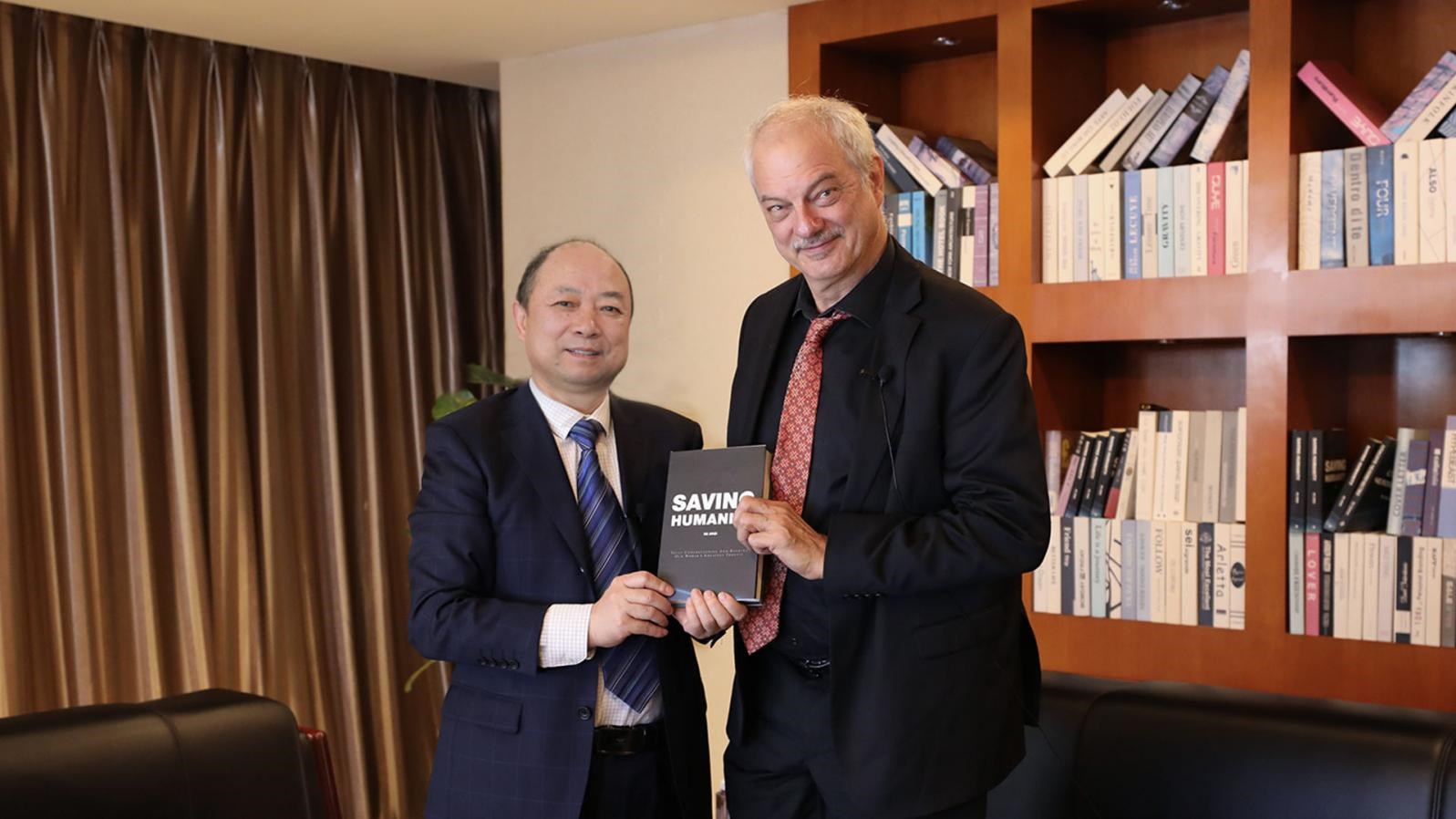
The November 8 exchange formed part of Humanitas Ark's ongoing efforts to promote research and discussion on technological risks and humanity's future. Through academic exchanges, research, and public communication, the organization seeks to encourage broader awareness of potential technological risks and international dialogue on approaches to safeguarding humanity's long-term future.
About Humanitas Ark
Founded in 2018, Humanitas Ark is dedicated to the study of technological risks and the holistic survival of humanity. Its work focuses on research, public awareness, and international dialogue concerning the potential consequences of high-risk technologies.
Contact Person: Reese Jin
Company Name: Humanity Issues Research Institute
Website: http://en.savinghuman.org/
Email: shao@savinghuman.org
To view the source version of this press release, please visit https://www.newsfilecorp.com/release/323297
Source: Hmedium