
Shanghai, China--(Newsfile Corp. - August 27, 2026) - From July 17 to 20, 2026, the World AI Conference & High-Level Meeting on Global AI Governance was held in Shanghai, China. Chinese President Xi Jinping attended the opening ceremony and delivered a keynote address. Under the theme "AI Partnership for a Brighter Future," the conference sent a clear message: China seeks to be more than an application market in the global AI race; it also wants a role in shaping the rules that will guide the technology's future development. Artificial intelligence has now become a new focal point of global technological competition. Drawing on its vast manufacturing system, diverse application scenarios and steadily expanding investment in research and development, China is forging its own path in AI. The Shanghai conference showcased the latest evolution of that path.
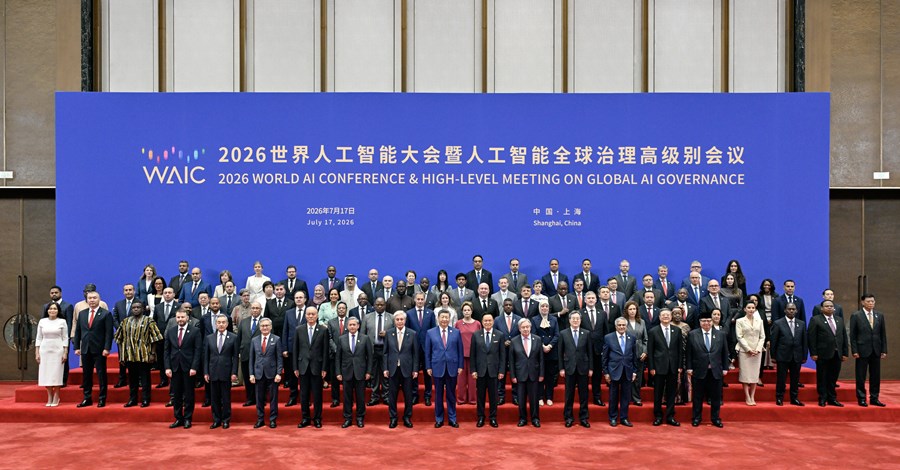
Figure 1
Technological Strength: From a Manufacturing Powerhouse to an Innovation Hub
In the eyes of international observers, China's AI industry is undergoing a remarkable transformation. China was once commonly viewed primarily as a manufacturing powerhouse, but the AI era has fundamentally reshaped that picture. According to data released during the conference, the value of China's core AI industry exceeded RMB 1.2 trillion in 2025, with more than 6,200 specialized AI companies. By 2026, the number of AI companies in China had surpassed 6,600, accounting for 15 percent of the global total.
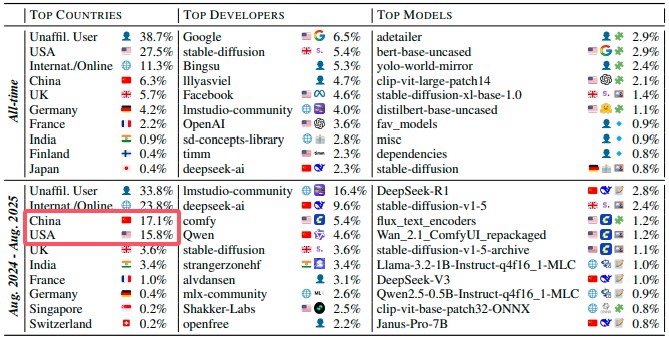
Figure 2
Even more striking to the global technology community is China's dual breakthrough in technological innovation and cost control. As The New York Times and other media outlets have noted, Chinese AI start-ups have stunned Silicon Valley with their exceptional cost-performance ratio, demonstrating an ability to develop high-performance systems at a fraction of the cost incurred by their Western peers. China has also established a strong presence in open source. Today, most of the world's leading high-performance open-source AI models come from China, and cumulative global downloads of open-source large models have exceeded 10 billion. International technology companies have incorporated Chinese models into their technology stacks. This shift from "follower" to "leader" signals that China is steadily emerging as a pivotal hub for global AI innovation and development.
Breaking New Ground in Governance: Building a Fair and Equitable Global AI Order
Behind the breakneck pace of technological progress lies a global governance system that remains fragmented and slow to respond. Addressing the defining question of our age-"How should humanity coexist with machines once they begin to think?"-President Xi set out a clear Chinese approach in his keynote address. His four proposals-"upholding openness and win-win cooperation," "strengthening risk awareness," "encouraging inclusiveness" and "promoting solidarity and collaboration"-establish four pillars for a fair and equitable global AI governance system and have won broad support.
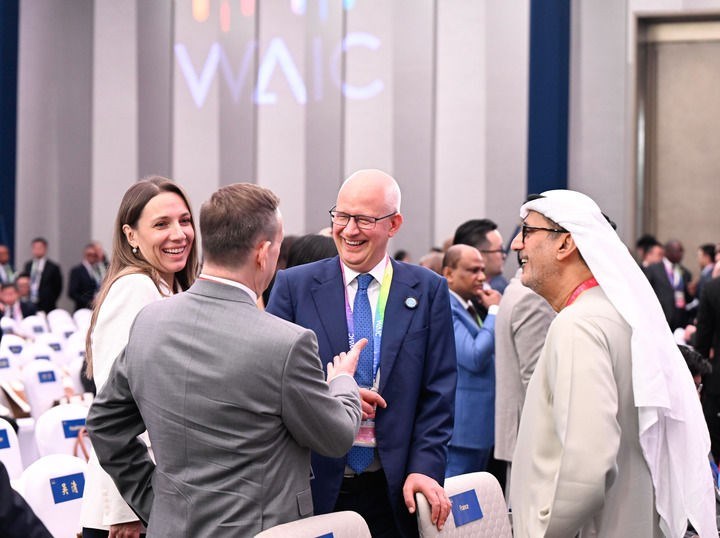
Figure 3
The conference's most significant outcome was undoubtedly the establishment in Shanghai of the World Artificial Intelligence Cooperation Organization (WAICO), made possible through the joint efforts of all parties. On July 16, representatives from 29 countries gathered at the Shanghai World Reception Hall to sign the agreement establishing the organization, with UN Secretary-General António Guterres witnessing the occasion. Its creation is a major step in responding to the calls of Global South countries and uniting the international community around AI development and governance. It marks an important milestone in the history of AI by providing a standing mechanism through which the principles of balancing development and security, openness and inclusiveness, fairness and broad accessibility can be put into practice. Following the conference, TICON Africa said WAICO could open new channels for cultivating AI talent and building digital infrastructure across the continent. Officials from Southeast Asia expressed similar hopes that the new platform would help advance multilingual intelligent technologies and bring smart agriculture projects to fruition.
Inclusive AI for Good: Making AI a Public Good for All Humanity
"Artificial intelligence should be an international public good that benefits all humanity." This proposition was vividly illustrated throughout the conference. Unlike some countries, China maintains that technology derives its value from circulation and sharing, advocating a "flowing water" approach.
To narrow the widening digital and intelligent divide, China announced a series of practical measures: providing 5,000 places in specialized AI training programs for developing countries over the next five years; establishing international AI application cooperation centers for regional organizations including ASEAN, the African Union and BRICS; and promoting the deployment of the "Mazu" AI-powered meteorological early-warning solution in 30 countries. These measures show that China has chosen to help build inclusive AI public goods rather than erect technological barriers.
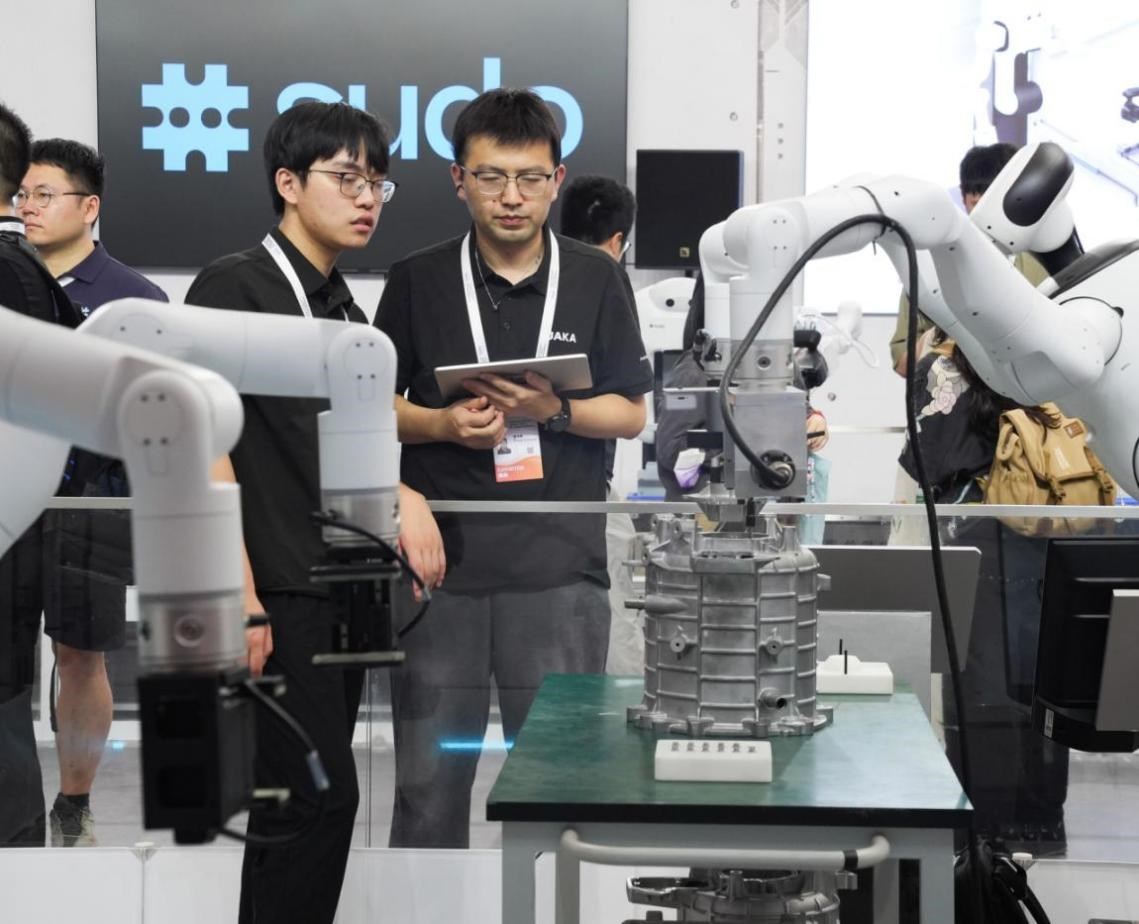
Figure 4
Within this framework for cooperation, a range of regional initiatives are gradually taking shape. Southeast Asia is using multilingual intelligent technologies to support agricultural transformation, while Latin American start-ups are drawing on open-source models to develop localized applications at low cost. Many African delegates observed that this cooperation is based on equality: China focuses on helping partner countries build indigenous technological capabilities and implement livelihood projects in areas such as weather-related disaster prevention and smart healthcare, rather than imposing technology in a one-way transfer. Cooperation among equals, grounded in real needs, is precisely the model of inclusive AI development that Global South countries are seeking.
Real-World Friction: The Deep-Seated Challenges and Contestation Behind Bridging the Divide
Yet translating an ambitious vision for governance into real productive capacity across the Global South cannot be achieved through a single agreement or a handful of training sessions. Beneath the promise of inclusion lie more complex sources of real-world friction. The first is the "infrastructure gap." Microsoft's 2025 AI Diffusion Report showed that, in the second half of 2025, generative AI adoption stood at approximately 24.7 percent in countries and regions of the Global North, compared with just 14.1 percent in the Global South. Many developing countries face basic constraints in electricity supply, internet connectivity and digital skills. Even with lightweight models, keeping systems running reliably under severely constrained physical conditions remains a major engineering challenge.
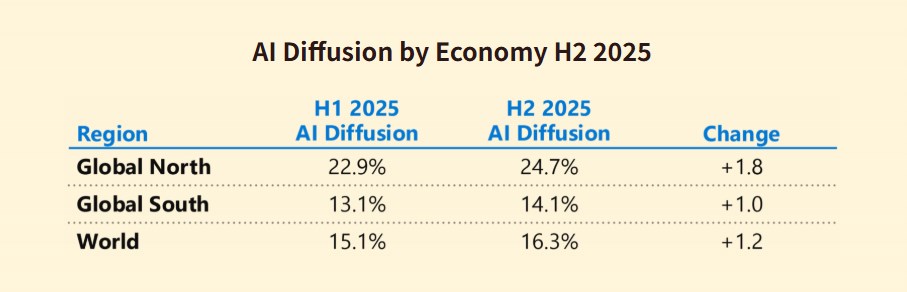
Figure 5
The second concern is a new form of technological dependence. Although open-source models have broken commercial monopolies, developing countries risk becoming a new generation of "digital dependents" if they remain confined to the application layer and fail to build a self-sustaining ecosystem of foundational algorithms and high-quality local-language data, even as they benefit from lower costs.
The final challenge is the contest playing out in the broader geopolitical environment. Efforts to share technology inevitably encounter clashes between different development philosophies and security priorities. When some countries seek security by drawing boundaries, the costs of and resistance to technological cooperation rise accordingly. This persistent tug-of-war between "open sharing" and "defensive barriers" is putting the global consensus on governance to a real-world test.
From the release of the Action Plan for AI Cooperation and Development to the launch of frontier models such as Kimi K3, the 2026 World Artificial Intelligence Conference highlighted both China's accelerating AI development and the friction impeding global AI governance. Under the vision of "AI Partnership for a Brighter Future," the world saw a major country seeking to reshape the rules and provide public goods. Yet no handful of declarations can make AI inclusive and beneficial once and for all. When openness encounters technological barriers and inclusion collides with geopolitical rivalry, the real test is only beginning. Only by confronting these tensions and finding common ground can AI become a force for human well-being rather than a catalyst for division.
Contact:
World AI Conference
Cathy Sun
support@worldaic.com.cn
https://www.worldaic.com.cn
To view the source version of this press release, please visit https://www.newsfilecorp.com/release/311594
Source: BW Media