
Calgary, Alberta--(Newsfile Corp. - July 2, 2026) - Copper Fox Metals Inc. (TSXV: CUU) (OTCQX: CPFXF) (FSE: HPU) ("Copper Fox" or the "Company") is pleased to announce positive results from the continuing metallurgical program and a progress report on the 2026 Schaft Creek program. The metallurgical update discusses results of mineralogical characterization, comminution, bulk flotation, and locked cycle portions of the metallurgical program and plans for further metallurgical investigations.
The Schaft Creek project is managed through the Schaft Creek Joint Venture ("SCJV"). Teck Resources Limited ("Teck") is the operator of the SCJV and holds a 75% interest with Copper Fox holding the remaining 25% interest. The Schaft Creek deposit, located in northwestern British Columbia, is one of the largest undeveloped porphyry copper deposits in North America that contains significant gold-molybdenum-silver by-products.
Elmer B. Stewart, President and CEO of Copper Fox, stated, "The positive results from the metallurgical testwork demonstrate comparable metal recoveries at a coarser grind size. Additional studies are recommended to further optimize metallurgical performance related to mill throughput, metal production, and energy consumption, and will be evaluated as the project advances toward the Pre-Feasibility Study stage."
Metallurgical Testwork Highlights
- Open circuit cleaner flotation tests indicate slightly lower copper and silver recoveries at a coarser primary grind of P80 161-210 μm, compared to a finer grind of P80 140-160 μm. The recovery of molybdenum and gold appears unaffected at the coarser grind size up to 210 μm.
- Copper recovery to the rougher floatation concentrate shows significant variability across feed grades ranging from 0.1 to 0.4% Cu.
- Chalcopyrite is the dominant copper sulphide mineral, with minor amounts of bornite and chalcocite. Pyrite content ranges from zero to 7.6%, with an average of approximately 0.4%.
- Liberation of copper-bearing minerals at the grind size of 80% passing 220 μm is 46%, slightly lower than the 47% at 152 μm.
- The mineralization is classified as hard to very hard based on Abrasion index and Bond Ball Work index ("BWi") indices.
- The higher ore hardness values may require increased mill power.
Future Testwork Recommendations
Based on the results of the testwork, the following recommendations for future metallurgical programs were made:
- Continue evaluating a coarser primary grind size (P80 ~212 µm) to reduce grinding costs.
- Update geometallurgical domain classification to better understand variability in recovery across the deposit, especially at lower feed grades.
- Conduct more locked cycle tests at the coarser grind size to refine recovery and concentrate grade models.
- Further investigate gold occurrence and recovery.
2026 Program
The primary focus of the 2026 program is to complete a technical review of key project components to determine project readiness to transition to the Pre-Feasibility Study ("PFS") stage. Key components of the program include updates to geological and metallurgical models and trade off studies related to tailings, mine plan and access roads.
Metallurgical studies planned for 2026 will focus on refining geometallurgical domains within the Schaft Creek deposit, conducting coarse particle flotation testwork, and initiating a gold deportment study to better characterize gold distribution, particle size, and mineral associations. In addition, a trade-off study will be undertaken to evaluate the potential application of High-Pressure Grinding Roll ("HGPR") within the comminution circuit.
The 2026 field program includes collection of environmental data to support future site planning and permitting. Upgrades to the camp to support future programs are also planned.
A trade-off study evaluating several potential access routes to the project is currently underway, alongside a System Impact Study being conducted by BC Hydro. Additionally, an updated lithology model incorporating the 2024 and 2025 structural studies resulted in only minor refinements to the interpreted geology.
Metallurgical Results
The metallurgical testwork program incorporates the work perform by the SCJV as well as test results completed by Copper Fox in the years 2005 to 2012. The testwork completed by the SCJV focused on metallurgical tests at the P80 at 210-micron grind size and consisted of comminution (grinding) tests, bulk flotation, and locked cycle testwork and mineralogical characterization on seventy-five variability samples and one composite sample. The flow sheet for the 2023-2024 testwork metallurgical testwork programs is shown in Figure-1. The flow sheet for the 2023-2024 testwork sample (BL-1286) consisted of bulk sulphide rougher flotation, fine regrinding on the bulk concentrate, and three stages of cleaner flotation.
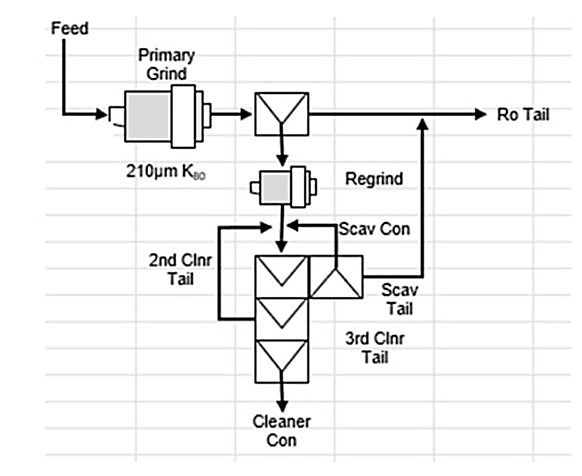
Figure-1: Flow sheet for 2023-2024 testwork program for the Schaft Creek Project.
To view an enhanced version of this graphic, please visit:
https://images.newsfilecorp.com/files/2177/303570_36d6777f6455d904_001full.jpg
Mineralogy
The mineralogical analysis indicates chalcopyrite is the dominant copper sulphide mineral with minor amounts of bornite and rare chalcocite. Low concentrations of secondary copper minerals were identified in several samples. Molybdenite is the main molybdenum bearing mineral. The pyrite content ranged from zero to 7.6%, averaging approximately 0.4%.
Hardness Tests/Comminution
Comminution (grinding) test results for 111 variability samples were reviewed in the study, and a variety of testing methods were used to determine the hardness of material and energy requirements to achieve a desired grind size to optimize metallurgical performance. The testwork indicates volcanic hosted mineralization shows greater hardness than breccia and intrusive hosted mineralization indicating higher mill power requirements.
Copper sulphide mineral liberation at a grind size of 80% passing 220 µm is approximately 46%, only slightly lower than at 152 µm, supporting a coarser grind size for future work. The estimated liberation levels of copper minerals ranged from 39 to 51% in historical testwork at the grind size P80 of approximately 150 μm. Results indicate that the finer grind improves the liberation of copper sulphide minerals, but not significantly.
Cu-Mo Bulk Flotation Tests
The study included rougher flotation testing on 75 variability samples. The testwork was completed using several different flotation collectors to find the optimal combination. Results indicate significant variability in copper recovery to the rougher flotation concentrate across feed grades ranging from 0.1 to 0.4% copper. The open circuit cleaner flotation tests show slightly lower recoveries of copper and silver at a coarser primary grind of P80 161-210 μm, compared to a finer grind of P80 140-160 μm.
In 2023-2024, seven locked cycle tests ("LCT") were completed on 6 variability samples, and 1 composite sample representative of the expected life of mine grades at a primary grind size of 80% passing at 209 μm. Results show similar metal recoveries to previous tests from 2008 to 2012 at a finer grind size of 153 μm.
Locked cycle tests are conducted to evaluate the effect of primary grind size on metal recovery. The LCT results showed that copper recovery dropped from 89 to 86% and silver recovery from 60 to 55% when the primary grind size was increased from 80% passing at 109 to 173 μm. However, molybdenum recovery increased significantly from 71% at the finest grind size to 87% at the coarsest grind size. Gold recovery increased from 67% to 72% by coarsening of the primary grind size.
The results from the 2023-2024 LCT testwork compared to historical LCT testwork and regression equations are presented in Figure-2. (Data in blue have an average primary grind size P80 of 153 μm and are from 2008-2012 test programs. Data in orange have an average grind size P80 of 209 μm and are from the 2023-2024 test program.)
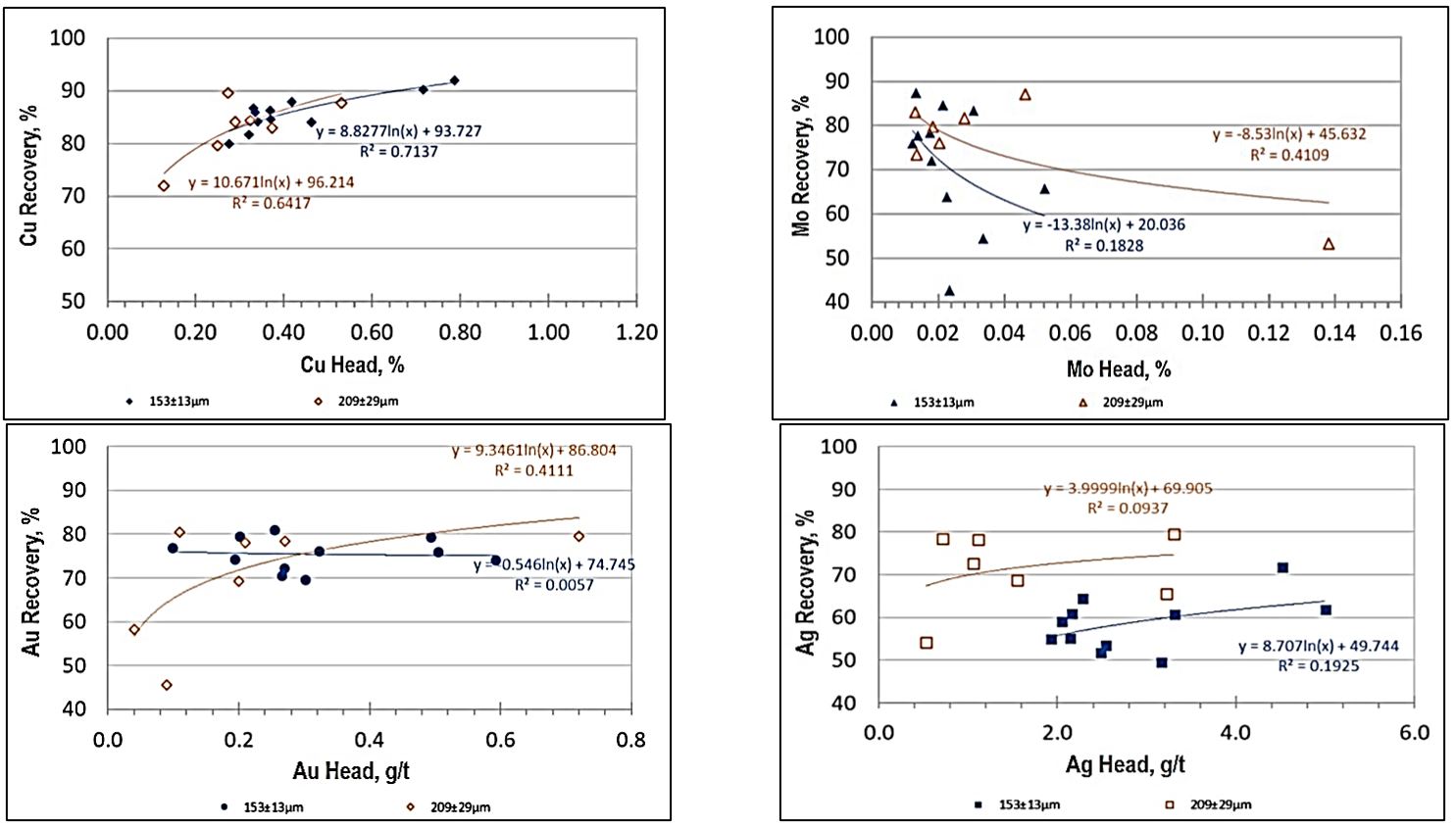
Figure-2: Comparison of metal recoveries based on LCT tests at different head grades.
To view an enhanced version of this graphic, please visit:
https://images.newsfilecorp.com/files/2177/303570_copperfox.jpg
In general, metal recoveries increase with higher feed grades. The copper recoveries at two different primary grind sizes overlap. The recoveries of other metals (molybdenum-gold-silver) at a coarser grind are also similar or improved. It is not clear if this behaviour is due to other metallurgical drivers such as mineralogy, lithology and different reagent scheme and requires further study. In general, the metallurgical performances from the variability samples in 2023-2024 are similar to the composites samples tested from 2008 to 2012. The data support a coarser primary grind size P80 of 212 μm could be used as a new baseline for future metallurgical testwork.
Qualified Person
Elmer B. Stewart, MSc. P. Geol., President and CEO of Copper Fox, is the Company's non-independent, nominated Qualified Person pursuant to National Instrument 43-101, Standards for Disclosure for Mineral Projects, has reviewed and approved the scientific and technical information disclosed in this news release.
About Copper Fox
Copper Fox is a Canadian resource company focused on copper development and exploration in the United States and Canada. Copper Fox and its subsidiaries own 100% of the Van Dyke ISCR project, a development stage, potential near term, mid-size copper mine in Arizona and a 25% interest in the Schaft Creek Joint Venture with Teck Resources Limited (75% interest and operator) which hosts the Schaft Creek copper-gold-molybdenum-silver project in British Columbia's Golden Triangle. In addition, Copper Fox owns 100% of the resource stage Eaglehead polymetallic porphyry copper project in northwestern British Columbia and the Sombrero Butte and Mineral Mountain advanced exploration stage porphyry copper projects located in the prolific Laramide age copper province in Arizona. For more information on Copper Fox's mineral properties and investments visit the Company's website at www.copperfoxmetals.com.
On behalf of the Board of Directors
Elmer B. Stewart
President and Chief Executive Officer
For additional information contact: Lynn Ball at 1-844-464-2820 or investor@copperfoxmetals.com.
Neither TSX Venture Exchange nor its Regulation Services Provider (as that term is defined in the policies of the TSX Venture Exchange) accepts responsibility for the adequacy or accuracy of this release.
Cautionary Note Regarding Forward-Looking Information
This news release contains "forward-looking information" within the meaning of the Canadian securities laws. Forward-looking information is generally identifiable by use of the words "believes," "may," "plans," "will," "anticipates," "intends," "budgets," "could", "estimates", "expects", "forecasts", "projects" and similar expressions, and the negative of such expressions. Forward-looking information in this news release includes statements related to: metallurgical testwork results, LCT work, additional metallurgical studies, trade off studies, comminution studies, key project parameters, camp upgrades, data collection programs, and a Systems Impact Study.
In connection with the forward-looking information contained in this news release, Copper Fox and its subsidiaries have made numerous assumptions, regarding, among other things: the geological, metallurgical, engineering, financial and economic advice that Copper Fox has received is reliable and is based upon practices and methodologies which are consistent with industry standards. While Copper Fox considers these assumptions to be reasonable, these assumptions are inherently subject to significant uncertainties and contingencies.
Additionally, there are known and unknown risk factors which could cause Copper Fox's actual results, performance, or achievements to be materially different from any future results, performance or achievements expressed or implied by the forward-looking information contained herein. Known risk factors include, among others: the preliminary metallurgical testwork results may not be accurate, the LCT work may not be indicative of actual metal recoveries, additional metallurgical studies may not be completed as planned or at all, access route, comminution and System Impact Study studies may not be completed as planned or at all, review of key project parameters, camp upgrades, and planned data collection may not be completed as planned or at all, the need to obtain additional financing, uncertainty as to the availability and terms of future financing.
A more complete discussion of the risks and uncertainties facing Copper Fox is disclosed in Copper Fox's continuous disclosure filings with Canadian securities regulatory authorities at www.sedarplus.ca. All forward-looking information herein is qualified in its entirety by this cautionary statement, and Copper Fox disclaims any obligation to revise or update any such forward-looking information or to publicly announce the result of any revisions to any of the forward-looking information contained herein to reflect future results, events, or developments, except as required by law.

To view the source version of this press release, please visit https://www.newsfilecorp.com/release/303570
Source: Copper Fox Metals Inc.