
Toronto, Ontario--(Newsfile Corp. - June 23, 2026) - Kirkland Lake Discoveries Corp. (TSXV: KLDC) (OTCQB: KLKLF) ("KLDC" or the "Company") is pleased to report additional assay results from holes from its ongoing 2026 diamond drilling program at the Mirado Project, located approximately 20 km southeast of Kirkland Lake, Ontario.
Highlights
KLM26-010, the southernmost hole in this release, was drilled approximately 120 m south of previously known mineralization, returning multiple high-grade gold intervals, including: 79.63 g/t Au over 2.1 m, including 184.04 g/t Au over 0.8 m
53.46 g/t Au over 1.4 m, including 165.89 g/t Au over 0.4 m
1.73 g/t Au over 2.9 m
3.97 g/t Au over 1.1 m
KLM26-011 intersected 0.98 g/t Au over 62.3m from 189 m, in a hole collared approximately 100 m west of KLM26-004, extending the broader South Zone mineralized area to the southwest and down-dip
KLM26-011 and KLM26-010 demonstrate two important expressions of the South Zone system: broader shallow mineralization in KLM26-011 and structurally controlled, very high-grade mineralization occurring along the same gold-bearing pathways farther south in KLM26-010
KLM26-008, drilled in the North Zone approximately 75 m east of previously released KLM26-006, returned multiple mineralized intervals over a broad downhole extent, continuing to demonstrate stacked, steeply dipping mineralized structures, including: 0.44 g/t Au over 17.7 m
0.93 g/t Au over 6.3 m
1.01 g/t Au over 5.0 m
1.88 g/t Au over 5.1 m
0.54 g/t Au over 4.0 m
The new MobileMT, VLF, and total magnetic intensity (TMI) plan maps suggest that the South Zone, North Zone, and southern high-grade intercepts occur within a broader connected structural-geophysical corridor (see Figure 1)
The new results continue to strengthen KLDC's interpretation of Mirado as a broad, structurally controlled gold system developed along persistent mineralized pathways. In the South Zone, drilling has now demonstrated both broad near-surface mineralized zones and the continued lateral extent of the mineralized structural network farther south, highlighting the potential for additional zones of gold mineralization along the same corridor.
KLM26-011 is particularly important to the shallow mineralization expansion model, intersecting 0.98 g/t Au over 62.3 m in a hole collared 100 m west of KLM26-004, extending the interpreted broader South Zone mineralized area laterally 100 m to the west and vertically 130 m. Farther south, KLM26-010 demonstrates that the same structural corridor remains fertile and can host narrow, very high-grade intervals, including 79.63 g/t Au over 2.1 m and 53.46 g/t Au over 1.40 m. This supports the interpretation that mineralizing structures persist along strike and to depth, with potential for repeated high-grade and broader mineralized zones beneath and beyond known mineralization (see Figure 2 and Table 1).
The Company is integrating these results with recently completed MobileMT, VLF, and TMI geophysical datasets. Together, the drilling and geophysics support a growing exploration model in which mineralization at Mirado is distributed along a broader structural-geophysical corridor rather than being confined to a single historical resource area.
Stefan Sklepowicz, Chief Executive Officer, commented: "These results continue to build the case that Mirado is not a single isolated historical resource, but a broader gold system with multiple mineralized structures and repeated mineralized zones. KLM26-011 expands the South Zone with a broad gold-bearing interval, while KLM26-010 demonstrates that the corridor remains capable of producing very high-grade gold farther south. With a second drill now turning and regional prospecting underway, we are accelerating our efforts to define the larger scale of the system."
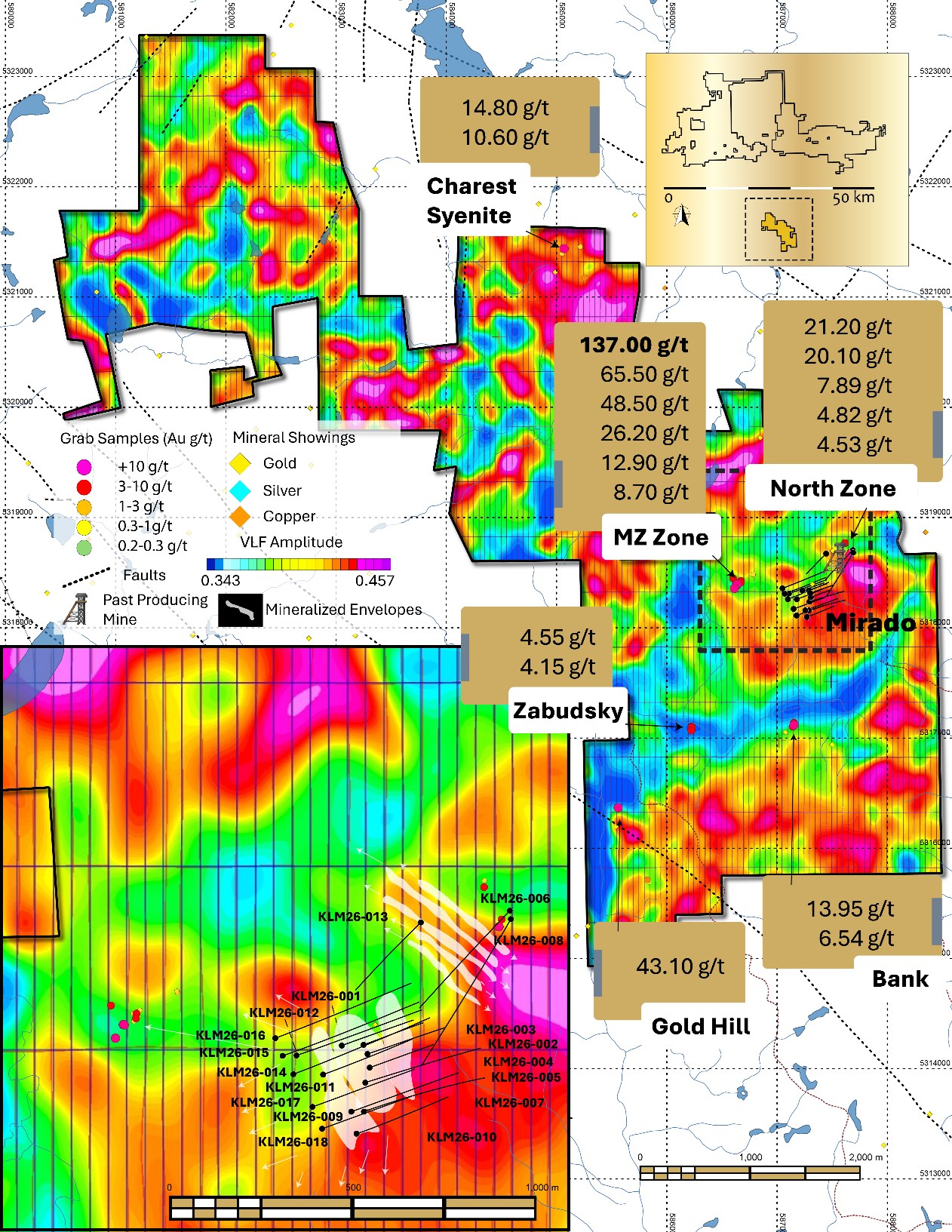
Figure 1 - Regional overview of KL South with new MobileMT VLF amplitude. Limited historical work has been completed across the property, but early indications show discovery potential in multiple areas. Regional high-resolution geophysics interpretation and geochemistry programs are underway to provide additional data for modern exploration and AI integration
To view an enhanced version of this graphic, please visit:
https://images.newsfilecorp.com/files/5701/302506_d861cf9434ba0be9_001full.jpg
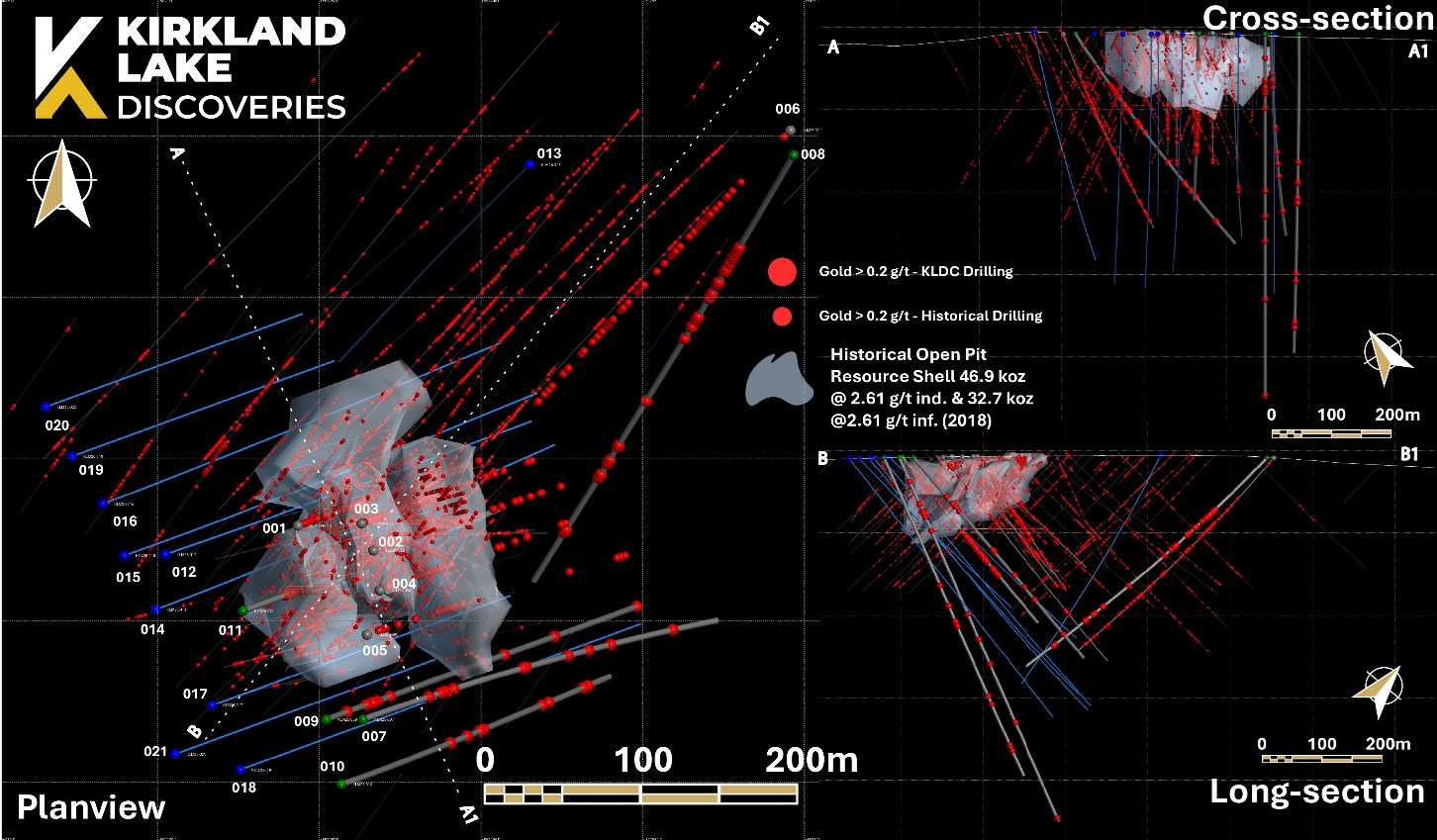
Figure 2 - Plan view, long-section and cross-section of historical and KLDC drilling showing mineralization over 0.2 g/t Au. The 2018 (historical) open pit resource shell is shown in grey.
To view an enhanced version of this graphic, please visit:
https://images.newsfilecorp.com/files/5701/302506_d861cf9434ba0be9_002full.jpg
Table 1 - Drill Results
| Drill Hole | From (m) | To (m) | Interval (m) | Au (g/t) | Zone |
| KLM26-007 | No reportable composite intervals | South Zone | |||
| KLM26-008 | 136.4 | 154.1 | 17.7 | 0.44 | North Zone |
| and | 186.0 | 190.2 | 4.2 | 0.47 | North Zone |
| and | 235.2 | 241.5 | 6.3 | 0.93 | North Zone |
| and | 415.0 | 420.0 | 5.0 | 1.01 | North Zone |
| including | 415.0 | 418.0 | 3.0 | 1.63 | North Zone |
| and | 435.0 | 442.0 | 7.0 | 0.52 | North Zone |
| and | 455.0 | 460.1 | 5.1 | 1.88 | North Zone |
| and | 531.0 | 535.0 | 4.0 | 0.54 | North Zone |
| KLM26-009 | 415.0 | 416.0 | 1.0 | 10.18 | South Zone |
| KLM26-010 | 255.9 | 257.3 | 1.4 | 53.46 | South Zone |
| including | 256.6 | 257.0 | 0.4 | 165.89 | South Zone |
| and | 296.0 | 298.9 | 2.9 | 1.73 | South Zone |
| including | 298.1 | 298.9 | 0.8 | 4.88 | South Zone |
| and | 336.5 | 338.6 | 2.1 | 79.63 | South Zone |
| including | 337.1 | 337.9 | 0.8 | 184.04 | South Zone |
| and | 477.8 | 478.9 | 1.1 | 3.97 | South Zone |
| and | 587.1 | 588.0 | 0.9 | 1.44 | South Zone |
| KLM26-011 | 189.0 | 251.3 | 62.3 | 0.98 | South Zone |
| including | 241.5 | 251.3 | 9.8 | 3.51 | South Zone |
| and | 266.2 | 271.0 | 4.8 | 0.35 | South Zone |
| and | 277.6 | 285.0 | 7.4 | 0.34 | South Zone |
Reported intervals are calculated using a weighted average grade with a 0.2 g/t Au cutoff. To reflect the continuity of mineralization within the broader system, up to 6.9 m of internal dilution (consecutive material below cutoff) is included within reported composites. True widths are estimated at approximately 80% of the reported core length intervals. At this stage, no top-cutting has been applied to high-grade results. Further drilling is required to generate a robust dataset for variographic analysis, which will be used to mathematically determine appropriate grade capping for future resource estimations.
Emerging connected dilation-zone model
KLDC's current interpretation is that the Mirado gold system consists of connected dilation zones developed along persistent structural fluid pathways. In this model, broader gold-bearing zones form where structures open into favourable dilation sites, while narrower high-grade gold intervals can occur along the same structures between or beyond the broader mineralized zones.
In simple terms: hot, gold-rich fluids flowed through a network of underground 'plumbing,' pooling into large, broad zones where the rock opened up, and leaving narrow, highly concentrated streaks of gold in the tighter cracks connecting them
The broader South Zone mineralization intersected in earlier drilling (including KLM26-001, KLM26-001B, KLM26-002, KLM26-003, and KLM26-004) is interpreted as a major dilation-hosted mineralized area. These holes returned wider zones of mineralization and helped define the main South Zone mineralized body.
KLM26-011 now extends this broader shallow South Zone mineralized area approximately 100 m west of KLM26-004, returning 0.98 g/t Au over 62.3 m from 189 m (see Figure 3). This result is significant because it demonstrates that broader South Zone mineralization is not limited to the previously drilled KLM26-001 to KLM26-004 area and may repeat along the same structurally controlled fluid pathways.
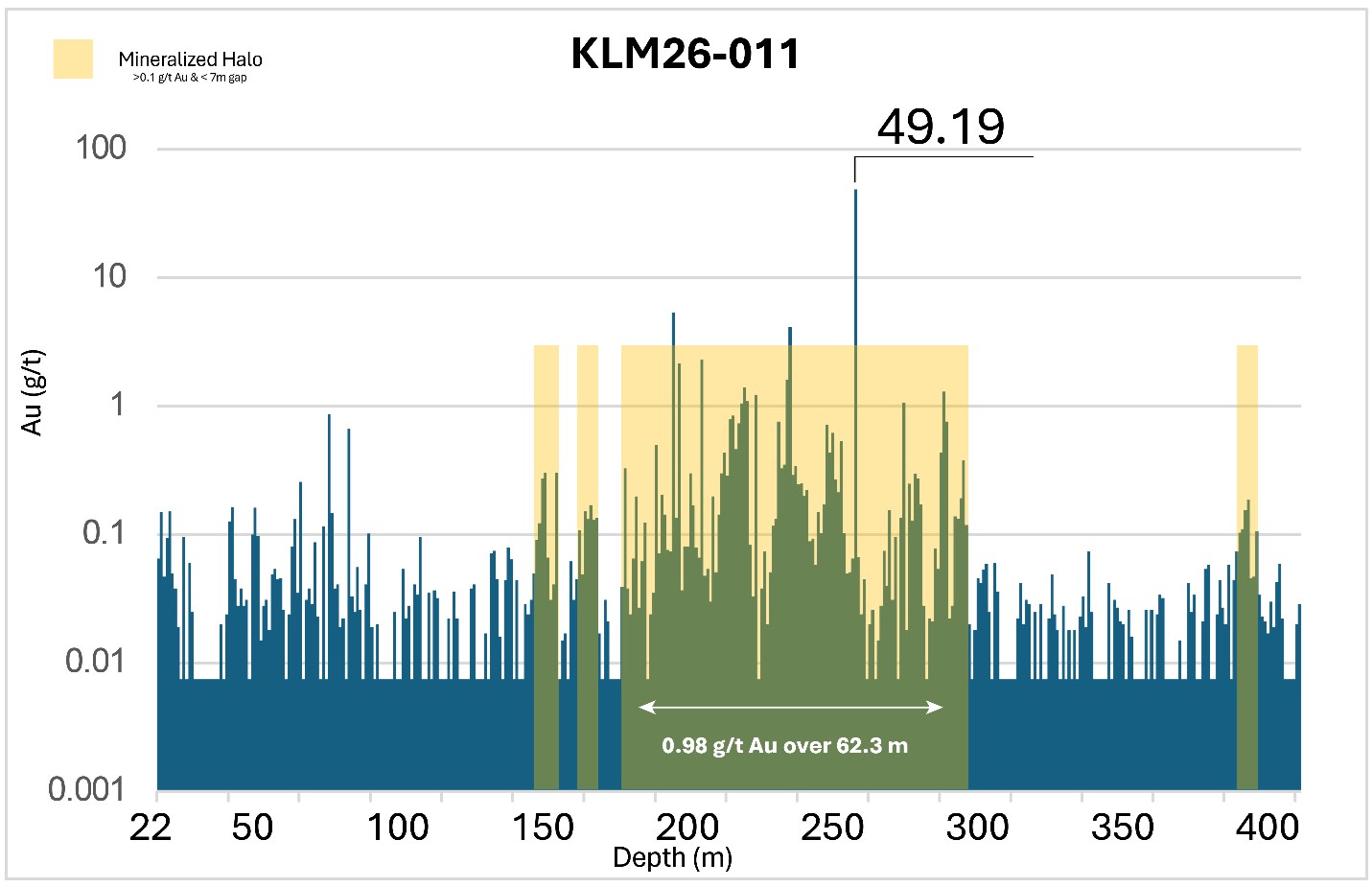
Figure 3 - Mineralization distribution in hole KLM26-011
To view an enhanced version of this graphic, please visit:
https://images.newsfilecorp.com/files/5701/302506_d861cf9434ba0be9_003full.jpg
Farther south, KLM26-010 demonstrates that the structural corridor remains fertile where mineralization is expressed as narrow, very high-grade intervals rather than broad continuous mineralized envelopes. KLM26-010 was drilled approximately 50 m south of KLM26-009 and approximately 120 m south of previously known mineralization, highlighting the potential for additional high-grade mineralization along the southern continuation of the system.
KLM26-007 and KLM26-009 are also important to this model. Although they did not return broad significant composite intervals, they help constrain the geometry of the system and suggest that the broader dilation zones may pinch, step, or be offset along the controlling structures. This information is valuable for targeting additional mineralized zones along strike and down plunge.
Together, the South Zone results support a positive expansion model for Mirado, where gold mineralization is interpreted to occur along a connected structural corridor with broader mineralized zones developed in favourable structural sites and narrower high-grade intervals representing the continued lateral expression of the same mineralized network. This interpretation provides KLDC with a stronger framework for targeting additional mineralized zones along strike, down-dip, and within prospective structural step-over areas.
North Zone confirms stacked vertical structures
In the North Zone, KLM26-008 was drilled approximately 75 m east of KLM26-006 and continues to support KLDC's interpretation of stacked, steeply dipping mineralized structures. The hole intersected repeated gold-bearing intervals over a broad downhole extent, indicating that mineralization is distributed through multiple structural panels rather than a single horizon.
This is significant because it suggests the North Zone represents a separate but related mineralized area within the broader Mirado system. When integrated with the South Zone, the expansion in KLM26-011, and the southern high-grade intercepts in KLM26-010, the results support a larger exploration model in which multiple mineralized zones may be connected by a common structural and hydrothermal framework.
Geophysical interpretation supports expansion model
The Company is integrating the new drill results with recently completed MobileMT, VLF, and TMI geophysical datasets. Initial interpretation suggests that the 2026 drilling is testing a corridor developed along a magnetic transition between lower magnetic response to the west and stronger magnetic response to the east.
The VLF and MobileMT apparent conductivity maps show response features in and around the drilled areas, including the South Zone, North Zone, and the southern KLM26-010 area. KLDC interprets these geophysical patterns as potentially reflecting structural breaks, lithological contacts, or zones of enhanced permeability that may have influenced the movement of mineralizing fluids.
The combination of drilling and geophysics supports the Company's view that Mirado has potential for additional connected mineralized zones beyond the historically drilled resource area.
KLDC will use this integrated geological and geophysical model to target additional step-out drilling along interpreted structural corridors, with a focus on identifying further dilation zones capable of hosting broader mineralization and high-grade shoots.
Project Updates
KLDC is pleased to report that a second diamond drill is now turning at the Mirado Project. The second drill, operated by Chibougamau Drilling, increases the Company's exploration capacity at a key point in the 2026 program and provides additional flexibility to advance priority targets across the South Zone, North Zone, and broader Mirado structural corridor.
The Company has also commenced its 2026 prospecting program, with two field teams from Dynamite Geological Services now active on the property. This work is focused on testing high-priority regional targets generated from the integration of historical geological data, previous exploration results, and newly acquired MobileMT geophysical data. These targets include priority structural, conductive, and magnetic features interpreted to represent potential extensions or repetitions of the Mirado gold system beyond the currently drilled areas.
The addition of a second drill and the launch of regional prospecting positions KLDC to maintain strong exploration momentum at Mirado. This expanded field program is designed to both continue defining and extending known mineralized zones and advance new regional targets toward drill-ready status. KLDC believes this integrated approach provides a strong platform for potential discovery growth and continued value creation at the Mirado Project.
Mining Hub - Interactive 3D model
Kirkland Lake Discoveries Corp. has launched a publicly accessible, interactive 3D drill hole model in partnership with Mining Hub, providing stakeholders with direct access to visualized drilling data. This initiative reflects the Company's commitment to transparency and technical integrity, allowing stakeholders to visualize drill hole data and better understand the spatial relationships between drilling, mineralized intervals, and interpreted target areas. This can be viewed at: https://mininghub.com/3d/v/JLhdvEvF
Video Footage
The latest episode of KLDC's Treasure Hunters series on YouTube follows the ongoing journey for discovery in Kirkland Lake. Follow along with the team as VP Exploration Ben Cleland and CEO Stefan Sklepowicz discuss results from our ongoing drill program at Mirado.
Cannot view this video? Visit:
https://www.youtube.com/watch?v=r8sDFBS45ko
Data Verification & Quality Assurance/Quality Control (QA/QC)
Gold analyses were completed on ½ NQ Core at Paragon Geochemical using Chrysos PhotonAssay™ technology, a fast, non-destructive analytical method that utilizes high-energy X-rays to directly measure gold content in large (~500 g) samples. The larger sample mass used in PhotonAssay is designed to reduce sampling variability associated with coarse gold mineralization and provides rapid, non-destructive gold analysis while also enabling faster turnaround times.
Paragon preparation and Analysis
| Analysis | Code | Locations |
| Preparation | PREP-PKG | Timmins, Ontario, Canada |
| Photon and Fire Assay | PA-AU01, Au-SCR1K | Surrey, British Columbia Hamilton, Ontario, Canada |
| Multi-Element | 33MA-OES | Sparks, Nevada, USA |
Samples returning gold values above the 350 g/t upper detection limit of the PhotonAssay method are reanalyzed using a 1 kg screen fire assay, wherein the sample is sieved at 110 microns, the coarse (+) fraction is analyzed by gravimetric methods, and the fine (-) fraction is analyzed in duplicate by AAS, with the combined results providing a representative total gold value, particularly in samples containing coarse gold.
Drill program design, QA/QC, and interpretation of results are conducted by qualified persons consistent with National Instrument 43-101 and industry best practices. Certified reference standards and blanks are inserted into the sample stream at regular intervals, approximately one control sample per twenty samples, to monitor analytical accuracy and precision.
Reported intervals are calculated using a weighted average grade with a 0.2 g/t Au cutoff. To reflect the continuity of mineralization within the broader system, up to 6.9 m of internal dilution (consecutive material below cutoff) is included within reported composites. No top-cutting has been applied to high-grade results. True widths are estimated at approximately 80% of the reported core length intervals. Assays are uncut except where indicated.
Qualified Person
The technical information contained in this news release has been reviewed and approved by Benjamin Cleland, P.Geo., Vice-President Exploration, who is a Qualified Person as defined by National Instrument 43-101 - Standards of Disclosure for Mineral Projects.
About Kirkland Lake Discoveries Corp.
Kirkland Lake Discoveries Corp. (TSXV: KLDC) (OTCQB: KLKLF) has assembled a 420-km² exploration portfolio in the Kirkland Lake region of Ontario's Abitibi Greenstone Belt, one of the most prolific mining districts in the world. The Company's properties span key fault zones, geophysical anomalies, and volcanic-sedimentary contacts within the Blake River Group, a highly prospective assemblage known to host both gold and polymetallic massive-sulphide deposits.
With exploration permits now in place, KLDC is positioned to advance a strong pipeline of drill-ready targets at KL South, KL West and KL East, supported by multiple anomalous soil trends, historical mineral showings, and structurally controlled intersections.
For additional information, please contact:
Stefan Sklepowicz
Chief Executive Officer
Phone: +1 226-979-3515
Email: stefan@kirklandlakediscoveries.com
Website: www.kirklandlakediscoveries.com
Neither TSX Venture Exchange nor its Regulation Services Provider (as that term is defined in policies of the TSX Venture Exchange) accepts responsibility for the adequacy or accuracy of this release.
Forward-Looking Statements This news release contains "forward-looking statements" within the meaning of applicable securities legislation. All statements, other than statements of historical fact, are forward-looking statements. Forward-looking statements in this news release include, but are not limited to, statements with respect to the Company's 2026 drilling program, the expansion of high-grade zones, the validation of historical data, and the potential for a mineral resource. Generally, forward-looking statements can be identified by the use of forward-looking terminology such as "plans", "expects" or "does not expect", "is expected", "budget", "scheduled", "estimates", "forecasts", "intends", "anticipates" or "does not anticipate", or "believes", or variations of such words and phrases or state that certain actions, events or results "may", "could", "would", "might" or "will be taken", "occur" or "be achieved".
Forward-looking statements are subject to known and unknown risks, uncertainties and other factors that may cause the actual results, level of activity, performance or achievements of the Company to be materially different from those expressed or implied by such forward-looking statements, including but not limited to: the results of exploration and drilling activities; the reliability of historical data; the price of gold and other commodities; and general economic, market or business conditions. Although the Company has attempted to identify important factors that could cause actual results to differ materially from those contained in forward-looking statements, there may be other factors that cause results not to be as anticipated, estimated or intended. There can be no assurance that such statements will prove to be accurate, as actual results and future events could differ materially from those anticipated in such statements. Accordingly, readers should not place undue reliance on forward-looking statements. The Company does not undertake to update any forward-looking statements that are incorporated by reference herein, except in accordance with applicable securities laws.
Table 2 - KLDC - KL South Drill Collars
| Actual Hole | Easting | Northing | Azimuth (°) | Inclination (°) | Final Length | Target/Showing | Assay Result Status |
| KLM26-001 | 587230 | 5318337 | 70 | -50 | 303 | Mirado SZ | Released |
| KLM26-001B | 587230 | 5318337 | 70 | -50 | 303 | Mirado SZ | Released |
| KLM26-002 | 587301 | 5318309 | 70 | -45 | 300 | Mirado SZ | Released |
| KLM26-003 | 587290 | 5318352 | 70 | -55 | 300 | Mirado SZ | Released |
| KLM26-004 | 587311 | 5318276 | 70 | -55 | 300 | Mirado SZ | Released |
| KLM26-005 | 587300 | 5318242 | 70 | -50 | 498 | Mirado SZ | Released |
| KLM26-006 | 587687 | 5318705 | 224 | -50 | 504 | Mirado NZ | Released |
| KLM26-007 | 587290 | 5318195 | 70 | -50 | 504 | Mirado SZ | Released |
| KLM26-008 | 587690 | 5318682 | 210 | -45 | 573 | Mirado NZ | Released |
| KLM26-009 | 587256 | 5318158 | 70 | -65 | 732 | Mirado SZ | Released |
| KLM26-010 | 587270 | 5318098 | 70 | -65 | 636 | Mirado SZ | Released |
| KLM26-011 | 587179 | 5318260 | 70 | -50 | 399 | Mirado SZ | Released |
| KLM26-012 | 587107 | 5318311 | 70 | -45 | 489 | Mirado SZ | Pending |
| KLM26-013 | 587445 | 5318673 | 225 | -65 | 492 | Mirado NZ | Pending |
| KLM26-014 | 587098 | 5318260 | 70 | -50 | 588 | Mirado SZ | Pending |
| KLM26-015 | 587069 | 5318310 | 70 | -50 | 618 | Mirado SZ | Pending |
| KLM26-016 | 587049 | 5318358 | 70 | -50 | 603 | Mirado SZ | Pending |
| KLM26-017 | 587150 | 5318171 | 70 | -45 | 408 | Mirado SZ | Pending |
| KLM26-018 | 587176 | 5318111 | 70 | -50 | 615 | Mirado SZ | Pending |
| KLM26-019 | 587020 | 5318402 | 70 | -50 | 402 | Mirado SZ | Pending |
| KLM26-020 | 586996 | 5318448 | 70 | -50 | 394 | Mirado SZ | Pending |
| KLM26-021 | 587116 | 5318126 | 70 | -50 | 414 | Mirado SZ | Pending |

To view the source version of this press release, please visit https://www.newsfilecorp.com/release/302506
Source: Kirkland Lake Discoveries Corp.