
Vancouver, British Columbia--(Newsfile Corp. - September 22, 2026) - Tiger Gold Corp. (TSXV: TIGR) (FSE: D150) (OTCQB: TGRGF) ("Tiger" or the "Company") is pleased to report assay results from seven infill drillholes (TSDH-89 to TSDH-95) at its Tesorito gold deposit. Tesorito is part of the Company's 100% owned Quinchía Gold Project in Colombia's prolific Mid-Cauca gold belt. Drilling is ongoing at Quinchía, with one rig at Tesorito, where the planned program is nearing completion, and two rigs at Ceibal.
Highlights:
- TSDH-89 intersected 333.57 m @ 0.5 g/t Au from 6 m downhole, including:
- 8 m @ 1.4 g/t Au
- 10 m @ 1.0 g/t Au
- 5 m @ 1.0 g/t Au
- TSDH-95 intersected 342 m @ 0.5 g/t Au from 92 m downhole, including:
- 9.7 m @ 1.7 g/t Au
- TSDH-94 intersected 218.91 m @ 0.5 g/t Au from 296 m downhole, including:
- 5 m @ 1.1 g/t Au
- TSDH-92 intersected 243.4 m @ 0.5 g/t Au from 2 m downhole, including:
- 7.2 m @ 2.8 g/t Au
- 6 m @ 2.8 g/t Au
- Assays are pending from the ongoing Tesorito and Ceibal drill programs
Robert Vallis, President & CEO, commented, "Infill drilling continues to improve our picture of Tesorito. It has traced a north-northeast trend extending from the core of the deposit, where grades are consistently coming in above what is currently modelled. These are very encouraging results, and we expect them to contribute to the updated resource estimate we're targeting for the first quarter of 2027."
The results reported in this news release are summarized in Tables 1 and 2. Figure 1 shows the drillhole collar and section locations. Figures 2 to 5 present cross sections through the reported section lines. Figure 6 is a regional map of the Quinchía Gold Project. All reported intervals are downhole core lengths and estimated true widths are presented in Table 1.
Infill Drilling Extends a Higher-Than-Modelled Trend Towards the Northeast
The Tesorito deposit hosts an Inferred Mineral Resource of 104 million tonnes grading 0.47 g/t Au, containing 1.57 million ounces of gold, at a 0.2 g/t Au cut-off. The results reported in this release show broad gold mineralization along a north-northeast trend through the core of the Tesorito deposit, aligned with the interpreted approximate N030°-striking structural grain.
Along this trend, drilling has returned grades above local block model. TSDH-89, TSDH-90, TSDH-92, and TSDH-95, which the model had estimated at approximately 0.4 g/t Au (below the deposit's average grade of 0.47 g/t Au), returned grades typically more than 25% higher than the block model estimates over these intervals. Similarly, the previously reported holes TSDH-86 to TSDH-88, modelled at approximately 0.6 g/t Au, returned grades typically more than 50% higher.
These infill drilling results indicate that grades in this portion of the model are higher than currently modelled and are expected to support an improved representation of grade in the next update to Mineral Resource estimate. TSDH-91, TSDH-93, and TSDH-94, which returned grades at or below the current model, appear to refine the margins of the deposit and are not expected to adversely affect the Mineral Resource.
TSDH-89 Returns 333.57 m @ 0.5 g/t Au from Near Surface
TSDH-89 intersected 333.57 metres grading 0.5 g/t Au from 6 metres downhole, as shown in Section A-A' (Figure 2). The interval includes 8 metres grading 1.4 g/t Au, 10 metres grading 1.0 g/t Au, and 5 metres grading 1.0 g/t Au. The hole was completed to 346.1 metres, exceeding its planned depth.
Mineralization is hosted within porphyritic andesite, multiple early diorite phases, and two intrusive breccias. Logging identified weak to moderate potassic alteration overprinted by chlorite-sericite near surface, strengthening to strong potassic alteration with secondary biotite and potassium feldspar at depth. The first intrusive breccia, from 107.6 metres to 144.1 metres, carries a high-temperature vein assemblage that includes unidirectional solidification texture (UST), A-type, B-type, and M-type veins, together with disseminated pyrite, chalcopyrite, and molybdenite. Below the early diorite, an alternating sequence of intrusive breccia and porphyritic andesite from approximately 257 metres to 340 metres is strongly altered and veined, hosting A-type, B-type, and M-type veins with persistent chalcopyrite. UST veinlets, present in the upper breccia, are absent from this interval.
TSDH-89 sits alongside TSDH-86, TSDH-87, and TSDH-88, previously reported in the Company's news releases of June 4 and June 16, 2026. Together these holes define a coherent, broadly mineralized interval through this part of the Tesorito deposit, and include some of the longest and highest-grade intervals drilled to date by Tiger at Tesorito.
Across Section A-A' (Figure 2) from northwest to southeast, TSDH-89, TSDH-88, TSDH-87, and TSDH-86 are interpreted to record progressively more peripheral, upper levels of the porphyry system. TSDH-89, the northwestern-most and deepest of these four holes, intersected strengthening potassic alteration at depth and intrusive breccias hosting UST and A-type veins. The Company interprets these as the most proximal, higher-temperature features intersected on the section. TSDH-88 and TSDH-87 intersected early diorite with potassic alteration overprinted by chlorite-sericite, B-type quartz-sulphide and M-type magnetite veinlets. TSDH-86, the southeastern-most and shallowest hole, intersected early diorite with weak to moderate potassic alteration and B-type veinlets, interpreted as the upper, peripheral part of the system.
These high-temperature features in TSDH-89 are comparable to those in the equigranular early diorite intersected at depth in TSDH-71 (89.96 m @ 0.9 g/t Au), whose deep, higher-grade core (16.9 m @ 2.3 g/t Au) has been interpreted as a potential feeder.1 These high-temperature features are interpreted as indicating proximity to an intrusive centre at depth within the porphyry system.
The near-surface portion of the mineralization is developed within colluvium and supergene-altered saprolite and may in part reflect supergene enrichment. Such near-surface grades are not necessarily representative of primary mineralization at depth.
TSDH-90, TSDH-91, and TSDH-92 Bracket a North-Northeast-Striking Structure
TSDH-90, TSDH-91, and TSDH-92 were drilled along Section B-B' (Figure 3). TSDH-90 intersected 311.6 metres grading 0.4 g/t Au from 7 metres downhole, a single, long, gold-dominant porphyry interval. It is hosted in porphyritic andesite cut by early diorite and intramineral diorite, with potassic alteration (secondary biotite and potassium feldspar) beneath a chlorite-sericite overprint. A B-type quartz-potassium feldspar and M-type magnetite stockwork carries chalcopyrite and molybdenite from near bedrock to the base of the hole, which ended in the footwall sandstone-mudstone unit.
TSDH-91 and TSDH-92 were drilled approximately 80 metres apart along Section B-B' (Figure 3) and returned markedly different results. TSDH-91 intersected 145 metres grading 0.3 g/t Au from 1 metre in potassic-altered early diorite and andesite and appears to lie beyond the eastern margin of the higher-than-modelled trend. TSDH-92, a step-back from TSDH-91, intersected 243.4 metres grading 0.5 g/t Au from 2 metres, including higher-grade shoots of 7.2 metres grading 2.8 g/t Au and 6.0 metres grading 2.8 g/t Au, and intense potassic alteration.
These two holes are interpreted as bracketing the north-northeast-striking structure, with the more strongly mineralized rock preserved on its northwestern side. The near-surface higher-grade interval in TSDH-92, from 22 to 29.2 metres, lies within supergene-altered saprolite and may in part reflect supergene enrichment, which may not necessarily be representative of primary mineralization at depth.
The high-temperature features logged around TSDH-92, including actinolite and A-type veinlets, together with the UST logged in TSDH-89, TSDH-91, TSDH-93 and TSDH-94, are interpreted as indicating proximity to an intrusive centre and the magmatic-hydrothermal transition of the porphyry system. These features are comparable to those in the equigranular early diorite intersected at depth in TSDH-71 (89.96 m grading 0.9 g/t Au), whose deep, higher-grade core (16.9 m grading 2.3 g/t Au) is interpreted as a potential feeder zone.
TSDH-95 Suggests the Higher-Than-Modelled Trend Continues to the Northeast
TSDH-95, the northernmost hole reported to date in this Tesorito drill program, was drilled along section C-C' (Figure 4) and intersected 342 metres grading 0.5 g/t Au from 92 metres downhole, including 9.7 metres grading 1.7 g/t Au from 296 metres. A separate near-surface interval of 78 metres grading 0.2 g/t Au was returned from surface. Mineralization is hosted in porphyritic andesite intruded by early diorite, potassic-altered from approximately 115 metres, with a magnetite-bearing quartz-potassium feldspar stockwork. The highest-grade gold in the hole is associated with late base-metal shear veins rather than with the disseminated stockwork. The hole ended at 459 metres in basalt beneath the sandstone-mudstone marker unit.
The results in TSDH-95 are interpreted as indicating that the higher-than-modelled trend striking approximately N030° continues to the north-northeast. Drilled holes TSDH-99, TSDH-100, and TSDH-110 are positioned to test this potential higher-than-modelled strike trend along this same section line. TSDH-97, TSDH-98, and TSDH-102 are positioned to test this trend's north-northeastern extension.
TSDH-93 and TSDH-94 Refine the Northwestern Margin
TSDH-93, drilled on section D-D' (Figure 5), and TSDH-94 drilled on section A-A' (Figure 2), both intersected a broad upper interval of argillic and phyllic alteration through porphyritic andesite, with potassic alteration and the associated quartz-potassium feldspar and magnetite stockwork developed only at depth within an early diorite package. TSDH-94 returned 218.91 metres grading 0.5 g/t Au from 296 metres, including 5 metres grading 1.1 g/t Au, within that deeper potassic package. TSDH-93 returned several composites, including 85.16 metres grading 0.4 g/t Au and 104.2 metres grading 0.3 g/t Au, beneath the Mineral Resource conceptual pit shell. Both holes continued into a thick footwall basalt beneath the porphyry-altered rock. TSDH-93 and TSDH-94 are interpreted as recording the structurally disrupted, lower-grade northwestern margin of the Tesorito system.
Drill Program and Upcoming Milestones
The current diamond drilling program at Tesorito comprises more than 11,670 metres of diamond drilling over 47 holes drilled to date and is expected to conclude near the end of this month. The Company expects to report an updated Mineral Resource estimate for the Tesorito deposit in the first quarter of 2027.
One of the two rigs at Tesorito was recently mobilized back to the nearby Ceibal project area. Upon completion of the Tesorito program, the remaining rig will also mobilize to Ceibal, for a total of three rigs to complete the drill program. The Ceibal program is intended to support a maiden Mineral Resource estimate that the Company is targeting to report near the end of the first quarter of 2027.
Mineral Resources and Technical Report
A report titled Quinchía Gold Project NI 43-101 Technical Report & Preliminary Economic Assessment, Department of Risaralda, Colombia (effective September 18, 2025) (the "Technical Report") was filed on SEDAR+ on December 10, 2025. The Technical Report also supports the disclosure of Mineral Resource estimates for the Miraflores and Tesorito deposits with an effective date of July 31, 2025. Mineral Resources that are not Mineral Reserves do not have demonstrated economic viability.
Qualified Person
The pertinent scientific and technical information contained in this release has been reviewed and approved by Jeremy Link, M.Eng., P.Eng., Tiger's Vice-President, Corporate Development, and César García, M.Sc., FAusIMM, the Company's Exploration Manager in Colombia, each of whom is a "qualified person" as defined by Canadian Securities Administrators within the meaning of National Instrument 43-101 Standards of Disclosure for Mineral Projects ("NI 43-101"). Neither Mr. Link nor Mr. García is independent of the Company. Drill programs at Tesorito are designed by Mr. Link, Mr. García, and Ivor W. O. Jones, M.Sc., FAusIMM, P.Geo., of Aurum Consulting, who is a "qualified person" and independent of the Company. Exploration programs at the Quinchía Gold Project are directed and supervised by Mr. García.
Sampling, Quality Assurance and Quality Control
All drilling was completed using HQ- and NQ-diameter diamond core. Drill core is logged by a Company geologist, photographed, cut in half, and sampled at the Company's core facility in Quinchía, Colombia under the supervision of a geologist. One half of the core is bagged and sent to ALS' laboratory in Medellín for sample preparation and with sub-samples sent to ALS' laboratories in Lima, Perú for analysis. The remaining half-core (or quarter-core if a core duplicate sample was taken) is retained onsite as a witness sample. Core was sampled over nominal 2-metre and 4-metre intervals depending upon lithology, adjusted to geological boundaries. ALS' Medellín and Lima laboratories are ISO/IEC 17025 accredited and are independent of the Company. All samples are analyzed for gold using 50 g fire assay with AAS finish (Au-AA26). Samples are also analyzed for a 48-element suite by ICP-AES and ICP-MS following a four-acid digestion (ME-MS61L). Where applicable, high-grade and overlimit assays are re-analyzed using an appropriate technique. In addition to the laboratory's quality assurance and quality control ("QA/QC") practices, certified reference materials, coarse blanks, and quarter-core duplicates are inserted into the sample stream to monitor analytical performance. Mr. García has verified the data underlying the results disclosed in this news release, including the sampling, analytical, and test data, by reviewing the certified reference material, blank, and duplicate QA/QC results against the assay database, and neither Mr. García nor Mr. Link is aware of any limitations on that verification. Other than as reported, no unreported significant core recovery or drilling issues were encountered during the program. Drill core was orientated, and downhole orientation surveys were collected at regular intervals.
About Tiger Gold Corp.
Tiger is a growth-oriented gold exploration and mine development company focused on advancing its 100% owned flagship asset, the Quinchía Gold Project, in the prolific Mid-Cauca belt of Colombia. Tiger is led by a multidisciplinary team of exploration geologists, mine builders, engineers, metallurgists, ESG specialists, and corporate finance professionals with a track record of exploration success, project advancement, and bringing mines into production at globally recognized mining companies including AngloGold Ashanti, Barrick Mining, Yamana Gold, Detour Gold, NewGold, Pretium Resources, and others.
For further information, please contact:
| Robert Vallis President, CEO & Director info@tigergoldco.com www.tigergoldco.com | Kin Communications Investor Relations +1 (604) 684-6730 tigr@kincommunications.com |
Neither the TSX Venture Exchange nor its Regulation Services Provider (as that term is defined in the policies of the TSX Venture Exchange) accepts responsibility for the adequacy or accuracy of this news release.
Cautionary Note Regarding Forward-looking Statements
This news release contains forward-looking information and forward-looking statements, as such terms are defined under applicable securities laws (collectively, "forward-looking statements"). Often, but not always, forward-looking statements can be identified by the use of words such as "plans", "expects" or "does not expect", "is expected", "estimates", "budget", "scheduled", "forecasts", "projects", "intends", "suggests", "preliminary", "confident", "interpreted", "targets", "aims", "anticipates" or "does not anticipate", or "believes", or variations of such words and phrases, or statements that certain actions, events, or results "may", "could", "can", "would", "might", or "will" be taken, occur, or be achieved. Forward-looking statements involve known and unknown risks, uncertainties, assumptions (which may prove incorrect), and other factors which may cause the actual results, performance, or achievements of Tiger to be materially different from any future results, performance, or achievements expressed or implied by the forward-looking statements.
Forward-looking information in this news release includes, but is not limited to, statements regarding Tiger's objectives, goals, or future plans; exploration results, geologic interpretations, potential mineralization, potential porphyry plugs, potential feeder zones, and potential porphyry centres, potential pathfinders, vectors, or proximity to a causative porphyry, lateral extensions, mineralized offsets, the potential effect of supergene enrichment on near-surface grades, and the potential to expand mineralization or improve grade or increase Mineral Resource category confidence, including through infill, extension, gap, definition, and step-out drilling; Tiger's plans to execute and complete its Phase 1 and Phase 2 exploration programs detailed in the 2025 Technical Report, including the anticipated timing, commencement, completion, and results of drill programs (including drilling and assays pending or in progress), planned field programs, future technical studies (including preliminary economic assessment, preliminary feasibility, or feasibility-level studies), and updated Mineral Resource estimates, including the reclassification of any portion of Inferred Mineral Resources to the Indicated category or higher; exploration and project development plans at the Quinchía Gold Project and regionally, including the ability to develop exploration targets, drill targets, and define Mineral Resources or Mineral Reserves; the establishment of mutually beneficial partnerships with local and Indigenous communities; the timing of the commencement of operations; and estimates of market conditions. Forward-looking statements are based upon assumptions including, without limitation, the availability of drilling rigs and other equipment, contractors and supplies, continued site access, receipt of required permits and approvals, the Company's ability to maintain community and stakeholder support; that drilling, sampling, assaying, data compilation, geological modelling and Mineral Resource estimation, and technical studies (including preliminary economic assessment, preliminary feasibility or feasibility-level studies) will commence and be completed on the timelines currently anticipated; that the Company will have access to the financing required to advance technical studies and the project; that the current drilling results are representative of the mineralization and will be reflected in the updated Mineral Resource estimate; and that exploration and drilling results will be consistent with management's expectations. Such forward-looking information also includes statements regarding the Preliminary Economic Assessment for the Quinchía Gold Project, which by definition is preliminary in nature, includes Inferred Mineral Resources that are considered too speculative geologically to have the economic considerations applied to them that would enable them to be categorized as Mineral Reserves, and for which there is no certainty that the economics or results described will be realized. Mineral Resources that are not Mineral Reserves do not have demonstrated economic viability. Any references to nearby projects, properties, deposits, or mines are provided for regional context only, and mineralization on adjacent or nearby properties is not necessarily indicative of mineralization on the Quinchía Gold Project.
Factors that could cause actual results to differ materially from such forward-looking information include, but are not limited to, failure to intersect potentially economic intervals of mineralization or to identify Mineral Resources or Mineral Reserves; uncertainties related to geological continuity and the extent of mineralization, including due to geological complexity, insufficient drilling data, or incomplete, inaccurate, or insufficient historical drilling data, any of which may not yield economically viable results; the risk that the current drilling results may not be representative of, or predictive of, the updated Mineral Resource estimate, and that infill drilling may not result in any increase in estimated grade or Mineral Resources or in the conversion of Inferred Mineral Resources to a higher category; delays in, or reductions to, or the inability to complete or advance drill or field programs, sampling, assaying, data validation, data verification, geological modelling, technical studies, or Mineral Resource or Mineral Reserve estimates, including within anticipated timeframes; risks that the Company may not satisfy minimum expenditure requirements or other work commitments under its property agreements (including option or earn-in agreements), which could adversely affect the Company's ability to maintain or earn its interest in the project; the preliminary nature of metallurgical test results; delays in obtaining or failures to obtain required governmental, environmental, or other project approvals; and changes in governmental regulation of exploration and mining operations; political risks and social unrest; inability to fulfil consultation or accommodation obligations in respect of Indigenous peoples or to maintain constructive relationships with local communities; uncertainties relating to the availability and costs of financing needed in the future; capital and operating costs varying significantly from estimates; changes in equity markets, inflation, changes in exchange rates, and fluctuations in commodity prices, including gold and diesel fuel; and the other risks involved in the mineral exploration and development industry.
While Tiger anticipates that subsequent events and developments may cause its views to change, Tiger specifically disclaims any obligation to update these forward-looking statements. These forward-looking statements should not be relied upon as representing Tiger's views as of any date after the date of this news release. Although Tiger has attempted to identify important factors that could cause actual actions, events, or results to differ materially from those described in forward-looking statements, there may be other factors that cause actions, events, or results not to be as anticipated, estimated, or intended. There can be no assurance that forward-looking statements will prove to be accurate, as actual results and future events could differ materially from those anticipated in such statements. Accordingly, readers should not place undue reliance on forward-looking statements.
The factors identified above are not intended to represent a complete list of the factors that could affect Tiger. Additional factors are noted under "Risk Factors" in Tiger's public disclosure record, including in the Filing Statement and other documents available under Tiger's profile on SEDAR+. The forward-looking statements contained in this news release are expressly qualified in their entirety by this cautionary statement. The forward-looking statements included in this news release are made as of the date of this news release and Tiger undertakes no obligation to publicly update such forward-looking statements to reflect new information, subsequent events, or otherwise unless required by applicable securities legislation.
Table 1: Composite Interval Assay Results
| Drillhole | From | To | Interval | True Width | Au | Ag | Cu | Mo |
| ID | (m) | (m) | (m) | (m) | (g/t) | (g/t) | (%) | (ppm) |
| TSDH-89 | 6 | 339.57 | 333.57 | 282 | 0.5 | 0.6 | 0.04 | 30 |
| incl. | 94 | 102 | 8 | 7 | 1.4 | 1.1 | 0.08 | 48 |
| incl. | 208 | 218 | 10 | 8 | 1.0 | 0.7 | 0.07 | 54 |
| incl. | 254 | 259 | 5 | 4 | 1.0 | 0.6 | 0.08 | 92 |
| TSDH-90 | 7.17 | 318.77 | 311.6 | 269 | 0.4 | 0.5 | 0.03 | 28 |
| TSDH-91 | 1 | 146 | 145 | 125 | 0.3 | 0.4 | 0.02 | 27 |
| TSDH-92 | 1.8 | 245.2 | 243.4 | 207 | 0.5 | 0.4 | 0.03 | 28 |
| incl. | 22 | 29.2 | 7.2 | 6 | 2.8 | 1.2 | 0.09 | 3 |
| incl. | 204 | 210 | 6 | 5 | 2.8 | 0.5 | 0.04 | 52 |
| TSDH-93 | 240 | 253.45 | 13.45 | 12 | 0.4 | 0.4 | 0.01 | 3 |
| and | 326.84 | 412 | 85.16 | 73 | 0.4 | 0.8 | 0.04 | 23 |
| and | 424 | 528.2 | 104.2 | 89 | 0.3 | 0.5 | 0.03 | 21 |
| TSDH-94 | 296 | 514.91 | 218.91 | 178 | 0.5 | 0.6 | 0.04 | 34 |
| incl. | 484 | 489 | 5 | 4 | 1.1 | 0.7 | 0.08 | 39 |
| TSDH-95 | 0 | 78 | 78 | 67 | 0.2 | 0.3 | 0.02 | 10 |
| and | 92 | 434 | 342 | 293 | 0.5 | 1.2 | 0.04 | 33 |
| incl. | 296.27 | 306 | 9.73 | 8 | 1.7 | 1.1 | 0.12 | 22 |
- All composite intervals are reported over a minimum downhole length of 10 m at a minimum length-weighted grade of 0.2 g/t Au, allowing for up to 10 m of consecutive internal dilution below cut-off. No assays were capped.
- All reported intervals refer to downhole core lengths. True width estimates for Tesorito are based upon the Company's current interpretation.
- Higher-grade intervals reported as any interval over a minimum length of 5 m at a minimum length-weighted grade of 1 g/t Au, allowing for up to 5 m of consecutive internal dilution below cut-off. No assays were capped.
Table 2: Drillhole Collar Information (EPSG:32618)
| Drillhole | Easting | Northing | Elevation | Length | Azimuth | Dip |
| ID | (m) | (m) | (m asl) | (m) | (°) | (°) |
| TSDH-89 | 423,724 | 584,661 | 1,296 | 346.1 | N131° | -60 |
| TSDH-90 | 423,746 | 584,694 | 1,291 | 340.1 | N128° | -60 |
| TSDH-91 | 423,874 | 584,619 | 1,254 | 155.4 | N129° | -60 |
| TSDH-92 | 423,806 | 584,663 | 1,281 | 260.3 | N130° | -60 |
| TSDH-93 | 423,521 | 584,718 | 1,358 | 656.7 | N130° | -60 |
| TSDH-94 | 423,593 | 584,755 | 1,352 | 726.6 | N130° | -65 |
| TSDH-95 | 423,719 | 584,813 | 1,334 | 459.0 | N130° | -60 |
- Collar coordinates and elevations were surveyed by GNSS-RTK, except for TSDH-95, for which the horizontal position was measured in the field using a handheld GPS device with an expected accuracy of ± 5 metres and the elevation was derived from a 2025 airborne LiDAR digital terrain model.
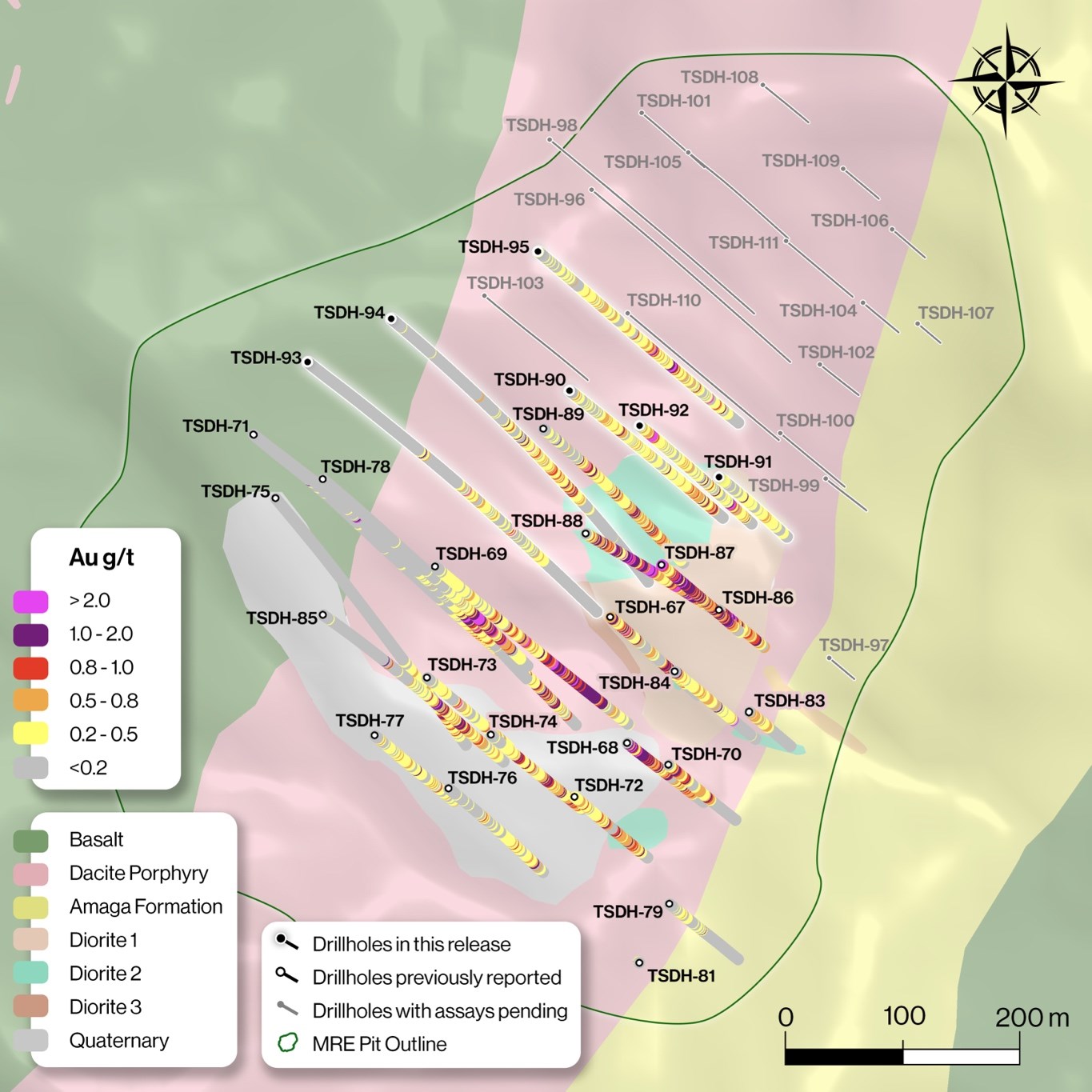
Figure 1: Tesorito Drillhole Collar and Section Locations Plan Map
To view an enhanced version of this graphic, please visit:
https://images.newsfilecorp.com/files/11720/315377_80398cda148cea50_001full.jpg
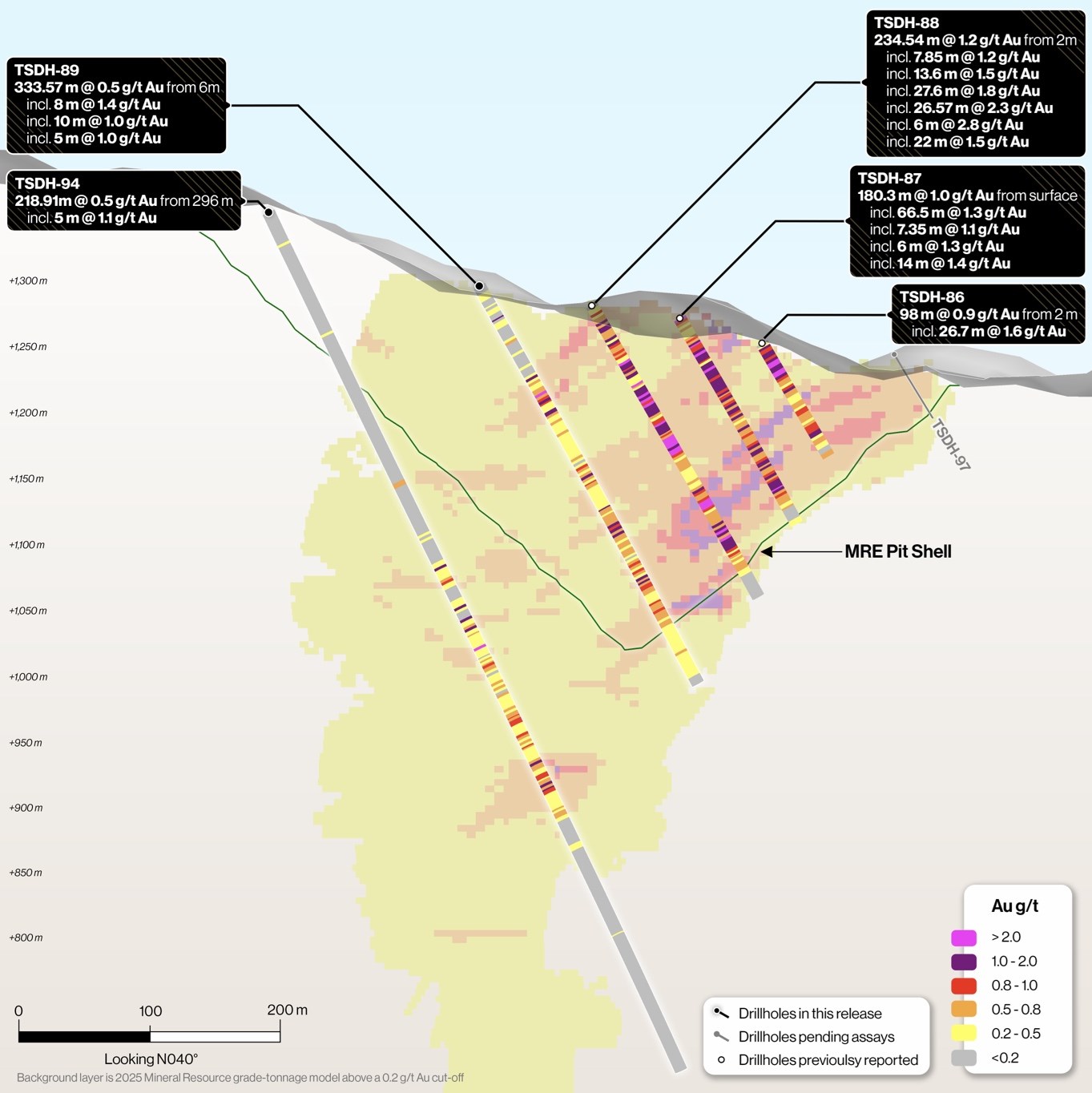
Figure 2: Tesorito Cross Section A-A' (looking N040°)
To view an enhanced version of this graphic, please visit:
https://images.newsfilecorp.com/files/11720/315377_80398cda148cea50_002full.jpg
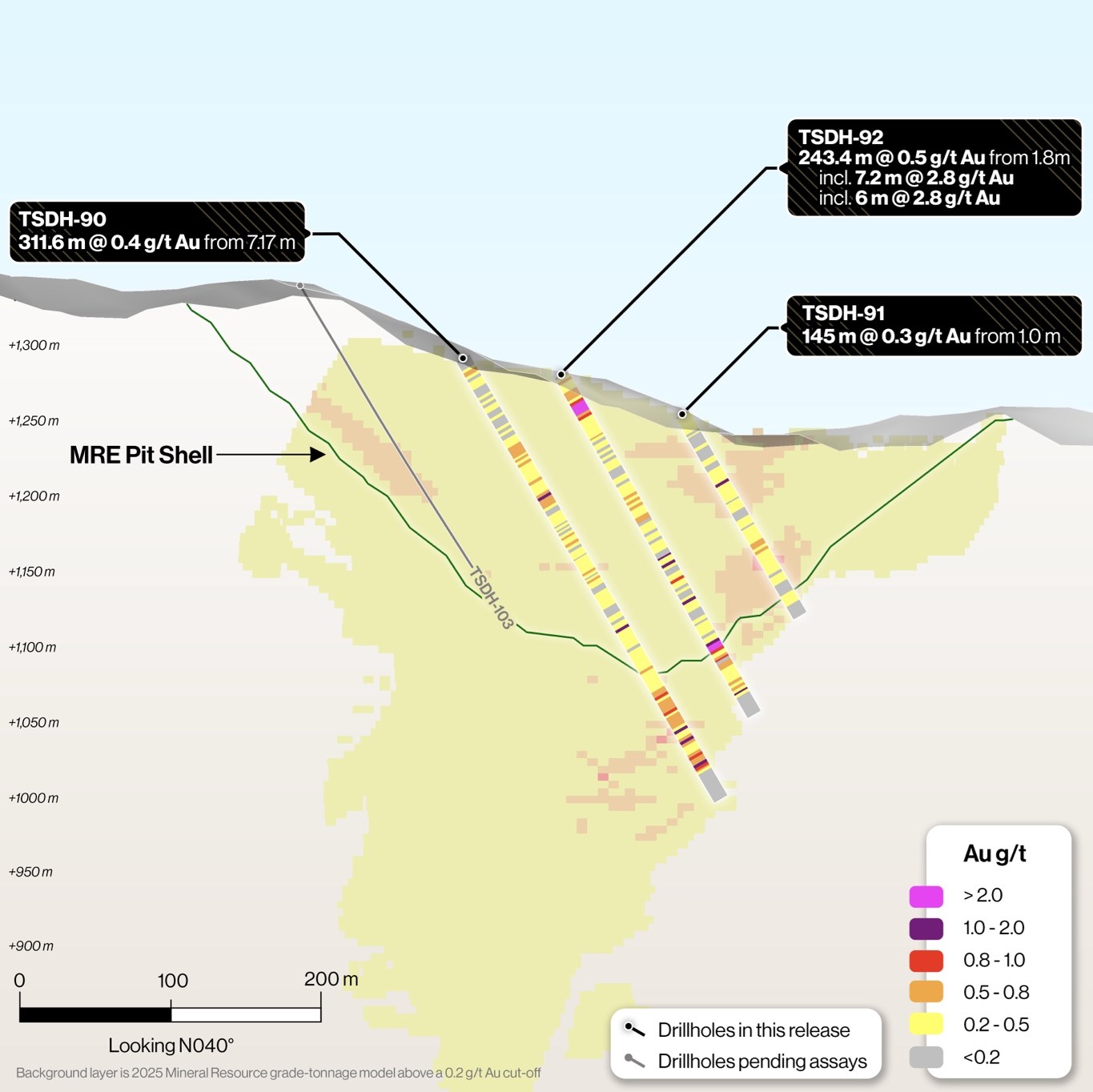
Figure 3: Tesorito Cross Section B-B' (looking N040°)
To view an enhanced version of this graphic, please visit:
https://images.newsfilecorp.com/files/11720/315377_80398cda148cea50_003full.jpg
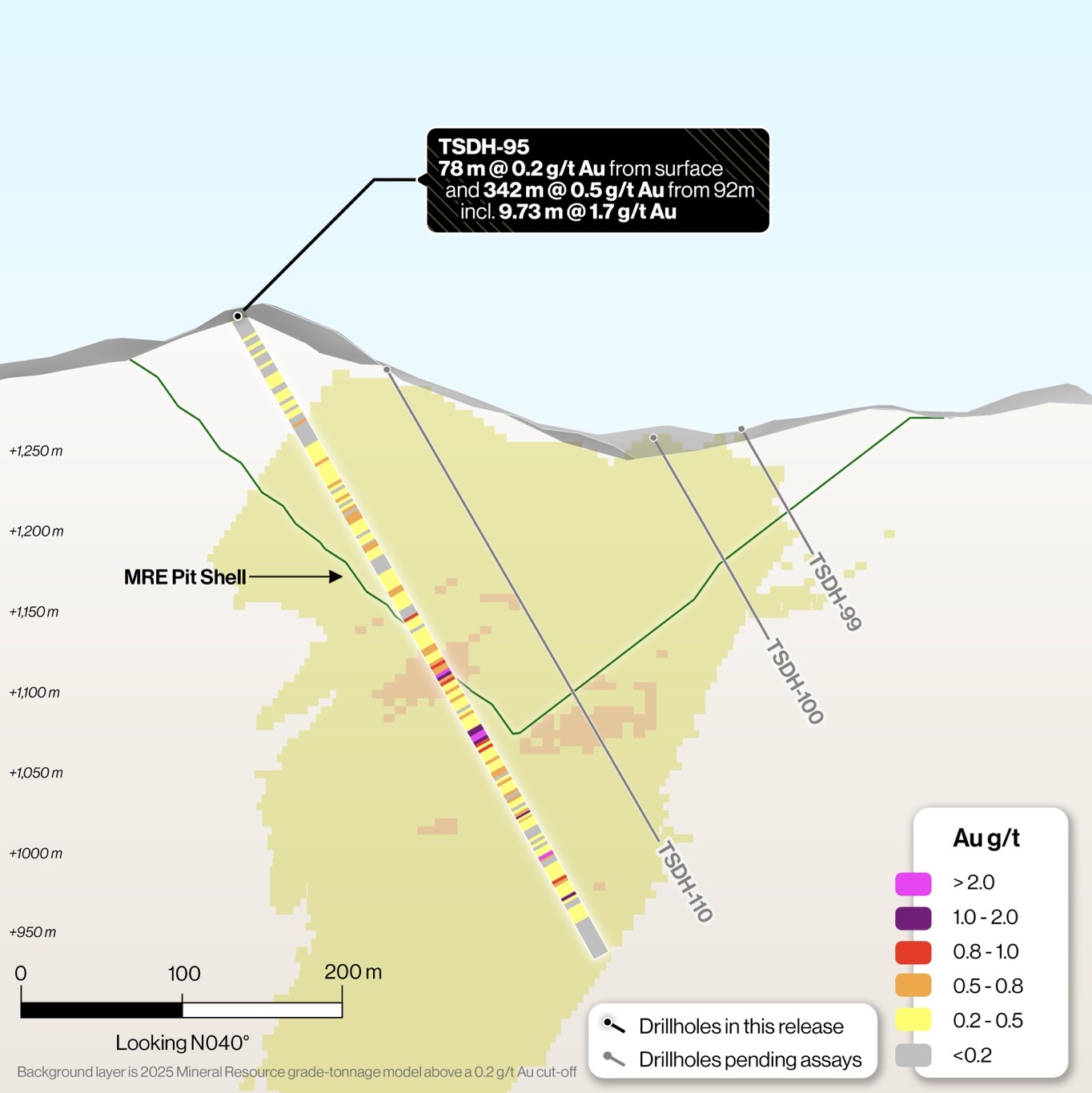
Figure 4: Tesorito Cross Section C-C' (looking N040°)
To view an enhanced version of this graphic, please visit:
https://images.newsfilecorp.com/files/11720/315377_80398cda148cea50_004full.jpg
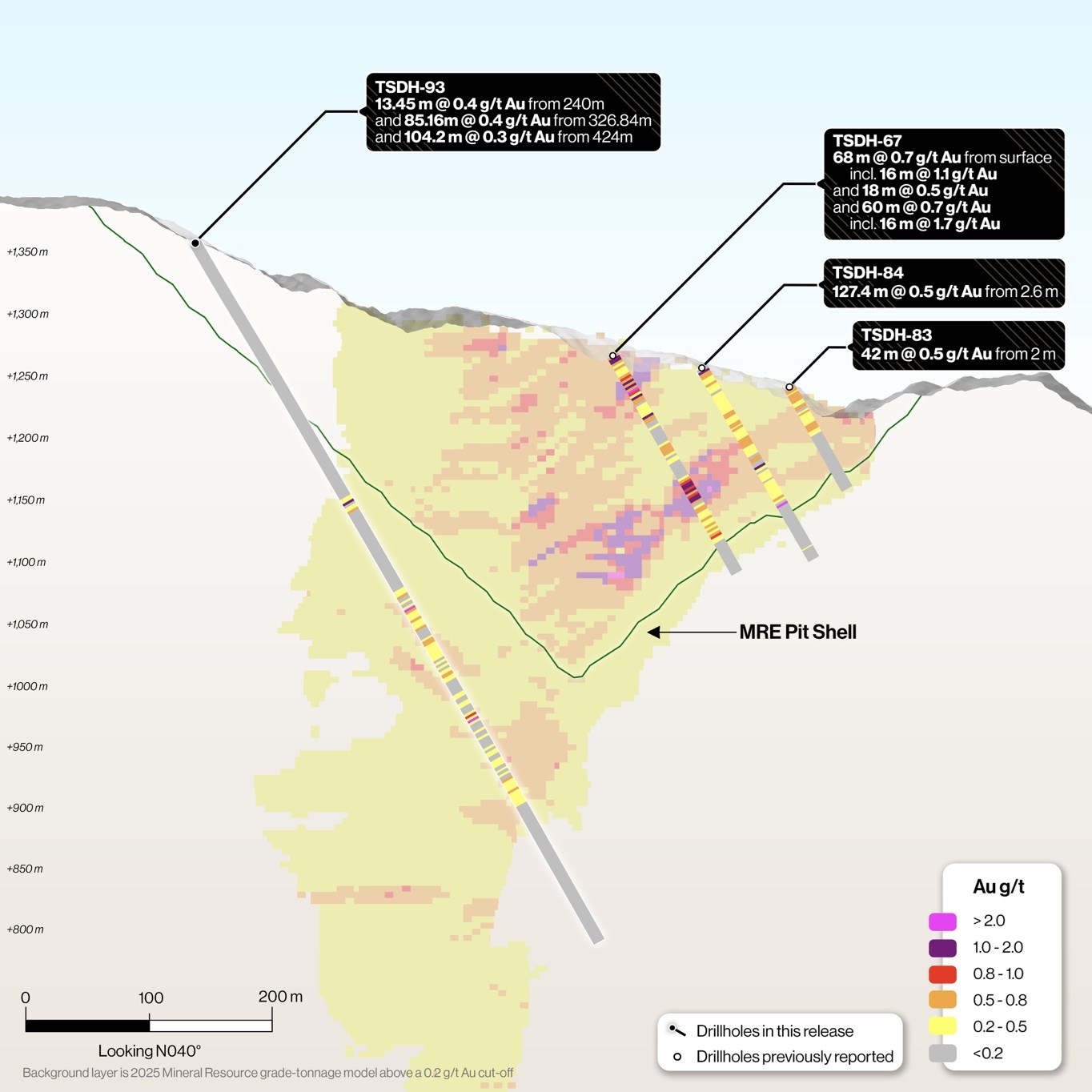
Figure 5: Tesorito Cross Section D-D' (looking N040°)
To view an enhanced version of this graphic, please visit:
https://images.newsfilecorp.com/files/11720/315377_80398cda148cea50_005full.jpg
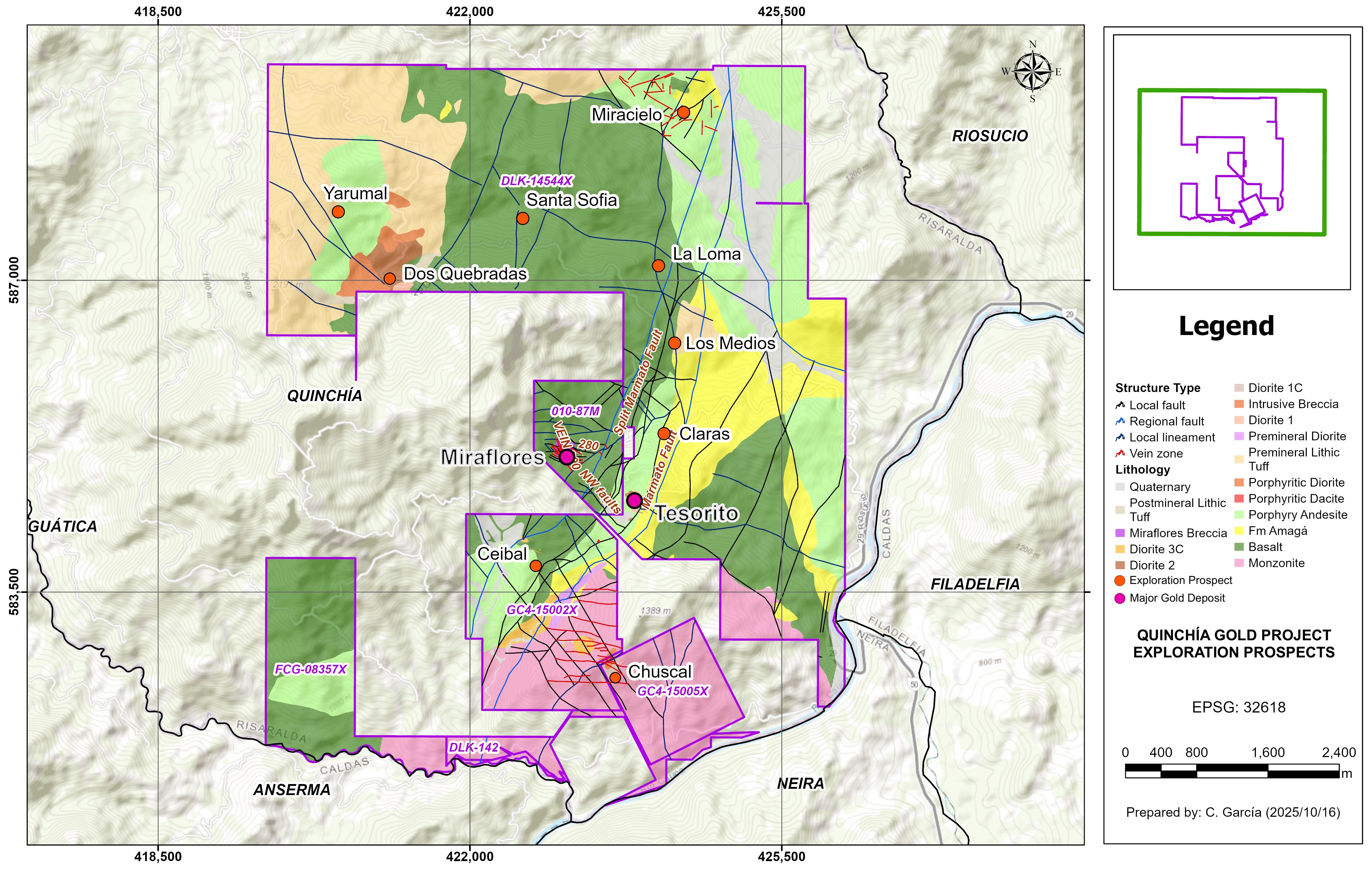
Figure 6: Quinchía Gold Project Deposits and Prospects
To view an enhanced version of this graphic, please visit:
https://images.newsfilecorp.com/files/11720/315377_80398cda148cea50_006full.jpg
1 See news release titled 'Tiger Gold Intersects Potential Feeder Zone Beneath Tesorito Mineral Resource with 16.9 m @ 2.3 g/t Au and 0.25% Cu, including 6 m @ 4.1 g/t Au and 0.43% Cu, within 89.96 m @ 0.9 g/t Au' dated February 24, 2026.

To view the source version of this press release, please visit https://www.newsfilecorp.com/release/315377
Source: Tiger Gold Corp.