
Toronto, Ontario--(Newsfile Corp. - June 23, 2026) - Meryllion Resources Corporation (CSE: MYR) ("Meryllion" or the "Company") is pleased to announce promising assay results from its initial shallow scout drilling program (Figure 1) at its northeastern Tasmanian ionic adsorption clay ("IAC") hosted rare earths ("REE") project.
Russell's Plains (Launceston) scout drilling has delivered encouraging results and confirms that the rare earth system the company is targeting exists within the project area. Russell's Plain drill target sits along strike of the Portrush IAC hosted REE project of the Abx Group (Figure 2).
Drilling highlights include -
- Drill interval with maximum grade up to 879 ppm TREO. This is around the typical head grade of Australian ionic REE clay deposits
- Five of the twelve holes contain Rare Earth assays above the cut-off grade (> 350 ppm TREO-CeO2 ppm) for resources from the nearby Deep Leads ionic clay REE Deposit
- In majority of cases, the shallow nature of this drilling program (often <5m depth) only pierced the top of the potential mineralised system, with the bottom of hole ending in mineralisation
- Scandium mineralisation also identified in several drill holes, with grades up to 164 ppm Sc2O3
- Scandium is a high value (US$1200-$3800 per Kg for scandium oxide) critical element used in aluminium alloy technologies and solid oxide fuel cells (SOFCs).
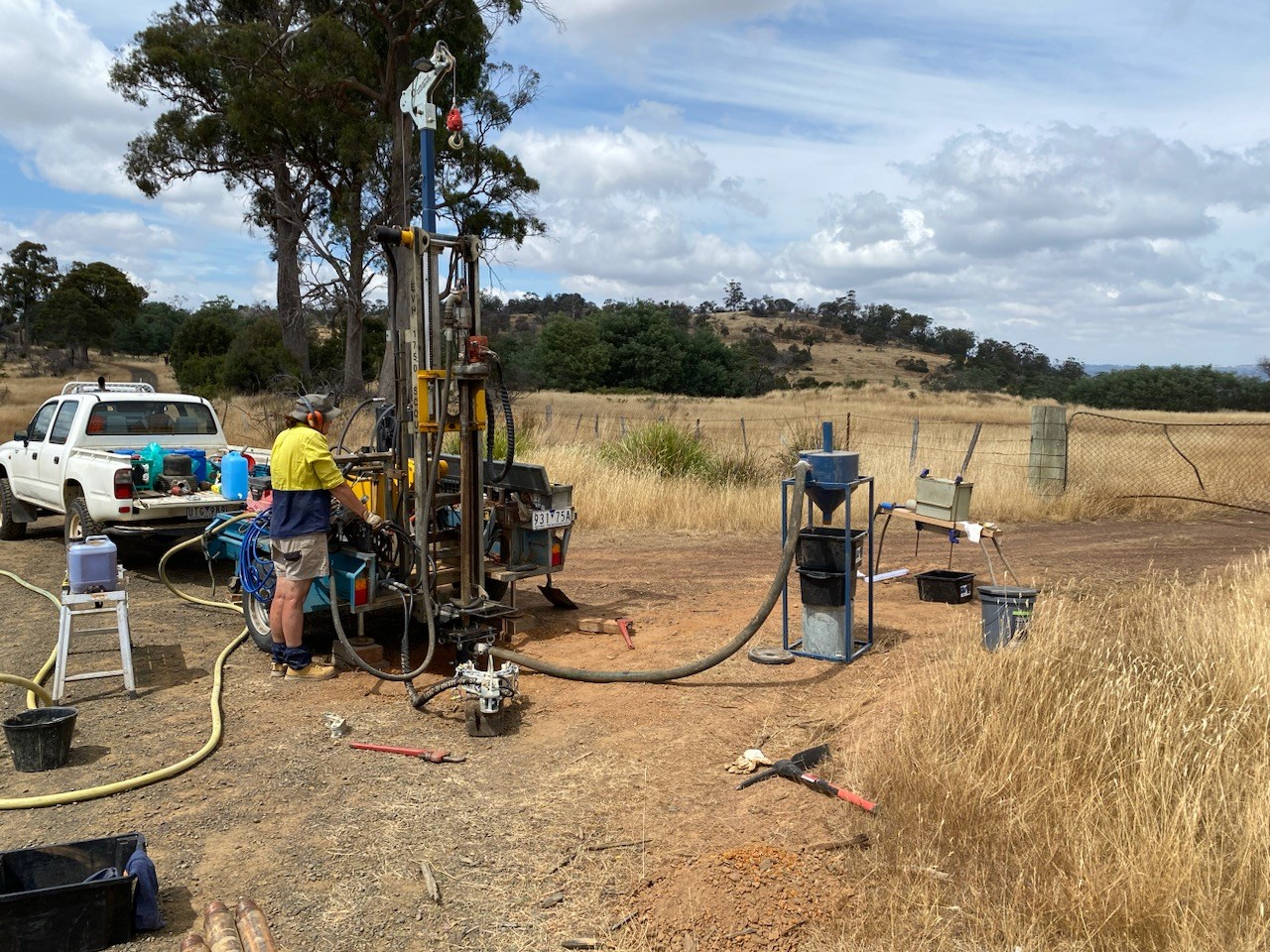
Figure 1: Trailer-mounted drilling rig in use at Russell's Plains.
To view an enhanced version of this graphic, please visit:
https://images.newsfilecorp.com/files/5495/302448_f08ab880f492a879_001full.jpg
Meryllion CEO, Richard Revelins, commented: "We are highly encouraged that we were able to demonstrate that our geological theories have been supported by the identification of a potentially large, mineralised target. Being the first drilling program to be undertaken and completed on our leases, we were encouraged leading up to the program by the previous results reported by our immediate neighbours, ABx Group. ABX have already established a JORC compliant resource of 89mt @ 844 ppm TREO (refer ABX announcement dated 5 May 2025). Recent column leach results reported 76% extraction of dysprosium (Dy) and 79% extraction of terbium Tb). Dy and Tb are two of the most valuable rare earth elements and are not typically found to any significant degree in hard rock hosted REE projects. ABX has also demonstrated that the mineralisation is suited to low-cost heap leach processing (refer ABX announcement 18 December 2025).
"It was also encouraging that scandium mineralisation has been observed in drilling for the first time in the area and will be further targeted in the coming drill programs. Scandium is a high value critical mineral primarily used in the aluminium alloy industry. Australia is developing a scandium industry, with the standout example of Robert Friedland backed Sunshine Energy Metals having a market cap of > Aus $2.5 billion from its development of the Syerston Project in NSW."
Drilling Results
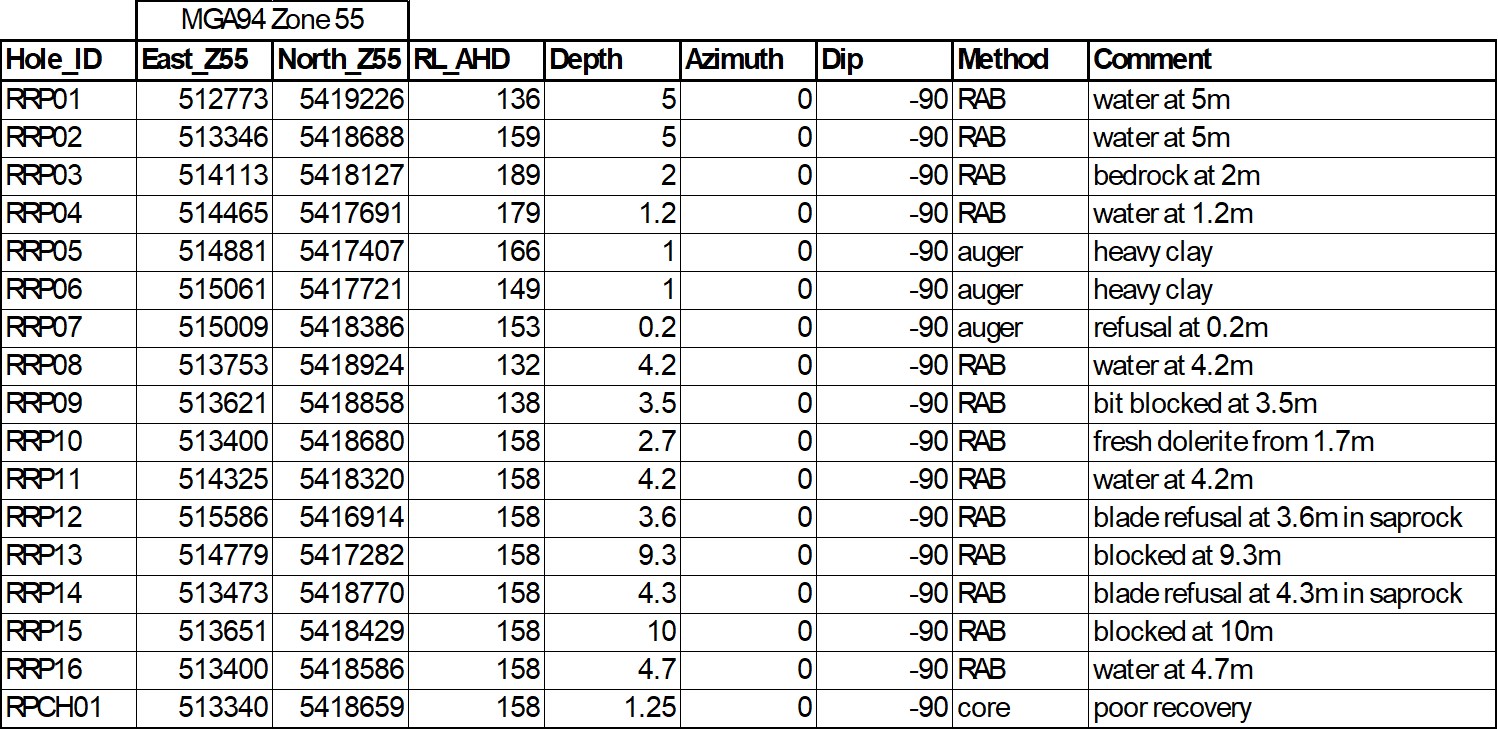
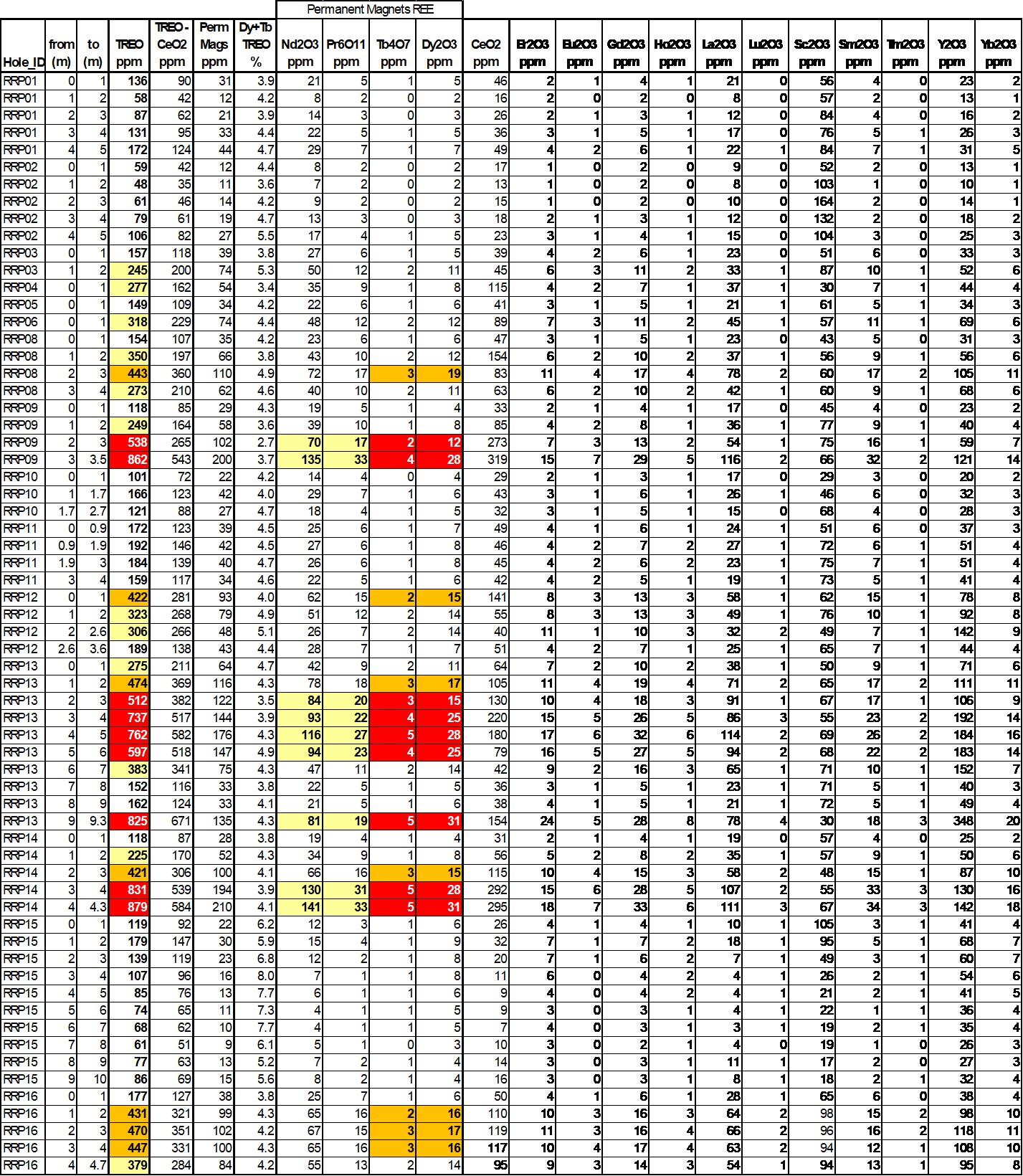
The drill hole collar details and a full list of assay results are presented in Tables 2 and 3. The strongest REE results came from holes RRP09, RRP13, and RRP14, which returned the highest rare earth values and demonstrate that the mineralised system is active across the prospect area at Russel's Plain (see Figures 2 to 5). Five of the twelve drillholes demonstrated grades above 350ppm TREO-CeO2, which would fall within the cutoff of all the IAC Rare Earth JORC resources elsewhere in Australia (Table 1). Given the shallowness of the depths the drilling finished, potentially only the top of the mineralised system is being intersected.
This included -
- 1.3m @ 840 ppm TREO from 3m, with end of hole in mineralisation (Drillhole RRP014)
- 4m @ 625 ppm TREO from 2m and 0.3m @ 835 ppm TREO from 9m with end of hole in mineralisation (Drillhole RRP013)
- 0.5m @ 862 ppm TREO from 3m, with end of hole in mineralisation (Drillhole RRP009)
These head grades are consistent with other known ionic REE clay deposits in Australia.
Table 1: Comparison of Australian ionic adsorption clay-hosted rare earth projects, showing JORC Total Resource tonnages, grade and resource grade cut offs.
| Deposit | Company | Head Grade (TREO) | Tonnage Mt | Cut off |
| Deep Leeds (Tas)1 | Abx | 811 ppm | 89 | 350 ppm (TREO-CeO2) |
| Koppamurra (SA)2 | Australian Rare Earths | 748 ppm | 236 | 324 ppm (TREO-CeO2) |
| Narraburra (NSW)3 | Godolphin Resources | 738 ppm | 95 | 300 ppm (TREO-CeO2) |
| Kennedy (QLD)4 | DevEx Resources | 1000 ppm | 150 | 325 ppm (TREO-CeO2) |
Scandium
Scandium mineralisation has also been identified from this scout drilling, with maximum grade of 164 ppm Sc2O3. The best three drill holes showed intersections of -
- 5m @ 133 ppm Sc2O3 from surface, with end of hole in mineralisation (Drillhole RRP002)
- 2m @ 100 ppm Sc2O3 from surface (Drillhole RRP015)
- 4m @ 96 ppm Sc2O3 from 1m, with end of hole in mineralisation (Drillhole RRP016)
These grade as similar to other clay-hosted Scandium + REE projects currently being evaluated in Australia (e.g. Rocky Gully Project; Salazar Project).
Scandium is considered a Rare Earth and is mainly used in high technology aluminium alloys in the aviation, military, aerospace, semiconductor and energy technology sectors. The USGS quote a price range between $1200 to $3,800 per kg for scandium oxide in recent years5. China recently put export controls on the commodity, coinciding with recent tariff retaliation to the US.
Next Phase of Work
Meryllion will be following up the initial reconnaissance program with additional drilling, targeting what has been identified as likely to host higher-grade mineralisation at Russel's Plain, as well as the untested Brushy Lagoon and Ready March target areas, which adjoin the Deep Lead and Windbreak Resources of the ABx Group. Work is underway to source a new drill rig for deeper ground penetration, for the next program.
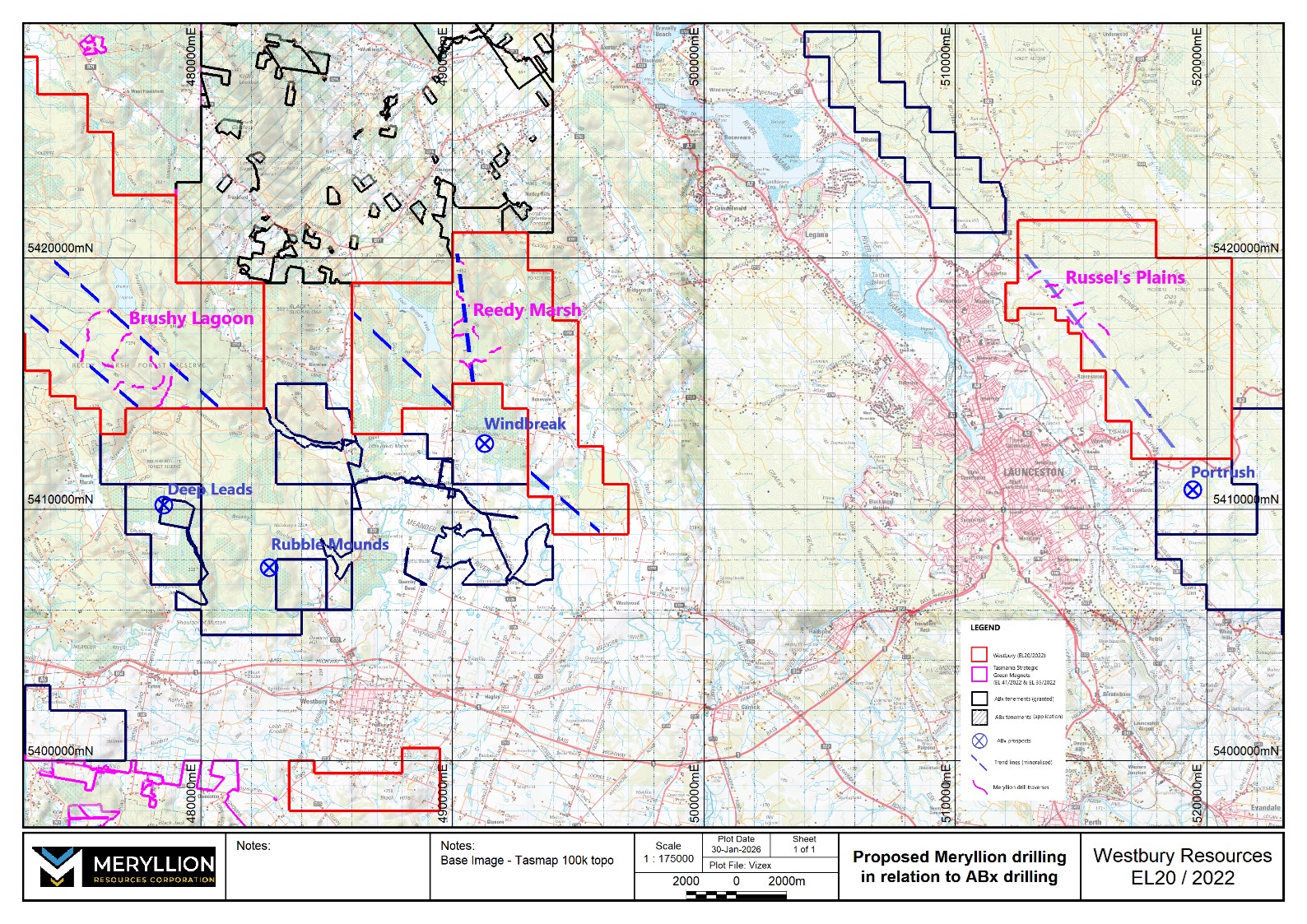
Figure 2: Plan of tenement area showing the Russel's Plain drilling area, future targets at Brushy Lagoon and Reedy Marsh, and the project areas of ABx Group (e.g. Deep Leads, Rubble Mound, Windbreak and Portrush Prospects).
To view an enhanced version of this graphic, please visit:
https://images.newsfilecorp.com/files/5495/302448_f08ab880f492a879_002full.jpg
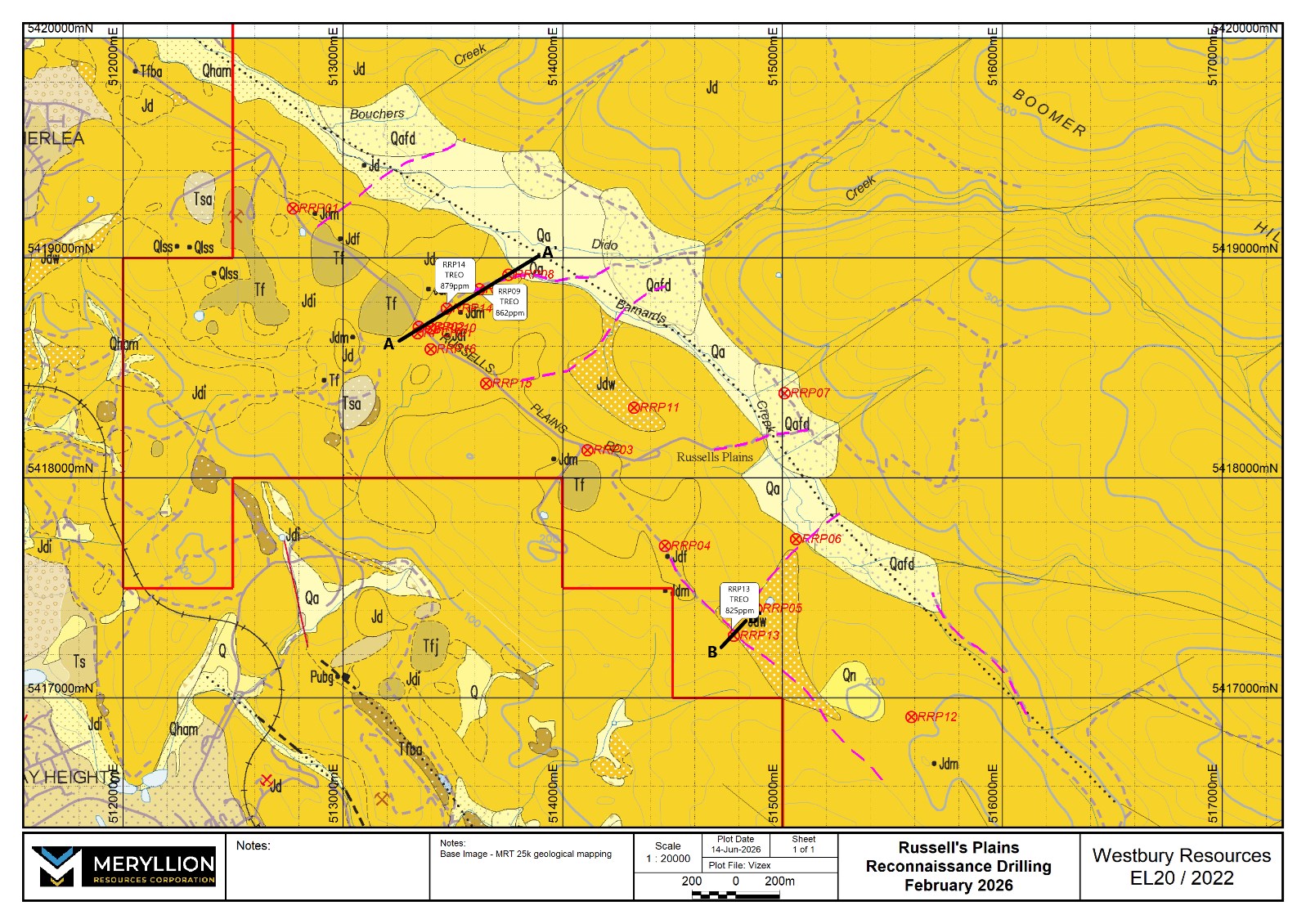
Figure 3: Geological map of Russell's Plain drilling area, with section locations (see Figures 4 and 5).
To view an enhanced version of this graphic, please visit:
https://images.newsfilecorp.com/files/5495/302448_f08ab880f492a879_003full.jpg
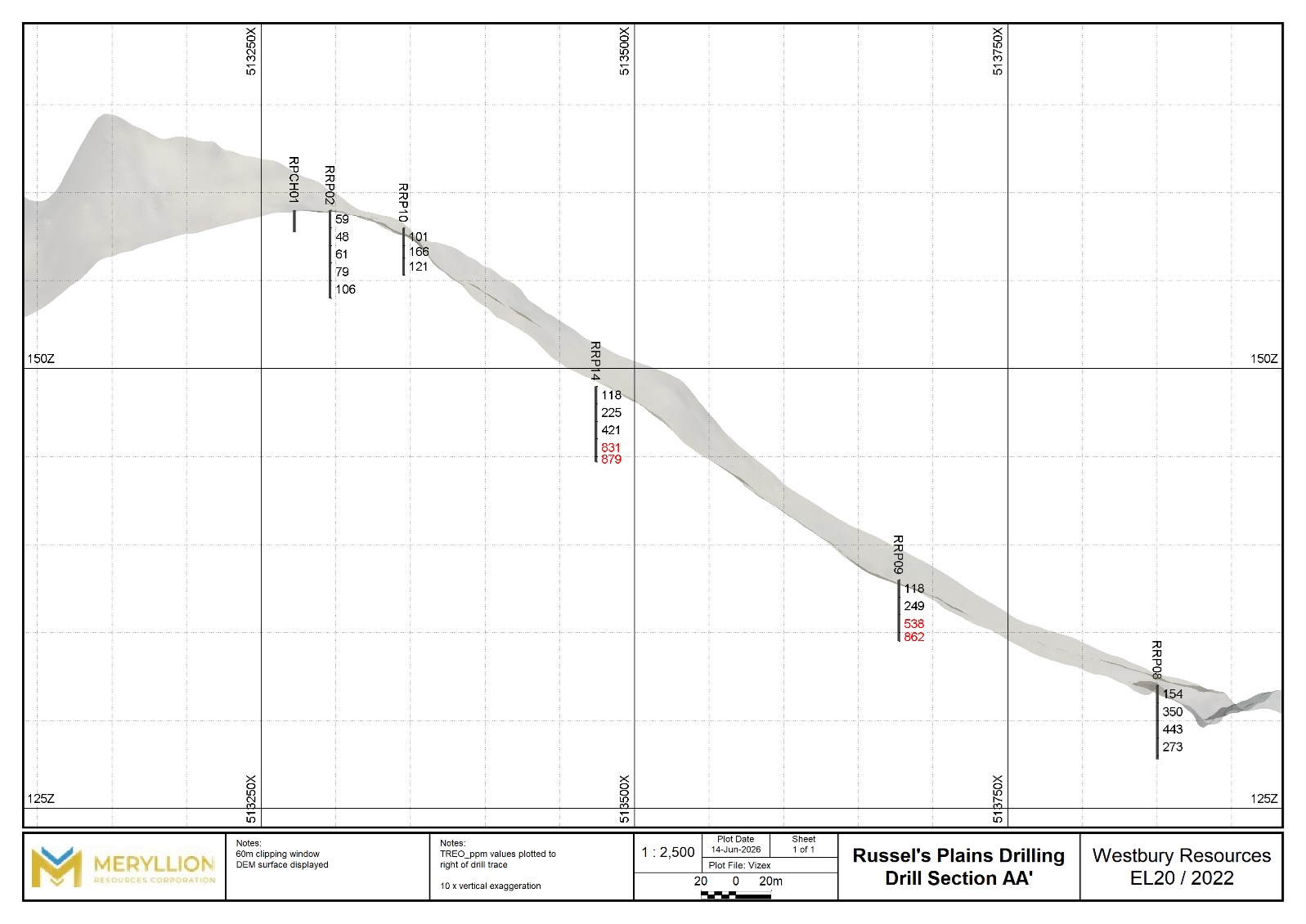
Figure 4: Cross-section AA' showing TREO results (ppm).
To view an enhanced version of this graphic, please visit:
https://images.newsfilecorp.com/files/5495/302448_f08ab880f492a879_004full.jpg
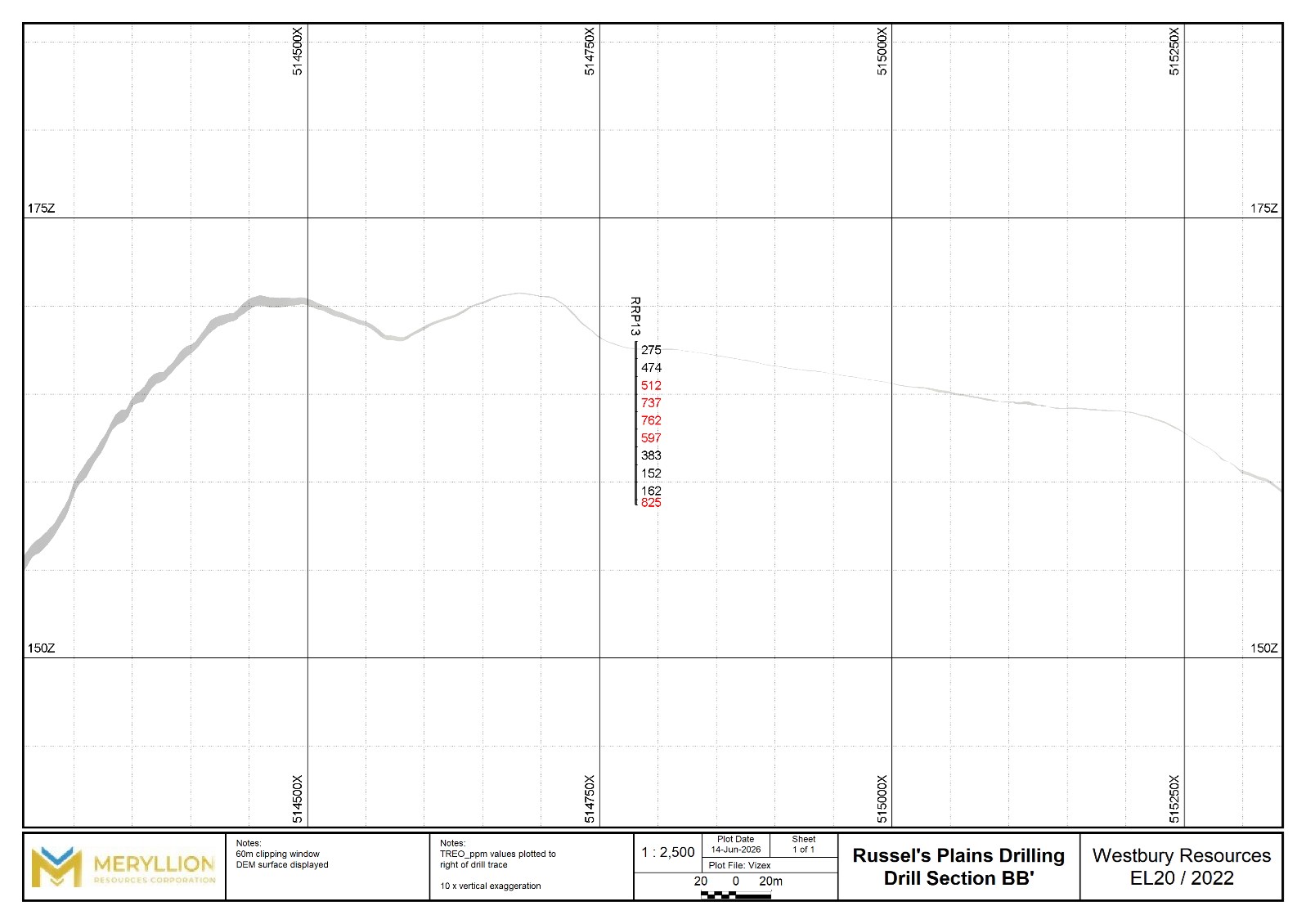
Figure 5: Cross-section BB' showing TREO results (ppm).
To view an enhanced version of this graphic, please visit:
https://images.newsfilecorp.com/files/5495/302448_f08ab880f492a879_005full.jpg
Table 2: List of drill-hole locations*.
To view an enhanced version of this graphic, please visit:
https://images.newsfilecorp.com/files/5495/302448_f08ab880f492a879_006full.jpg
*Hole location co-ordinate system GDA2020 MGA zone 56, and measured with portable GPS (+/- 5m).
Table 3: Table of assay results from drilling at Russell's Plain.
To view an enhanced version of this graphic, please visit:
https://images.newsfilecorp.com/files/5495/302448_f08ab880f492a879_007full.jpg
About the Tasmanian Rare Earths Project
The Project is hosted in highly sought rare earth-rich ionic adsorption clay hosted deposits comprising Jurassic Dolerites and Basalts and provides significant upside potential for economic rare earth magnet metals. Globally, most rare earths are sourced from hard-rock mines. These typically require large, costly processing plants and a significant lead time to reach production. A less common source of rare earths is ionic adsorption clay (IAC) deposits. Historically, these have only been mined in southern China. A major advantage of IAC deposits is that the rare earths can be extracted from the clay via a simple leaching process. Secondly, they often exist at shallow depth. These advantages enable a project to be developed rapidly and at lower cost. Furthermore, IAC deposits are relatively richer in the rare earths needed for permanent magnets, and they typically contain low concentrations of radioactive elements such as uranium and thorium.
Qualified Person & National Instrument 43-101 Disclosure
Dr. Gavin Engand (BSc, PhD), member of Australian Institute and Geosciences is a consultant to Meryllion and Technical Advisor. Dr. England is a "qualified person" for the purposes of National Instrument 43-101 - Standards of Disclosure for Mineral Projects, and he has reviewed and approved the scientific and technical disclosure contained in this press release.
Information on historical and recent prospecting, mining, and exploration activities at the Tasmanian REE group of properties, including the Russell's Plains property, contained within this news release has been reviewed and verified by the Qualified Person. In the opinion of the Qualified Person, sufficient verification of historical and new data has been undertaken to provide sufficient confidence that this new drilling program was performed to adequate industry standards and the data reported is fit for substantiating the prospectivity of the project in general, supporting the geological model/s proposed, planning exploration programs, and identifying targets for further investigation.
This news release contains information about adjacent properties or other projects within Australia, on which the Company does not have an interest. The QP has been unable to verify the information on these adjacent properties, and the information is not necessarily indicative to the mineralization on the properties that is the subject of this news release.
Quality Assurance / Quality Control on Assay Results
The Russell's Plain drilling collected drill chip samples of soil and clay. Drilling was open-hole RAB using combination of blade bit and DTH hammer; 90mm diameter vertical hole. Sample collection via diverter and cyclone; sample riffle split (15%) for lab sample; remainder used to backfill hole. A visual assessment of recovery was noted on the full geological drill logs. No bias was observed from sample quality and grade. Logging was qualitative and photographs of chip trays holding the 1m samples were taken. Geological logging was done by a qualified geologist.
Each sample represented ~1m (or less) interval and had ~0.75kg dispatched to the laboratory. Assay method was Lithium Borate Fusion, ICP-MS. Analysis was performed on a 250g crushed and pulverised sub-sample, split from the 0.75 kg homogenised sample. 85% passed 75 microns. Analyses were performed at ALS Burnie Tasmania, Australia and were delivered from site to the lab by the consultant geologist. No field blanks, standards or duplicates were applied, given it being early-stage exploration; internal laboratory QA/QC only (lab QA/QC within range).
Hand-held GPS (+-5m) and public domain DEM for elevation (+-2m) were applied and the coordinates were in GDA94 MGA Zone 55.
Mineralised Interval Calculations
Reported rare earth element significant mineralised intervals in this news release are calculated as down-hole length-weighted intercepts using ~350 ppm TREO-CEO lower cut-off grade and generally carry a maximum internal dilution of 1m. No top-cut grade was applied. For scandium intersection, a down-hole length-weighted intercept using ~90 ppm Sc2O3 lower cut-off grade. True widths of drill hole intercepts are yet to be determined; however, it is estimated that true widths are in the range of 70% to 95% of reported intervals.
Rare Earth Element Calculations
TREO (Total Rare Earth Oxides) values were calculated by the formula: TREO = CeO2 + La2O3 + Nd2O3 + Pr6O11 + Sm2O3 + Gd2O3 + Dy2O3 + Eu2O3 + Er2O3 + Tb4O7 + Ho2O3 + Tm2O3 + Lu2O3 + Yb2O3 + Y2O3.
MREO (Magnet Rare Earth Oxides) values were calculated by the formula: TREO = Nd2O3 + Pr6O11 + Sm2O3 + Gd2O3 + Dy2O3 + Tb4O7 + Ho2O3.
Standard element to oxide conversion factors have been used in the calculation of rare earth oxide values from elemental assay values.
References
1 Abx Group ASX announcement 2 May 2024
2 Australian Rare Earths ASX announcement 30 September 2024
3 Godolphin Resources Ltd ASX announcement 19 April 2023
4 DevEx Resources Ltd ASX announcement 4 July 2024
5 USGS Scandium Fact Sheet 2024. https://pubs.usgs.gov/periodicals/mcs2025/mcs2025-scandium.pdf
About Meryllion Resources Corporation
Meryllion is an exploration stage company listed on the Canadian Securities Exchange. The Company has entered into a lease and option agreement in respect of the Makenzie antimony/gold/silver project located 48kms north northwest of Kinross Mining's Round Mountain Gold Project (+20m ozs Au), Nevada in the Toiyabe Range of central Nevada. Makenzie is one of the largest known untested antimony, gold and silver anomalies in the state of Nevada.
Meryllion also has the rights to acquire up to a 100% interest in the Westbury and Tasmanian Strategic Green Metals ionic adsorption clay (IAC) hosted rare earth elements (REE) projects located in northeast Tasmania, Australia with a total tenement area of approximately 800 kms2. Meryllion's IAC REE projects are situated along strike, and/or adjacent to, discoveries by ABx Group Limited. ABx has reported that Tb (Terbium) and Dy (Dysprosium) concentrations in all of ABx's rare earths resources are the highest of any ionic adsorption clay deposit in Australia and are amongst the highest globally. (refer ABx ASX announcement dated 5 May 2025).
For further information, please contact:
Mr. Richard Revelins
Chief Executive Officer
Meryllion Resources Corporation
rrevelins@peregrinecorporate.com
+1-310-405-4475

To view the source version of this press release, please visit https://www.newsfilecorp.com/release/302448
Source: Meryllion Resources Corporation