
Shanghai, China--(Newsfile Corp. - May 11, 2026) - Frost & Sullivan has released the "2026 Global Allergen Specific Immunotherapy Development Blue Book", a comprehensive analysis of the evolution and strategic trajectory of the global allergen-specific immunotherapy (AIT) sector. Rooted in an in-depth examination of allergic disease epidemiology, allergen types and sensitization mechanisms, AIT technology evolution, administration route iterations, unmet clinical needs, and future development trends, the report elucidates how AIT-as the only etiological treatment capable of altering the natural history of allergic diseases-is transitioning from "empirical treatment" to "precision immunomodulation." (To read the Blue Book, go here: https://hub.frost.com/global-allergen-specific-immunotherapy-ait-industry-development/)
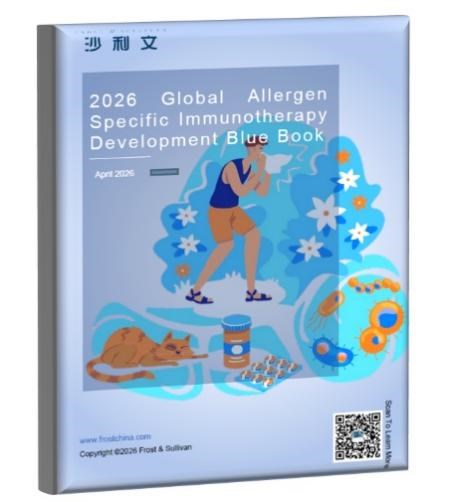
The "2026 Global Allergen Specific Immunotherapy Development Blue Book" highlights the following:
- The Core Position of AIT in Modern Medicine: How AIT, as the only disease-modifying treatment for allergic diseases, induces immune tolerance and prevents disease progression.
- Global Epidemiology of Allergic Diseases: Prevalence trends, regional variations, and major allergen spectra worldwide, with a special focus on China's rising disease burden.
- Four Generations of AIT Technology Evolution: From first-generation natural extracts to fourth-generation recombinant allergens, tracing the paradigm shift from "natural extracts" to "precision molecules."
- Diversification of Administration Routes: In-depth analysis of SCIT, SLIT, IDIT, and emerging delivery technologies such as microneedles and oral dissolving films.
- Unmet Clinical Needs and Market Drivers: Examination of global challenges including poor adherence and regulatory bottlenecks, alongside China-specific gaps such as product generation gaps and low awareness.
- Future Trends in AIT: Outlook on efficacy, safety, adherence, and accessibility, with next-generation products shortening treatment duration and expanding allergen coverage.
- Introduction to Selected AIT R&D Companies: Showcasing leading companies.
AIT Holds a Unique Position as the Only Etiological Treatment for Allergic Diseases
The World Health Organization recognizes AIT as the only etiological treatment that can alter the natural history of allergic diseases. AIT induces immune tolerance through long-term, repeated administration of specific allergens. Standardized AIT not only alleviates clinical symptoms and reduces reliance on symptomatic medications but also effectively prevents the progression from allergic rhinitis to asthma and lowers the risk of new allergen sensitizations, offering patients the possibility of long-term remission or even clinical cure.
Four Generations of AIT Technology: From Crude Extracts to Precision Molecules
AIT technology has evolved through four generations. First-generation natural extracts have over a century of clinical use, offering broad allergen coverage but facing challenges of low purity and high batch-to-batch variability. Second-generation allergoids use chemical modification to reduce IgE-mediated allergenicity while preserving T-cell epitopes. Third-generation molecular allergens achieve over 90% purity through chromatographic purification, enabling precise targeting and reducing systemic allergy risk. Fourth-generation recombinant allergens utilize genetic engineering to modify IgE-binding epitopes, reducing affinity for pre-existing IgE while fully preserving T-cell reactive epitopes, and are designed to decouple immunomodulation from allergic reactivity.
Global Unmet Needs and China's Strategic Opportunity
Globally, AIT faces challenges including poor adherence due to lengthy treatment duration, batch-to-batch variability of natural extracts lacking international quality standards, and regulatory bottlenecks. In China, AIT clinical practice remains dominated by first-generation natural extracts, with unresolved standardization deficits and batch variability. Fewer than 10% of China's over 100 million allergy patients are aware of AIT. Approved AIT products in China concentrate on house dust mites and mugwort, while other common aeroallergens such as fungi and pet dander lack commercialized therapeutic options.
Market Drivers and Future Outlook
The AIT market is driven by five core forces: a large and growing patient population, AIT's unique etiological value, rising awareness among physicians and patients, capital influx and industry collaboration, and next-generation technological breakthroughs. Looking forward, AIT will continue to advance in efficacy, safety, adherence, and accessibility.
About Frost & Sullivan
Frost & Sullivan, the Growth Partnership Company, works in collaboration with clients to leverage visionary innovation that addresses the global challenges and related growth opportunities that will make or break today's market participants. For more than 60 years, Frost & Sullivan has been developing growth strategies for the global 1000, emerging businesses, the public sector and the investment community.
Media Contact
Contact: Qian Li
Company Name: Frost & Sullivan
Website: http://www.frostchina.com
Email: qian.li@frostchina.com; hcknowledgecenter@frostchina.com
To view the source version of this press release, please visit https://www.newsfilecorp.com/release/296871
Source: Hmedium