
HIGHLIGHTS:
- 41m at 14.5 g/t Au from 260m in 26CN079
- 75m at 2.3 g/t Au from 253m in 26CN064
- 39m at 3.6 g/t Au from 186m, including 8m at 15.6 g/t Au from 192m, in 26CN074
- 62m at 2.5 g/t Au from 179m in 26CN073 within a broader 102m at 1.7 g/t Au
- Previously reported Benz results: 25m at 16.53 g/t Au in 26CN029, 95m at 4.3 g/t Au in 25GLR232 and 47m at 5.1 g/t Au in 25GLR237, are now interpreted to form part of the NE-plunging high-grade hinge systems at Icon.
- Systematic drilling within the established mineralised footprint is proving to be an ounce growth driver comparable to extensional drilling along strike and at depth. As drilling tightens, new NE-plunging high-grade hinge zones keep emerging, unlocking substantial new ounce potential from within the existing footprint.
- High-grade gold at Icon is increasingly associated with NE-plunging fold hinge zones, closely mirroring the structural architecture observed at the Hurricane camp.
- Benz's baseline 50m by 25m drilling pattern is generating substantial additional mineralisation potential within the existing Icon footprint.
- The next phase of drilling will focus on completing the planned baseline drilling pattern across the Hurricane, Icon and Thunderbolt camps to ensure high-grade hinge zones are fully resolved and captured in the geological model prior to maiden resource in H1 27.
Vancouver, British Columbia--(Newsfile Corp. - August 2, 2026) - Benz Mining Corp. (ASX: BNZ) (TSXV: BZ) ("Benz" or the "Company") is pleased to report further exceptional gold results from systematic drilling at the Icon deposit, part of the Company's Glenburgh Gold Project in Western Australia.
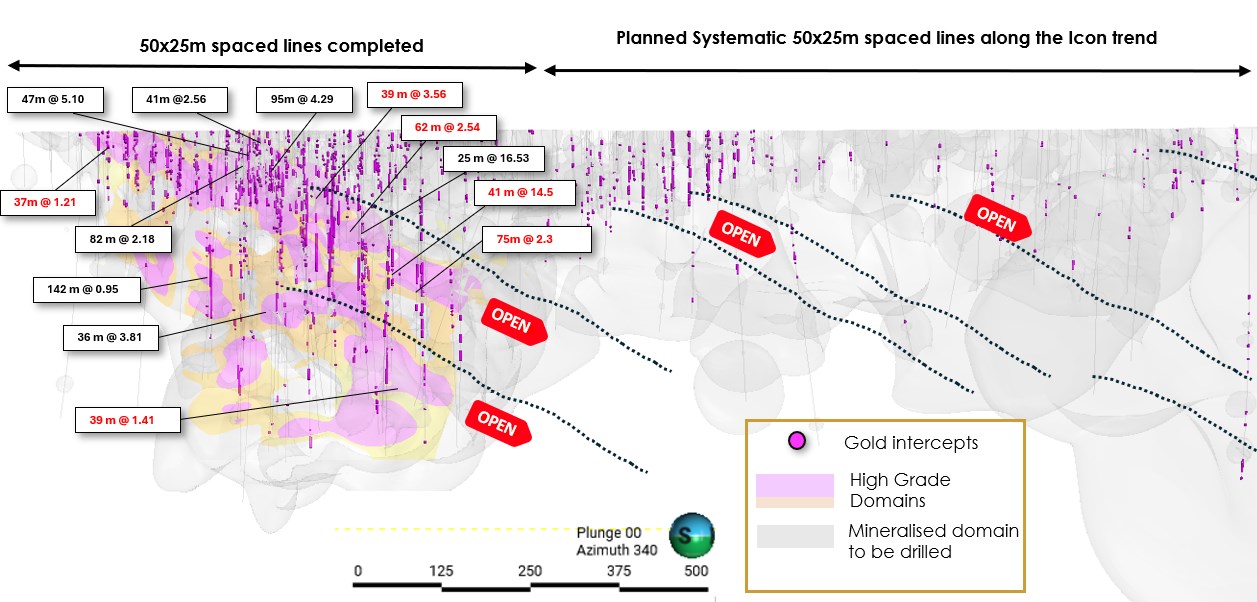
Figure 1: Icon long-section looking north showing NE-plunging high-grade hinge zones with selected drill intercepts (g/t Au). See red call out text for intercepts reported in this release.
To view an enhanced version of this graphic, please visit:
https://images.newsfilecorp.com/files/1818/307644_40b4c308b431d85b_002full.jpg
The latest results demonstrate that increasing drill density at Icon is doing considerably more than confirming previously identified mineralisation. It is providing the geological resolution required to identify additional fold hinges and high-grade gold positions that could not be resolved by earlier, wider-spaced drilling.
In addition, the planned drill lines also extend beyond the currently interpreted mineralised trends, providing significant potential for further discoveries and continued growth across Glenburgh.
As Benz progressively drills Icon on its baseline 50m by 25m pattern, additional NE-plunging hinge zones are emerging as important controls on high-grade gold mineralisation and potential drivers of future ounce growth. Earlier explorers missed these high-grade hinge zones in broader spaced shallow drilling which Benz first identified in early 2026 with intercepts such as:
- 95m at 4.3g/t Au from 13m in 25GLR232
- 29m at 8.8g/t Au from 84m in 25GLR190
- 47m at 5.1 g/t Au from 55m in 25GLR237
- 82m at 2.2g/t Au from 32m in 25GLR196
See ASX release dated 28 January 2026 for further details.
The same structural architecture is evident at the Hurricane camp, strengthening the Company's confidence that NE-plunging fold hinges represent an important and repeatable control on the distribution of high-grade gold across Glenburgh.
In a tightly folded mineral system such as Glenburgh, increasing geological resolution can materially change the understanding of the mineralised architecture. What may initially appear to be a broad mineralised envelope can resolve into multiple fold hinges, limbs and high-grade shoots as drilling advances.
Systematic drilling at Icon is therefore not simply increasing confidence in known mineralisation. It is revealing additional high-grade positions and generating substantial new mineralisation potential within the existing drilled footprint.
The results released today demonstrate the value of this approach and have the potential to add significantly to future contained ounces within an already exceptionally well-endowed gold system.
Importantly, the Company's baseline drill lines are not restricted to the currently interpreted mineralised trends. The 50m by 25m drilling pattern extends into areas outside the existing interpretation, providing further opportunities to identify previously unrecognised mineralised positions.
The program is therefore delivering on two fronts: revealing additional high-grade gold within the known Icon system while continuing to test substantial upside beyond the currently interpreted mineralised trends.
Management Commentary
Benz Chief Executive Officer, Mark Lynch-Staunton, commented:
"What excites us at Icon is that every new drill line seems to reveal more of the system. As drilling tightens, new NE-plunging high-grade hinge zones keep emerging, unlocking substantial additional ounce potential within the existing footprint.
"We are advancing Glenburgh at a pace that very few gold projects in Australia can currently match. This is one of the country's most aggressive drilling campaigns, and we are maintaining that momentum because systematic drilling is adding value to the project so quickly.
"Our immediate priority is to complete the baseline drilling across Hurricane, Icon and Thunderbolt, where drilling is now underway for the first time. These high-grade hinges can make an enormous contribution to contained ounces, and we want to ensure they are properly resolved and captured in the geological model.
"In parallel, we are advancing permitting and development activities. Glenburgh already benefits from a mature permitting position, giving us a clear and potentially rapid pathway forward as the resource work progresses. Tungsten re-assaying is also underway to assess the potential contribution of another strategically important metal.
"Approximately 80% of our maiden Exploration Target was already drill-constrained. We are not drilling to establish whether the target exists. We are completing the baseline drilling and geological work required to properly resolve the system and support the conversion of this substantial drill-supported inventory into a maiden Mineral Resource.
"The reason we are so confident about Glenburgh's scale is that the geology supports it. We have the craton-margin architecture, clear evidence of a huge magmatic-hydrothermal engine and a highly reactive sedimentary basin capable of trapping and concentrating enormous volumes of gold. These are the ingredients that build giant gold systems.
"The high-grade hinges emerging at Icon and Hurricane are part of something much bigger. This is not a one-deposit or one-camp story. We believe Glenburgh has the scale, architecture and geological engine to keep delivering new gold well beyond what we have defined today, with the potential to become truly world class.
"The Exploration Target was always intended as a starting point, not a limit. We look forward to delivering a maiden Mineral Resource Estimate which, based on the scale of the drill-constrained inventory already defined in the target, has the potential to rank amongst largest maiden gold resources reported on the ASX in recent years.
"The more we drill Glenburgh, the more gold it gives us. We believe this is just the beginning."
Glenburgh Geology: Makings of a Giant Gold System at Glenburgh
Benz has previously outlined the geological characteristics that point to Glenburgh being part of a large magmatic-hydrothermal mineral system. Continued drilling, multi-element geochemistry and geochronology are now refining that interpretation and providing greater clarity on how the different components of the system fit together.
While the precise deposit classification remains secondary, the fundamental geological processes identified by Benz are those associated with the formation of world-class mineral systems.
Through multi-element geochemistry, geochronology and systematic drilling, Benz is looking back through the effects of high-grade metamorphism and progressively reconstructing a vast, approximately 20 km-scale magmatic-hydrothermal alteration cell.
The developing model indicates that this system transported and concentrated gold, tungsten and iron within a volcano-sedimentary basin positioned along the margin of the Yilgarn Craton.
Benz believes Glenburgh contains three fundamental ingredients required to develop a giant gold system:
1. Crustal-scale structural architecture
Glenburgh is positioned along a craton margin where deep-seated breaks in the lithosphere created direct pathways between the mantle and the crust.
These long-lived structures provided the architecture required to focus magmas, heat and mineralising fluids through the Glenburgh system.
2. Magmatic heat, fluids and metals
Mantle-derived magmatic intrusions provided a powerful source of heat and metal-rich hydrothermal fluids.
This heat engine drove the development of a vast hydrothermal alteration cell capable of transporting gold and other metals through the broader Glenburgh system.
3. Geochemically reactive sedimentary basins
The mineralising fluids interacted with highly reactive rocks and basin-derived brines within the volcano-sedimentary sequence.
These reactive sedimentary rocks provided an effective environment for the trapping and concentration of huge volumes of gold.
The combination of crustal-scale structural architecture, a powerful magmatic-hydrothermal heat engine and a highly reactive sedimentary basin provides the geological framework for a potentially exceptional gold system.
Plan Ahead: Completing the Baseline Drill-Out Across Glenburgh
The next phase of drilling will focus on completing Benz's baseline 50m by 25m drilling pattern across all three principal camps at Glenburgh: Hurricane, Icon and Thunderbolt.
The objective is to ensure that the high-grade NE-plunging hinge zones are systematically identified, properly resolved and incorporated into the geological model. These hinge positions can make a significant contribution to contained gold but may not be adequately defined by wider-spaced drilling.
Benz has already observed this effect through closer-spaced drilling within the Icon data cube. As geological resolution increased, additional high-grade mineralisation and structural positions emerged that were not apparent from the earlier drilling pattern, as reported in the Company's announcement dated 28 January 2026.
This experience has reinforced the importance of completing the baseline drilling pattern across each of Glenburgh's major camps before the broader geological and mineralisation models are finalised.
The program is designed to ensure that high-grade hinge zones are not left behind simply because the drilling was too widely spaced to identify or connect them.
At the same time, the 50 m by 25 m drill lines will continue to extend beyond the currently interpreted mineralised trends, providing opportunities to identify additional folds, hinge zones and previously unrecognised mineralisation.
Glenburgh continues to demonstrate a compelling characteristic: the more systematically Benz drills the system, the more gold it defines.
The repeated emergence of high-grade hinge zones within broad mineralised envelopes reinforces Benz's view that Glenburgh is a phenomenally well-endowed gold system with substantial potential for continued ounce growth.
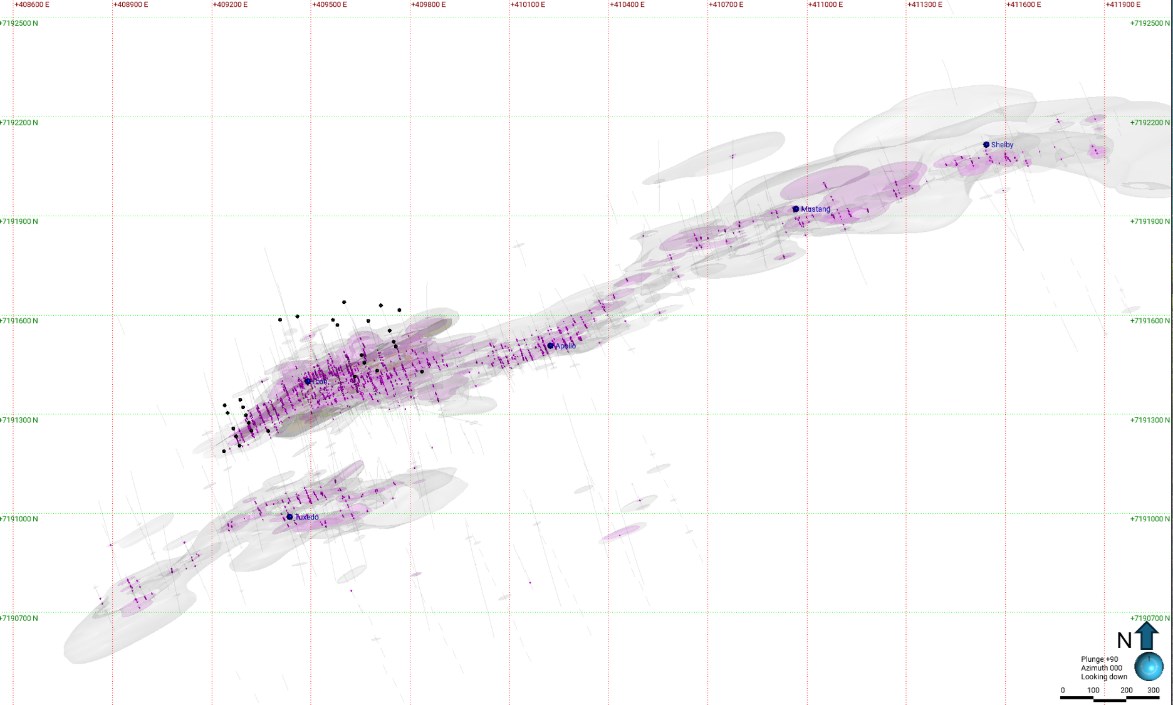
Figure 2: Collar Map of holes included in this release.
To view an enhanced version of this graphic, please visit:
https://images.newsfilecorp.com/files/1818/307644_40b4c308b431d85b_003full.jpg
– END –
This announcement has been approved for release by the Board of Benz Mining Corp.
For more information please contact:
Mark Lynch-Staunton
Chief Executive Officer Benz Mining Corp.
E: mstaunton@benzmining.com
T: +61 8 6143 6702
About Benz Mining Corp.
Benz Mining Corp. (TSXV: BZ) (ASX: BNZ) is a pure-play gold exploration company dual-listed on the TSX Venture Exchange and Australian Securities Exchange. The Company owns the Eastmain Gold Project in Quebec, and the recently acquired Glenburgh and Mt Egerton Gold Projects in Western Australia.
Benz's key point of difference lies in its team's deep geological expertise and the use of advanced geological techniques, particularly in high-metamorphic terrane exploration. The Company aims to rapidly grow its global resource base and solidify its position as a leading gold explorer across two of the world's most prolific gold regions.
To view an enhanced version of this graphic, please visit:
https://images.newsfilecorp.com/files/1818/307644_40b4c308b431d85b_004full.jpg
For more information, please visit: https://benzmining.com/.
Qualified Person's Statement (NI 43-101)
The disclosure of scientific or technical information in this news release is based on, and fairly represents, information compiled by Mr Mark Lynch-Staunton, who is a Qualified Person as defined by NI 43-101 and a Member of Australian Institute of Geoscientists (AIG) (Membership ID: 6918). Mr Lynch-Staunton has reviewed and approved the technical information in this news release. Mr Lynch-Staunton owns securities in Benz Mining Corp.
Forward-Looking Statements
Statements contained in this news release that are not historical facts are "forward-looking information" or "forward looking statements" (collectively Forward-Looking Information) as such term is used in applicable Canadian securities laws. Forward-Looking Information includes, but is not limited to, disclosure regarding the exploration potential of the Glenburgh Gold Project and the anticipated benefits thereof, planned exploration and related activities on the Glenburgh Gold Project. In certain cases, Forward-Looking Information can be identified by the use of words and phrases or variations of such words and phrases or statements such as "anticipates", "complete", "become", "expects", "next steps", "commitments" and "potential", in relation to certain actions, events or results "could", "may", "will", "would", be achieved. In preparing the Forward-Looking Information in this news release, the Company has applied several material assumptions, including, but not limited to, that the accuracy and reliability of the Company's exploration thesis in respect of additional drilling at the Glenburgh Gold Project will be consistent with the Company's expectations based on available information; the Company will be able to raise additional capital as necessary; the current exploration, development, environmental and other objectives concerning the Company's Projects (including Glenburgh and Mt Egerton Gold Projects) can be achieved; and the continuity of the price of gold and other metals, economic and political conditions, and operations.
Forward-looking information is subject to a variety of risks and uncertainties and other factors that could cause plans, estimates and actual results to vary materially from those projected in such forward-looking information. Factors that could cause the forward-looking information in this news release to change or to be inaccurate include, but are not limited to, the early stage nature of the Company's exploration of the Glenburgh Gold Project, the risk that any of the assumptions referred to prove not to be valid or reliable, that occurrences such as those referred to above are realized and result in delays, or cessation in planned work, that the Company's financial condition and development plans change, and delays in regulatory approval, as well as the other risks and uncertainties applicable to the Company as set forth in the Company's continuous disclosure filings filed under the Company's profile at www.sedarplus.ca and www.asx.com.au. Accordingly, readers should not place undue reliance on Forward-Looking Information. The Forward-looking information in this news release is based on plans, expectations, and estimates of management at the date the information is provided and the Company undertakes no obligation to update these forward-looking statements, other than as required by applicable law.
NEITHER THE TSX VENTURE EXCHANGE NOR ITS REGULATION SERVICES PROVIDER (AS THAT TERM IS DEFINED IN THE POLICIES OF THE TSX VENTURE EXCHANGE) ACCEPTS RESPONSIBILITY FOR THE ACCURACY OR ADEQUACY OF THIS RELEASE.
Appendix 1
Table 1: Collar Table. Glenburgh metallurgical drill hole details Coordinates system: GDA94/MGA Zone 50
| Hole ID | Easting | Northing | Elevation | Dip | Azimuth | End Depth |
| 26CN073 | 409580 | 7191570 | 296 | 60 | 163 | 534 |
| 26CN084 | 409237 | 7191188 | 294 | 60 | 160 | 60 |
| 26CN061 | 409407 | 7191586 | 295 | 60 | 160 | 621 |
| 26CN076 | 409661 | 7191456 | 296 | 60 | 160 | 360 |
| 26CN075 | 409700 | 7191432 | 296 | 60 | 162 | 300 |
| 26CN093 | 409239 | 7191327 | 295 | 61 | 159 | 282 |
| 26CN092 | 409248 | 7191304 | 295 | 60 | 160 | 252 |
| 26CN090 | 409265 | 7191257 | 295 | 61 | 158 | 150 |
| 26CN089 | 409274 | 7191233 | 295 | 60 | 160 | 102 |
| 26CN088 | 409284 | 7191205 | 295 | 60 | 157 | 60 |
| 26CN062 | 409459 | 7191596 | 295 | 61 | 158 | 457 |
| 26CN074 | 409567 | 7191585 | 296 | 61 | 161 | 552 |
| 26CN081 | 409738 | 7191553 | 297 | 59 | 159 | 522 |
| 26CN105 | 409371 | 7191249 | 295 | 60 | 158 | 102 |
| 26CN080 | 409750 | 7191519 | 297 | 60 | 159 | 492 |
| 26CN079 | 409757 | 7191505 | 297 | 61 | 160 | 432 |
| 26CN102 | 409286 | 7191344 | 295 | 60 | 161 | 264 |
| 26CN101 | 409295 | 7191321 | 295 | 60 | 161 | 204 |
| 26CN100 | 409303 | 7191297 | 295 | 61 | 160 | 150 |
| 26CN099 | 409312 | 7191274 | 295 | 60 | 159 | 120 |
| 26CN098 | 409320 | 7191250 | 295 | 60 | 160 | 102 |
| 26CN078 | 409673 | 7191583 | 297 | 66 | 160 | 600 |
| 26CN077 | 409653 | 7191479 | 297 | 61 | 160 | 402 |
| 26CN063 | 409836 | 7191429 | 296 | 60 | 161 | 222 |
| 26CN066 | 409767 | 7191615 | 297 | 61 | 161 | 612 |
| 26CN064 | 409711 | 7191629 | 297 | 59 | 160 | 588 |
| 26CN038 | 409600 | 7191639 | 296 | 59 | 156 | 600 |
| 26CN057 | 409633 | 7191414 | 296 | 60 | 155 | 252 |
High-Grade Intercepts: A nominal 0.5g/t Au lower cut off has been applied to results including up to a 5m limit on internal dilution unless otherwise stated. A minimum composite length of 2m is applied.
| Hole ID | From | To | Au (ppm) | Length |
| 26CN073 | 179 | 241 | 2.5 | 62 |
| 26CN073 | 248 | 253 | 0.6 | 5 |
| 26CN073 | 315 | 318 | 0.7 | 3 |
| 26CN073 | 338 | 341 | 0.5 | 3 |
| 26CN073 | 347 | 359 | 0.6 | 12 |
| 26CN061 | 320 | 322 | 0.9 | 2 |
| 26CN061 | 330 | 345 | 2 | 15 |
| 26CN061 | 354 | 362 | 2.2 | 8 |
| 26CN076 | 89 | 98 | 0.6 | 9 |
| 26CN076 | 108 | 110 | 0.8 | 2 |
| 26CN075 | 49 | 51 | 0.8 | 2 |
| 26CN075 | 59 | 83 | 0.7 | 24 |
| 26CN075 | 228 | 230 | 13.5 | 2 |
| 26CN090 | 12 | 14 | 0.7 | 2 |
| 26CN090 | 94 | 99 | 2.3 | 5 |
| 26CN089 | 10 | 36 | 0.8 | 26 |
| 26CN088 | 4 | 6 | 1.7 | 2 |
| 26CN062 | 343 | 345 | 0.8 | 2 |
| 26CN074 | 192 | 200 | 15.6 | 8 |
| 26CN074 | 213 | 225 | 0.9 | 12 |
| 26CN074 | 276 | 278 | 0.6 | 2 |
| 26CN074 | 329 | 336 | 0.9 | 7 |
| 26CN074 | 342 | 372 | 1.1 | 30 |
| 26CN074 | 402 | 406 | 1.1 | 4 |
| 26CN074 | 422 | 424 | 0.9 | 2 |
| 26CN074 | 430 | 434 | 0.6 | 4 |
| 26CN074 | 470 | 473 | 0.8 | 3 |
| 26CN081 | 169 | 188 | 1 | 19 |
| 26CN081 | 207 | 212 | 1 | 5 |
| 26CN081 | 268 | 274 | 0.5 | 6 |
| 26CN081 | 282 | 292 | 0.6 | 10 |
| 26CN081 | 298 | 320 | 0.8 | 22 |
| 26CN081 | 333 | 350 | 0.8 | 17 |
| 26CN081 | 360 | 379 | 0.7 | 19 |
| 26CN081 | 380 | 393 | 0.7 | 13 |
| 26CN081 | 419 | 425 | 1.3 | 6 |
| 26CN105 | 41 | 43 | 1 | 2 |
| 26CN080 | 135 | 164 | 1.3 | 29 |
| 26CN080 | 202 | 218 | 1.2 | 16 |
| 26CN080 | 267 | 282 | 1 | 15 |
| 26CN080 | 304 | 310 | 1.2 | 6 |
| 26CN080 | 356 | 362 | 0.5 | 6 |
| 26CN079 | 58 | 61 | 1 | 3 |
| 26CN079 | 116 | 120 | 1 | 4 |
| 26CN079 | 129 | 138 | 1.2 | 9 |
| 26CN079 | 148 | 150 | 1.8 | 2 |
| 26CN079 | 161 | 163 | 0.9 | 2 |
| 26CN079 | 260 | 295 | 17 | 35 |
| 26CN079 | 335 | 346 | 1.5 | 11 |
| 26CN102 | 205 | 212 | 0.9 | 7 |
| 26CN100 | 12 | 25 | 1.5 | 13 |
| 26CN100 | 61 | 67 | 1.5 | 6 |
| 26CN100 | 137 | 144 | 0.9 | 7 |
| 26CN099 | 13 | 50 | 1.2 | 37 |
| 26CN099 | 62 | 71 | 0.9 | 9 |
| 26CN099 | 84 | 92 | 1.3 | 8 |
| 26CN078 | 223 | 236 | 1.2 | 13 |
| 26CN078 | 256 | 269 | 0.9 | 13 |
| 26CN078 | 405 | 424 | 0.9 | 19 |
| 26CN078 | 431 | 470 | 1.4 | 39 |
| 26CN077 | 109 | 120 | 1.6 | 11 |
| 26CN077 | 126 | 141 | 0.7 | 15 |
| 26CN077 | 146 | 157 | 0.6 | 11 |
| 26CN066 | 169 | 171 | 1.1 | 2 |
| 26CN066 | 270 | 280 | 0.7 | 10 |
| 26CN066 | 290 | 296 | 0.6 | 6 |
| 26CN066 | 318 | 320 | 0.6 | 2 |
| 26CN066 | 338 | 346 | 0.5 | 8 |
| 26CN066 | 350 | 352 | 0.6 | 2 |
| 26CN066 | 356 | 358 | 0.6 | 2 |
| 26CN066 | 378 | 382 | 1.3 | 4 |
| 26CN064 | 257 | 313 | 2.9 | 56 |
| 26CN064 | 319 | 321 | 1.5 | 2 |
| 26CN064 | 444 | 472 | 1 | 28 |
| 26CN064 | 480 | 484 | 0.6 | 4 |
| 26CN064 | 525 | 527 | 1 | 2 |
| 26CN064 | 583 | 587 | 0.6 | 4 |
| 26CN038 | 232 | 239 | 0.6 | 7 |
| 26CN038 | 268 | 295 | 0.9 | 27 |
| 26CN038 | 504 | 507 | 1.3 | 3 |
| 26CN038 | 515 | 521 | 0.7 | 6 |
| 26CN038 | 530 | 538 | 0.6 | 8 |
| 26CN038 | 542 | 557 | 0.6 | 15 |
| 26CN057 | 40 | 49 | 10.2 | 9 |
| 26CN057 | 56 | 60 | 0.8 | 4 |
| 26CN057 | 108 | 119 | 1.6 | 11 |
Bulk Intercepts: A nominal 0.3g/t Au lower cut off has been applied to results including up to a 10m limit on internal dilution unless otherwise stated. Short high-grade composites > 1.5 gram metres are included, otherwise a minimum composite length of 2m is applied.
| Hole ID | From | To | Au (ppm) | Length |
| 26CN073 | 158 | 159 | 1.6 | 1 |
| 26CN073 | 170 | 272 | 1.7 | 102 |
| 26CN073 | 284 | 286 | 0.4 | 2 |
| 26CN073 | 294 | 359 | 0.4 | 65 |
| 26CN073 | 409 | 422 | 0.3 | 13 |
| 26CN073 | 507 | 509 | 0.6 | 2 |
| 26CN084 | 8 | 14 | 0.4 | 6 |
| 26CN061 | 315 | 362 | 1.1 | 47 |
| 26CN076 | 89 | 112 | 0.5 | 23 |
| 26CN076 | 142 | 144 | 1.5 | 2 |
| 26CN075 | 49 | 90 | 0.5 | 41 |
| 26CN075 | 115 | 122 | 1.3 | 7 |
| 26CN075 | 228 | 230 | 13.5 | 2 |
| 26CN093 | 259 | 268 | 0.3 | 9 |
| 26CN092 | 228 | 230 | 0.3 | 2 |
| 26CN090 | 0 | 2 | 0.4 | 2 |
| 26CN090 | 12 | 14 | 0.7 | 2 |
| 26CN090 | 79 | 99 | 0.8 | 20 |
| 26CN089 | 1 | 43 | 0.6 | 42 |
| 26CN088 | 3 | 15 | 0.5 | 12 |
| 26CN062 | 317 | 322 | 0.4 | 5 |
| 26CN062 | 341 | 345 | 0.5 | 4 |
| 26CN062 | 392 | 395 | 0.4 | 3 |
| 26CN074 | 186 | 225 | 3.6 | 39 |
| 26CN074 | 276 | 280 | 0.5 | 4 |
| 26CN074 | 323 | 380 | 0.8 | 57 |
| 26CN074 | 395 | 439 | 0.4 | 44 |
| 26CN074 | 470 | 473 | 0.8 | 3 |
| 26CN081 | 73 | 74 | 2.4 | 1 |
| 26CN081 | 169 | 194 | 0.8 | 25 |
| 26CN081 | 205 | 225 | 0.4 | 20 |
| 26CN081 | 243 | 247 | 0.4 | 4 |
| 26CN081 | 254 | 270 | 0.3 | 16 |
| 26CN081 | 273 | 343 | 0.6 | 70 |
| 26CN081 | 345 | 413 | 0.5 | 68 |
| 26CN081 | 417 | 440 | 0.6 | 23 |
| 26CN105 | 4 | 15 | 0.3 | 11 |
| 26CN105 | 40 | 44 | 0.7 | 4 |
| 26CN105 | 99 | 101 | 0.5 | 2 |
| 26CN080 | 80 | 82 | 0.7 | 2 |
| 26CN080 | 127 | 172 | 0.9 | 45 |
| 26CN080 | 195 | 218 | 0.9 | 23 |
| 26CN080 | 229 | 234 | 0.4 | 5 |
| 26CN080 | 267 | 283 | 1 | 16 |
| 26CN080 | 304 | 310 | 1.2 | 6 |
| 26CN080 | 341 | 362 | 0.4 | 21 |
| 26CN079 | 47 | 61 | 0.3 | 14 |
| 26CN079 | 78 | 81 | 0.5 | 3 |
| 26CN079 | 101 | 105 | 0.3 | 4 |
| 26CN079 | 116 | 150 | 0.6 | 34 |
| 26CN079 | 161 | 173 | 0.7 | 12 |
| 26CN079 | 260 | 301 | 14.5 | 41 |
| 26CN079 | 330 | 347 | 1 | 17 |
| 26CN079 | 392 | 394 | 0.4 | 2 |
| 26CN102 | 198 | 226 | 0.4 | 28 |
| 26CN101 | 145 | 165 | 0.3 | 20 |
| 26CN100 | 11 | 25 | 1.4 | 14 |
| 26CN100 | 60 | 72 | 0.9 | 12 |
| 26CN100 | 137 | 148 | 0.6 | 11 |
| 26CN099 | 0 | 5 | 0.6 | 5 |
| 26CN099 | 9 | 97 | 0.8 | 88 |
| 26CN099 | 109 | 113 | 0.4 | 4 |
| 26CN098 | 12 | 20 | 0.3 | 8 |
| 26CN098 | 33 | 37 | 0.9 | 4 |
| 26CN078 | 215 | 218 | 0.4 | 3 |
| 26CN078 | 223 | 272 | 0.7 | 49 |
| 26CN078 | 302 | 306 | 2.5 | 4 |
| 26CN078 | 341 | 342 | 2.7 | 1 |
| 26CN078 | 353 | 372 | 0.3 | 19 |
| 26CN078 | 386 | 470 | 1.1 | 84 |
| 26CN078 | 582 | 584 | 0.4 | 2 |
| 26CN077 | 108 | 166 | 0.7 | 58 |
| 26CN077 | 184 | 192 | 0.3 | 8 |
| 26CN077 | 195 | 197 | 0.4 | 2 |
| 26CN077 | 201 | 204 | 0.4 | 3 |
| 26CN063 | 24 | 25 | 2.3 | 1 |
| 26CN063 | 169 | 178 | 0.5 | 9 |
| 26CN066 | 159 | 174 | 0.3 | 15 |
| 26CN066 | 233 | 242 | 0.3 | 9 |
| 26CN066 | 266 | 299 | 0.4 | 33 |
| 26CN066 | 318 | 323 | 0.4 | 5 |
| 26CN066 | 338 | 366 | 0.4 | 28 |
| 26CN066 | 378 | 385 | 0.9 | 7 |
| 26CN066 | 439 | 448 | 0.4 | 9 |
| 26CN064 | 253 | 328 | 2.3 | 75 |
| 26CN064 | 352 | 354 | 0.5 | 2 |
| 26CN064 | 398 | 406 | 0.4 | 8 |
| 26CN064 | 430 | 492 | 0.6 | 62 |
| 26CN064 | 525 | 528 | 0.8 | 3 |
| 26CN064 | 572 | 588 | 0.4 | 16 |
| 26CN038 | 232 | 248 | 0.3 | 16 |
| 26CN038 | 254 | 304 | 0.6 | 50 |
| 26CN038 | 366 | 370 | 0.6 | 4 |
| 26CN038 | 386 | 390 | 0.4 | 4 |
| 26CN038 | 416 | 419 | 0.3 | 3 |
| 26CN038 | 483 | 485 | 0.4 | 2 |
| 26CN038 | 503 | 557 | 0.5 | 54 |
| 26CN038 | 575 | 576 | 6.9 | 1 |
| 26CN038 | 596 | 598 | 0.9 | 2 |
| 26CN057 | 33 | 73 | 2.6 | 40 |
| 26CN057 | 105 | 119 | 1.3 | 14 |
Appendix 2: JORC Tables
JORC Code, 2012 Edition – Table 1 report template
Section 1 Sampling Techniques and Data
(Criteria in this section apply to all succeeding sections)
| Criteria | Commentary |
| Sampling techniques |
|
| Drilling techniques |
|
| Drill sample recovery |
|
| Logging |
|
| Sub-sampling techniques and sample preparation |
|
| Quality of assay data and laboratory test |
|
| Verification of sampling and assaying |
|
| Location of data points |
|
| Data spacing and distribution |
|
| Orientation of data in relation to geological structure |
|
| Sample security |
|
| Audits or reviews |
|
Section 2 Reporting of Exploration Results
(Criteria listed in the preceding section also apply to this section)
| Criteria | Commentary |
| Mineral tenement and land tenure status |
|
| Exploration done by other parties |
|
| Geology |
|
| Drill hole Information |
|
| Data aggregation methods |
|
| Relationship between mineralisation widths and intercept lengths |
|
| Diagrams |
|
| Balanced reporting |
|
| Other substantive exploration data |
|
| Further work |
|

To view the source version of this press release, please visit https://www.newsfilecorp.com/release/307644
Source: Benz Mining Corp.