
HIGHLIGHTS:
- ~95.5% gold extraction within 24 hours from composite samples representative of the higher-grade core of the Icon deposit, confirming excellent conventional leach performance with rapid leach kinetics, low final residues and low cyanide and lime consumption.
- Consistently strong extraction across the Icon grade range tested, with high gold extraction maintained from higher-grade core material through to the broader mineralised halo, including material grading down to approximately 0.10 g/t gold.
| Material category | Avg. calculated head grade | Grade range | Avg. Gold extraction (24hr) |
| Higher-grade Icon core | ~2 g/t Au | ~1-3 g/t Au | ~95.5% |
| Mid-grade Icon mineralisation | ~0.6 g/t Au | ~0.4-0.7 g/t Au | ~91% |
| Mineralised halo | ~0.2 g/t Au | ~0.10-0.30 g/t Au | ~89% |
Icon mineralised halo represents an exciting incremental recoverable gold opportunity, with material grading from 0.1- 0.3g/t gold leaching strongly and returning gold extraction up to 93.3%. Strong recovery at these grades is an important differentiator for Glenburgh.
Important operational upside for future open-pit studies: low grade halo (0.1-0.3 g/t gold) has the potential to become mill feed rather than waste, with potential to substantially reduce any future strip ratios.
Rapid leach kinetics and low cyanide consumption confirmed, with Icon gold extraction generally complete within 8 to 24 hours and average cyanide consumption ranging from ranging from 0.18 – 0.22 kg/t NaCN.
Further recovery upside remains to be tested, with this initial program providing a strong baseline for future optimisation of grind size, leach conditions and gravity recovery response.
Glenburgh drilling ramp-up and pre-development programs underway: Benz is ramping up to 12 RC shifts across Hurricane, Icon and Thunderbolt Camps, alongside advancing metallurgical, geotechnical and orebody knowledge programs, reflecting increasing confidence in Glenburgh emerging as a large-scale multi-million-ounce gold system
Vancouver, British Columbia--(Newsfile Corp. - June 16, 2026) - Benz Mining Corp (ASX: BNZ) (TSXV: BZ) ("Benz" or the "Company") is pleased to report highly encouraging initial cyanidation testwork results from the Icon camp at the Glenburgh Gold Project in Western Australia. Benz's initial test results confirm that the gold at Icon is free milling with high recovery rates and low reagent consumption across all grade profiles tested.
Benz CEO, Mark Lynch-Staunton, commented:
"These are exactly the kind of metallurgical results we want to see from a large, open-pittable gold system. The higher-grade Icon core has delivered excellent gold extraction of approximately 95.5% within 24 hours, but the real significance is that strong extraction levels are maintained well beyond the high grade core and into the broader mineralised halo.
"The notably consistent extraction response across the tested grade range is an important differentiator for Glenburgh. Material grading down to approximately 0.10 g/t Au leached strongly to very low final residues, highlighting an exciting incremental recoverable gold opportunity around the higher-grade zones.
"In a future open-pit scenario, material inside the pit shell has to be mined. The question is whether that material is waste, dilution or recoverable gold. These initial results show that the broader Icon mineralised halo has the potential to contribute recoverable gold, supporting favourable future open-pit mining metrics at Glenburgh.
"This is still early-stage metallurgical work, but it strongly supports our view that Icon is a clean-leaching gold system with the scale, geometry and metallurgical characteristics required to become a major part of the Glenburgh growth story."
Metallurgical testwork discussion
The preliminary Icon cyanidation program was designed to assess the recovery response of different material categories across the Icon system, including higher-grade core material, mid-grade mineralisation and the broader mineralised halo.
Samples were ground to a nominal P80 of 75 µm and tested using a conventional gravity-concentration and cyanide-leach flowsheet. Gold extraction was measured at 2, 4, 8, 24 and 48 hours to assess leach kinetics and final extraction performance.
Across the Icon samples tested, gold extraction was generally complete within 8 to 24 hours, with 24-hour extraction results generally comparable to 48-hour extraction results. This indicates rapid leach kinetics and supports a conventional cyanide-leach processing pathway.
Average calculated head grades and gold extraction values are derived from the laboratory calculated-head basis. Gold extraction is calculated using the calculated head grade for each sample. Results are preliminary laboratory-scale results and do not represent plant-scale recovery.
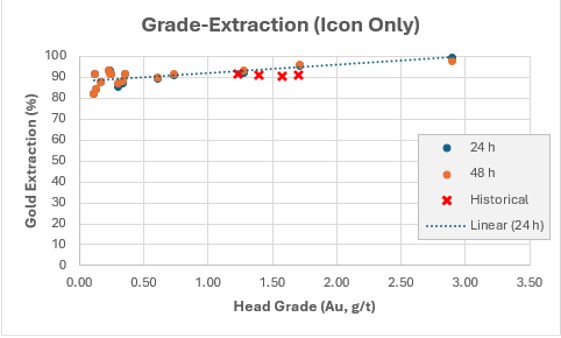
Figure 1: Grade Extraction curve at Glenburgh showing consistently high recoveries over all grade ranges tested.
To view an enhanced version of this graphic, please visit:
https://images.newsfilecorp.com/files/1818/301820_cb21b8f9d40c88a4_003full.jpg
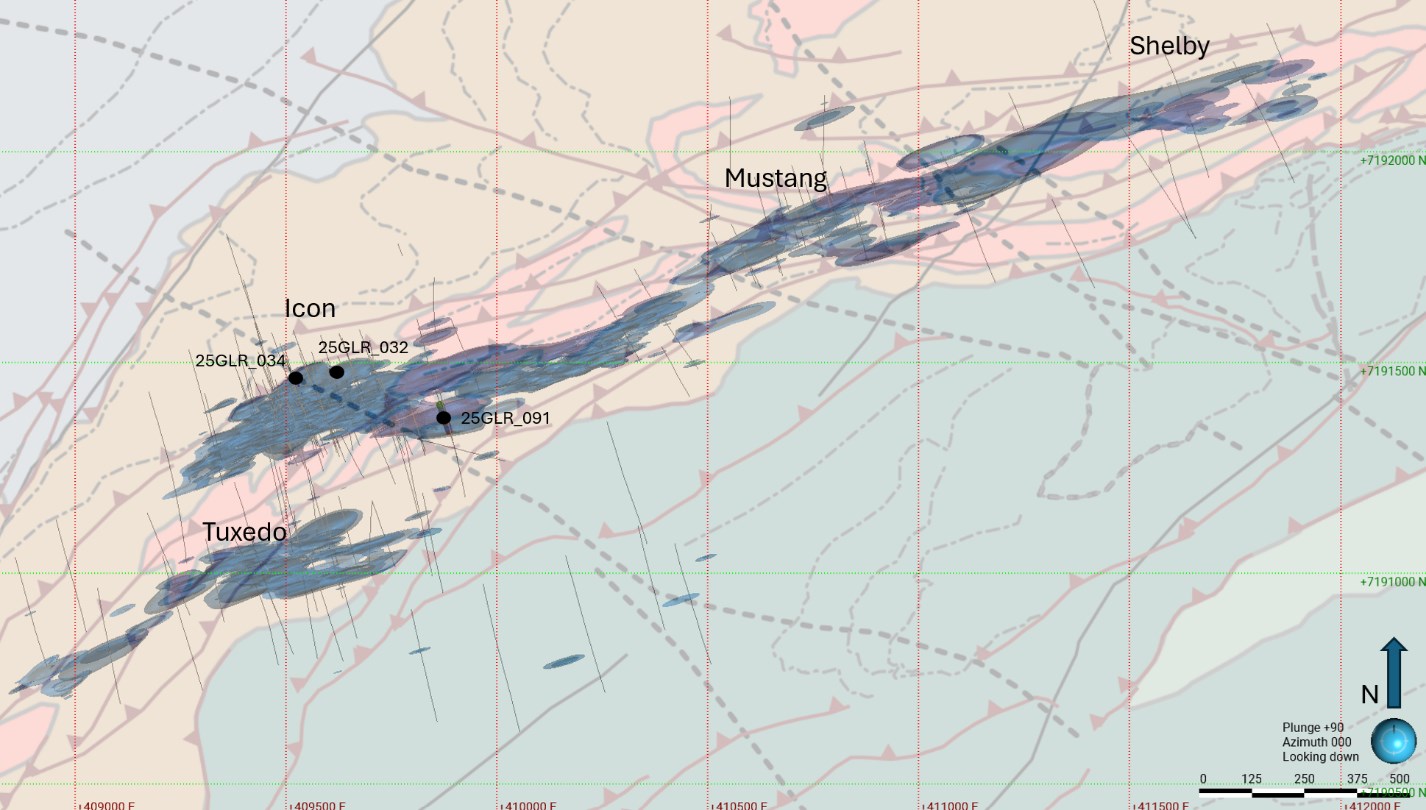
Figure 2: Plan map of composite samples in relation to the Icon camp.
To view an enhanced version of this graphic, please visit:
https://images.newsfilecorp.com/files/1818/301820_cb21b8f9d40c88a4_004full.jpg
Next steps
Benz will undertake further metallurgical testwork to confirm and extend the initial Icon results. Planned work includes:
repeat and confirmatory cyanidation testwork on selected samples;
additional testwork across the broader Icon mineralised halo and higher-grade core;
assessment of grind sensitivity and leach kinetics;
evaluation of gravity recovery and cyanidation response by material type;
further work to support future resource, mining and processing studies; and
integration of metallurgical results with geological modelling, geotechnical work and future open-pit study work.
Glenburgh Drilling Ramp-Up Underway
Benz is currently ramping up drilling activities across the Glenburgh Gold System to 12 operational RC drill shifts across the Hurricane, Icon and Thunderbolt Camps, representing one of the largest active gold exploration drilling programs currently underway in Australia.
The scale-up in drilling activity reflects increasing management confidence that Glenburgh is emerging as a large-scale multi-million-ounce gold system with substantial long-term growth potential across multiple mineralised camps.
A diamond drill rig has now mobilised to support metallurgical, geotechnical and broader orebody knowledge programs as Benz advances multiple pre-development workstreams in parallel with ongoing exploration drilling.
Glenburgh – A New Frontier Gold District
The 100%-owned Glenburgh Gold Project is rapidly emerging as a new frontier gold district with multi-million-ounce potential. Located in Western Australia's Gascoyne region, Glenburgh hosts an 18-20 kilometre mineralised corridor anchored by the large-scale Icon-Apollo trend and the high-grade Zone 126 system.
Glenburgh's unique combination of thick, bulk-style gold mineralisation (Icon-Apollo) and multiple high-grade underground lenses (Zone 126) positions it as a rare opportunity in the Australian gold sector. With gold prices at record levels, the ability to develop both large-scale open pit and underground operations offers exceptional leverage and growth potential.
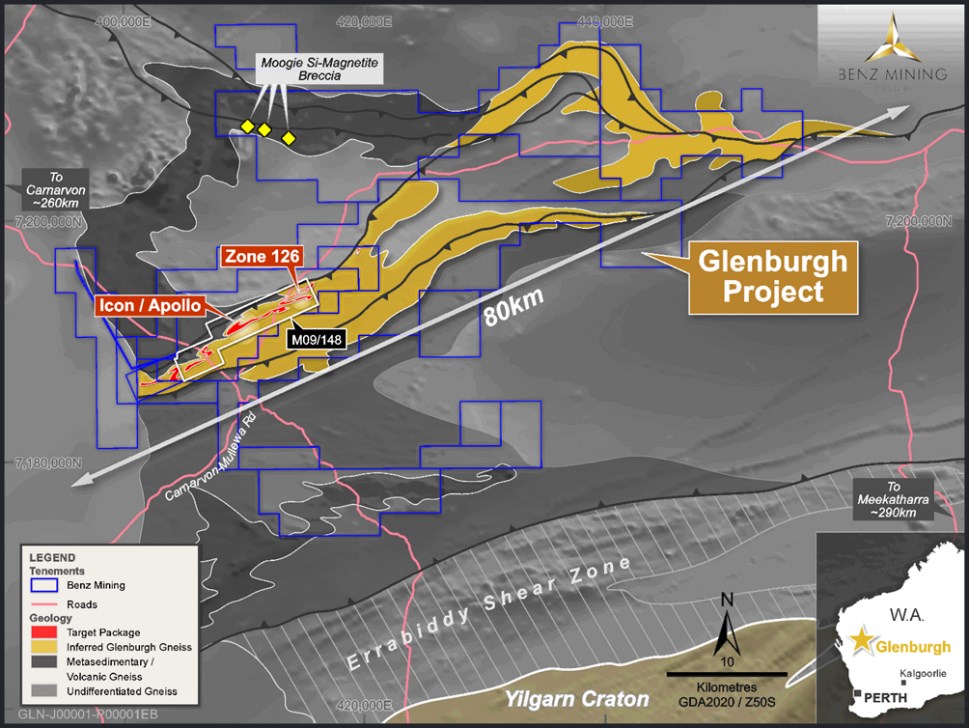
Figure 3: Geological overview of the Glenburgh Gold Project.
To view an enhanced version of this graphic, please visit:
https://images.newsfilecorp.com/files/1818/301820_cb21b8f9d40c88a4_005full.jpg
- END -
This announcement has been approved for release by the Board of Benz Mining Corp.
For more information, please contact:
Mark Lynch-Staunton
Chief Executive Officer Benz Mining Corp.
E: mstaunton@benzmining.com
T: +61 8 6143 6702
About Benz Mining Corp.
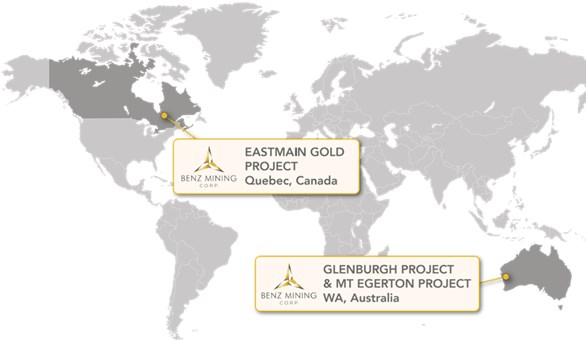
Benz Mining Corp. (TSXV: BZ) (ASX: BNZ) is a pure-play gold exploration company dual-listed on the TSX Venture Exchange and Australian Securities Exchange. The Company owns the Eastmain Gold Project in Quebec, and the recently acquired Glenburgh and Mt Egerton Gold Projects in Western Australia.
Benz's key point of difference lies in its team's deep geological expertise and the use of advanced geological techniques, particularly in high-metamorphic terrane exploration. The Company aims to rapidly grow its global resource base and solidify its position as a leading gold explorer across two of the world's most prolific gold regions.
To view an enhanced version of this graphic, please visit:
https://images.newsfilecorp.com/files/1818/301820_cb21b8f9d40c88a4_006full.jpg
For more information, please visit: https://benzmining.com/.
Qualified Person's Statement (NI 43-101)
The disclosure of scientific or technical information in this news release is based on, and fairly represents, information compiled by Mr Mark Lynch-Staunton, who is a Qualified Person as defined by NI 43-101 and a Member of Australian Institute of Geoscientists (AIG) (Membership ID: 6918). Mr Lynch-Staunton has reviewed and approved the technical information in this news release. Mr Lynch-Staunton owns securities in Benz Mining Corp.
Forward-Looking Statements
Statements contained in this news release that are not historical facts are "forward-looking information" or "forward-looking statements" (collectively Forward-Looking Information) as such term is used in applicable Canadian securities laws. Forward-Looking Information includes, but is not limited to, disclosure regarding the exploration potential of the Glenburgh Gold Project and the anticipated benefits thereof, planned exploration and related activities on the Glenburgh Gold Project. In certain cases, Forward-Looking Information can be identified by the use of words and phrases or variations of such words and phrases or statements such as "anticipates", "complete", "become", "expects", "next steps", "commitments" and "potential", in relation to certain actions, events or results "could", "may", "will", "would", be achieved. In preparing the Forward-Looking Information in this news release, the Company has applied several material assumptions, including, but not limited to, that the accuracy and reliability of the Company's exploration thesis in respect of additional drilling at the Glenburgh Gold Project will be consistent with the Company's expectations based on available information; the Company will be able to raise additional capital as necessary; the current exploration, development, environmental and other objectives concerning the Company's Projects (including Glenburgh and Mt Egerton Gold Projects) can be achieved; and the continuity of the price of gold and other metals, economic and political conditions, and operations.
Forward-looking information is subject to a variety of risks and uncertainties and other factors that could cause plans, estimates and actual results to vary materially from those projected in such forward-looking information. Factors that could cause the forward-looking information in this news release to change or to be inaccurate include, but are not limited to, the early stage nature of the Company's exploration of the Glenburgh Gold Project, the risk that any of the assumptions referred to prove not to be valid or reliable, that occurrences such as those referred to above are realized and result in delays, or cessation in planned work, that the Company's financial condition and development plans change, and delays in regulatory approval, as well as the other risks and uncertainties applicable to the Company as set forth in the Company's continuous disclosure filings filed under the Company's profile at www.sedarplus.ca and www.asx.com.au. Accordingly, readers should not place undue reliance on Forward-Looking Information. The Forward-looking information in this news release is based on plans, expectations, and estimates of management at the date the information is provided and the Company undertakes no obligation to update these forward-looking statements, other than as required by applicable law.
NEITHER THE TSX VENTURE EXCHANGE NOR ITS REGULATION SERVICES PROVIDER (AS THAT TERM IS DEFINED IN THE POLICIES OF THE TSX VENTURE EXCHANGE) ACCEPTS RESPONSIBILITY FOR THE ACCURACY OR ADEQUACY OF THIS RELEASE.
Appendix 1
Table 1: Collar Table. Glenburgh metallurgical drill hole details Coordinates system: GDA94/MGA Zone 50
| Deposit | Hole ID | Hole Size | Easting | Northing | RL | Dip | Azi | Depth | Met Sample ID |
| Icon | 25GLR_091 | RC | 409810 | 7191603 | 297.2 | -56 | 165 | 598 | Icon_MGZ01 |
| Icon | 25GLR_091 | RC | 409810 | 7191603 | 297.2 | -56 | 165 | 598 | Icon_SGH01 |
| Icon | 25GLR_091 | RC | 409810 | 7191603 | 297.2 | -56 | 165 | 598 | Icon_MGZ02 |
| Icon | 25GLR_091 | RC | 409810 | 7191603 | 297.2 | -56 | 165 | 598 | Icon_LGZ01 |
| Icon | 25GLR_091 | RC | 409810 | 7191603 | 297.2 | -56 | 165 | 598 | Icon_MGZ03 |
| Icon | 25GLR_091 | RC | 409810 | 7191603 | 297.2 | -56 | 165 | 598 | Icon_HGZ01 |
| Icon | 25GLR_091 | RC | 409810 | 7191603 | 297.2 | -56 | 165 | 598 | Icon_LGZ02 |
| Icon | 25GLR_091 | RC | 409810 | 7191603 | 297.2 | -56 | 165 | 598 | Icon_HGZ02 |
| Icon | 25GLR_034 | RC | 409495 | 7191541 | 295.1 | -60 | 165 | 530 | Icon_HGZ03 |
| Icon | 25GLR_034 | RC | 409495 | 7191541 | 295.1 | -60 | 165 | 530 | Icon_LGZ03 |
| Icon | 25GLR_034 | RC | 409495 | 7191541 | 295.1 | -60 | 165 | 530 | Icon_SGH02 |
| Icon | 25GLR_034 | RC | 409495 | 7191541 | 295.1 | -60 | 165 | 530 | Icon_LGZ04 |
| Icon | 25GLR_034 | RC | 409495 | 7191541 | 295.1 | -60 | 165 | 530 | Icon_SGH03 |
| Icon | 25GLR_032 | RC | 409582 | 7191565 | 295.8 | -60 | 165 | 432 | Icon_SGH04 |
| Icon | 25GLR_032 | RC | 409582 | 7191565 | 295.8 | -60 | 165 | 432 | Icon_SGH05 |
Table 2: Glenburgh Metallurgical samples intervals
| Hole ID | Sample ID | Depth From (m) | Depth To (m) | Sample Type | Mass (Kg) |
| 25GLR_091 | Icon_MGZ01 | 360 | 376 | Fresh | 32 |
| 25GLR_091 | Icon_SGH01 | 376 | 384 | Fresh | 16 |
| 25GLR_091 | Icon_MGZ02 | 384 | 397 | Fresh | 26 |
| 25GLR_091 | Icon_LGZ01 | 397 | 418 | Fresh | 42 |
| 25GLR_091 | Icon_MGZ03 | 418 | 430 | Fresh | 24 |
| 25GLR_091 | Icon_HGZ01 | 430 | 445 | Fresh | 30 |
| 25GLR_091 | Icon_LGZ02 | 445 | 467 | Fresh | 44 |
| 25GLR_091 | Icon_HGZ02 | 467 | 481 | Fresh | 28 |
| 25GLR_034 | Icon_HGZ03 | 173 | 179 | Fresh | 12 |
| 25GLR_034 | Icon_LGZ03 | 179 | 188 | Fresh | 18 |
| 25GLR_034 | Icon_SGH02 | 188 | 198 | Fresh | 20 |
| 25GLR_034 | Icon_LGZ04 | 242 | 251 | Fresh | 18 |
| 25GLR_034 | Icon_SGH03 | 271 | 279 | Fresh | 16 |
| 25GLR_032 | Icon_SGH04 | 163 | 175 | Fresh | 24 |
| 25GLR_032 | Icon_SGH05 | 285 | 310 | Fresh | 25 |
Table 3: Glenburgh Icon ore leach testwork results
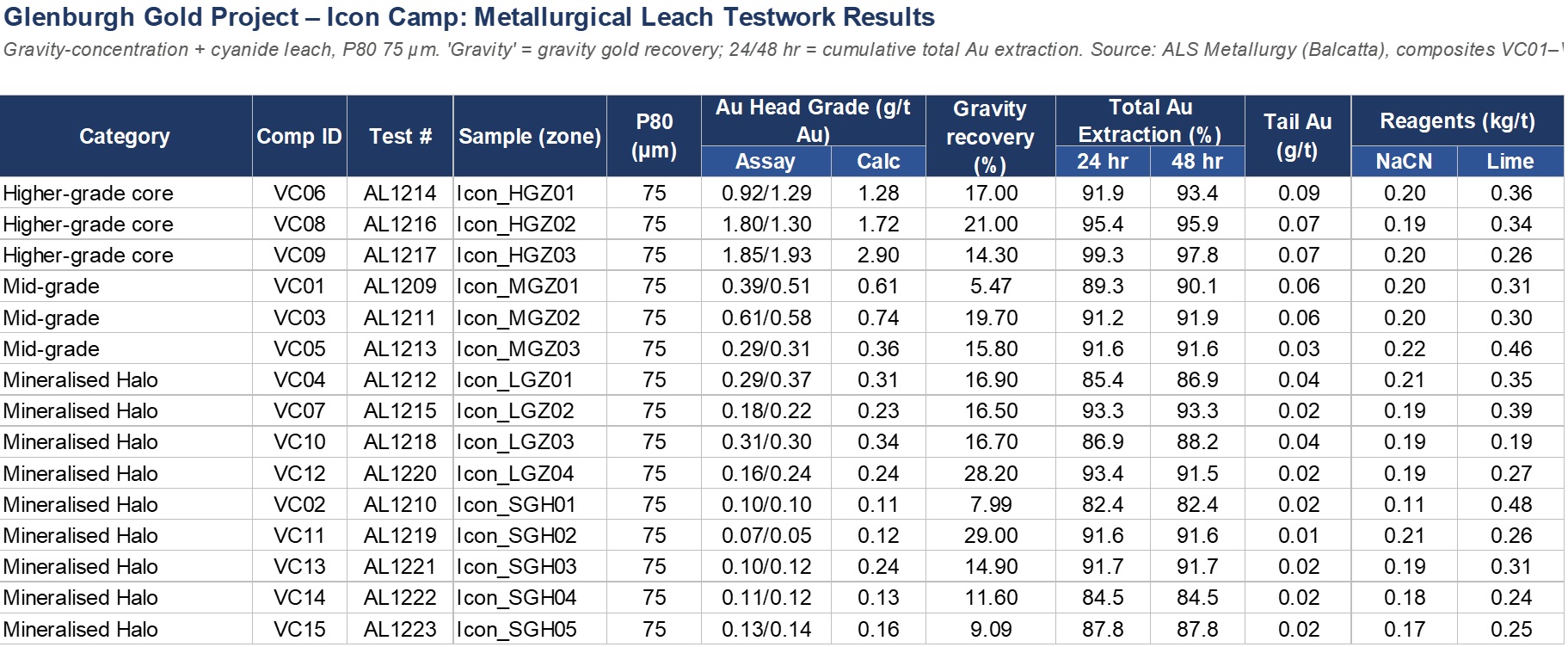
To view an enhanced version of this graphic, please visit:
https://images.newsfilecorp.com/files/1818/301820_benz-table3.jpg
Appendix 2: JORC Tables
JORC Code, 2012 Edition - Table 1 report template
Section 1 Sampling Techniques and Data
(Criteria in this section apply to all succeeding sections.)
| Criteria | Commentary |
| Sampling techniques |
|
| Drilling techniques |
|
| Drill sample recovery |
|
| Logging |
|
| Sub-sampling techniques and sample preparation |
|
| Quality of assay data and laboratory test |
|
| Verification of sampling and assaying |
|
| Location of data points |
|
| Data spacing and distribution |
|
| Orientation of data in relation to geological structure |
|
| Sample security |
|
| Audits or reviews |
|
Section 2 Reporting of Exploration Results
(Criteria listed in the preceding section also apply to this section.)
| Criteria | Commentary |
| Mineral tenement and land tenure status |
|
| Exploration done by other parties |
|
| Geology |
|
| Drill hole Information |
|
| Data aggregation methods |
|
| Relationship between mineralisation widths and intercept lengths |
|
| Diagrams |
|
| Balanced reporting |
|
| Other substantive exploration data |
|
| Further work |
|
To view the source version of this press release, please visit https://www.newsfilecorp.com/release/301820
Source: Benz Mining Corp.