
Hole ATXD19A Extends High-Grade B2B Breccia 180m to the South with Preliminary Assays of 0.99% CuEq over 70m; 940 Meters of Assays Remain Pending
New, Near-Surface High-Grade Conduits Intersected, Including 10m of 2.34% CuEq
Toronto, Ontario--(Newsfile Corp. - May 26, 2026) - ATEX Resources Inc. (TSX: ATX) (OTCQX: ATXRF) ("ATEX" or the "Company") is pleased to announce additional drill results from the Valeriano Copper-Gold Project ("Valeriano" or the "Project") in the Atacama region of Chile, including partial results from ATXD19A and full results from ATXD25D, ATXD26C and ATXD35.
The Company is currently undertaking a staged shutdown of its Phase VI drill program. Phase VI drilling totaled a record of approximately 28,400 meters ("m"), exceeding the initial 25,000m program target. Approximately 44% of assays have now been released with remaining assay results expected through July.
Phase VI was designed to achieve two primary objectives:
- Expand and refine the high-grade B2B breccia located above the Valeriano high-grade porphyry system; and
- Test additional targets displaying geophysical signatures similar to those associated with the B2B Zone at the same elevation.
Results received to date demonstrate significant success toward both objectives and continue to support the emergence of a broader and more continuous mineralized corridor surrounding the B2B breccia zone.
Highlights:
- Hole ATXD19A confirms that the high-grade B2B breccia mineralization extends an additional 180m, increasing the total strike length to approximately 600m and remains open to the south. Partial assays from hole ATXD19A returned 70m of 0.99% CuEq (0.64% Cu, 0.29 g/t Au) within a broader interval of 228m of 0.82% CuEq (0.54% Cu, 0.23 g/t Au). Silver and molybdenum assays for these intervals remain outstanding, with approximately 940m of additional assays from the remainder of the hole still pending. ATXD19B, a parallel extensional drill hole, has advanced approximately 270m beyond the end of hole ATXD19A which ended in mineralization. ATXD19B is currently paused in porphyry-style mineralization and will continue drilling in Phase VII.
- ATXD35 intersected 400m of 0.56% CuEq (0.42% Cu, 0.10 g/t Au, 1.0 g/t Ag, 67.1 g/t Mo), expanding the broader B2B mineralized corridor approximately 200m northeast of the defined B2B breccia and about 100m beyond the current copper resource shell, supported by geochemistry, geophysics, and district-scale mapping to the east and southeast. Additional drilling is required to determine whether eastern mineralization represents a lateral expansion of the broader B2B system or the initial expression of a new distinct intrusive center.
- ATXD35 also intersected 10m of 2.34% CuEq (1.99% Cu, 0.27 g/t Au, 8.6 g/t Ag, 1.5 g/t Mo) from 48m depth starting at surface, interpreted as discrete high-grade conduits requiring further drilling to determine their connection to existing or a separate mineralizing event at depth.
- Step-out drilling in ATXD26C returned 306m of 0.82% CuEq (0.59% Cu, 0.17 g/t Au, 1.0 g/t Ag, 138.1 g/t Mo) within a broader interval of 792m of 0.71% CuEq (0.51% Cu, 0.15 g/t Au, 1.0 g/t Ag, 114.2 g/t Mo), highlighting the scale and continuity of porphyry mineralization at the B2B elevation horizon.
Chris Beer, Interim President and CEO commented, "Phase VI represents a major step forward in our understanding of the scale and architecture of the Valeriano system. In addition to successfully expanding the high-grade B2B breccia zone northward, southward and at depth, drilling is increasingly outlining a broader mineralized corridor hosted within rhyolite units adjacent to the B2B zone.
Results from ATXD34 and today's ATXD35 suggest that mineralization east of the B2B breccia may not represent isolated zones, but rather part of a larger and more continuous structural-mineralized trend extending to the north, east and southeast.
Importantly, this newly identified B2B mineralized corridor remains open in multiple directions and may indicate either a significantly larger mineralized system than previously interpreted or the presence of an additional porphyry source to the east.
We have also identified indications of high-sulphidation mineralization at surface, potentially representing the upper expression of a large and evolving porphyry-hydrothermal system and further reinforcing the scale and fertility of Valeriano.
As additional assays are received and interpreted, the Company will continue refining the extent and controls of both the high-grade B2B breccia and the broader mineralized corridor. The geological insights and operational experience gained during Phase VI will play an important role in planning and executing the Phase VII program.
Finally, I would once again like to thank all ATEX employees and our trusted contract partners as we celebrate successfully completing more than 28,000 meters of drilling during Phase VI with six rigs. We look forward to applying the geological and operational insights gained during Phase VI toward the successful execution of our next phase of exploration at Valeriano in early September."
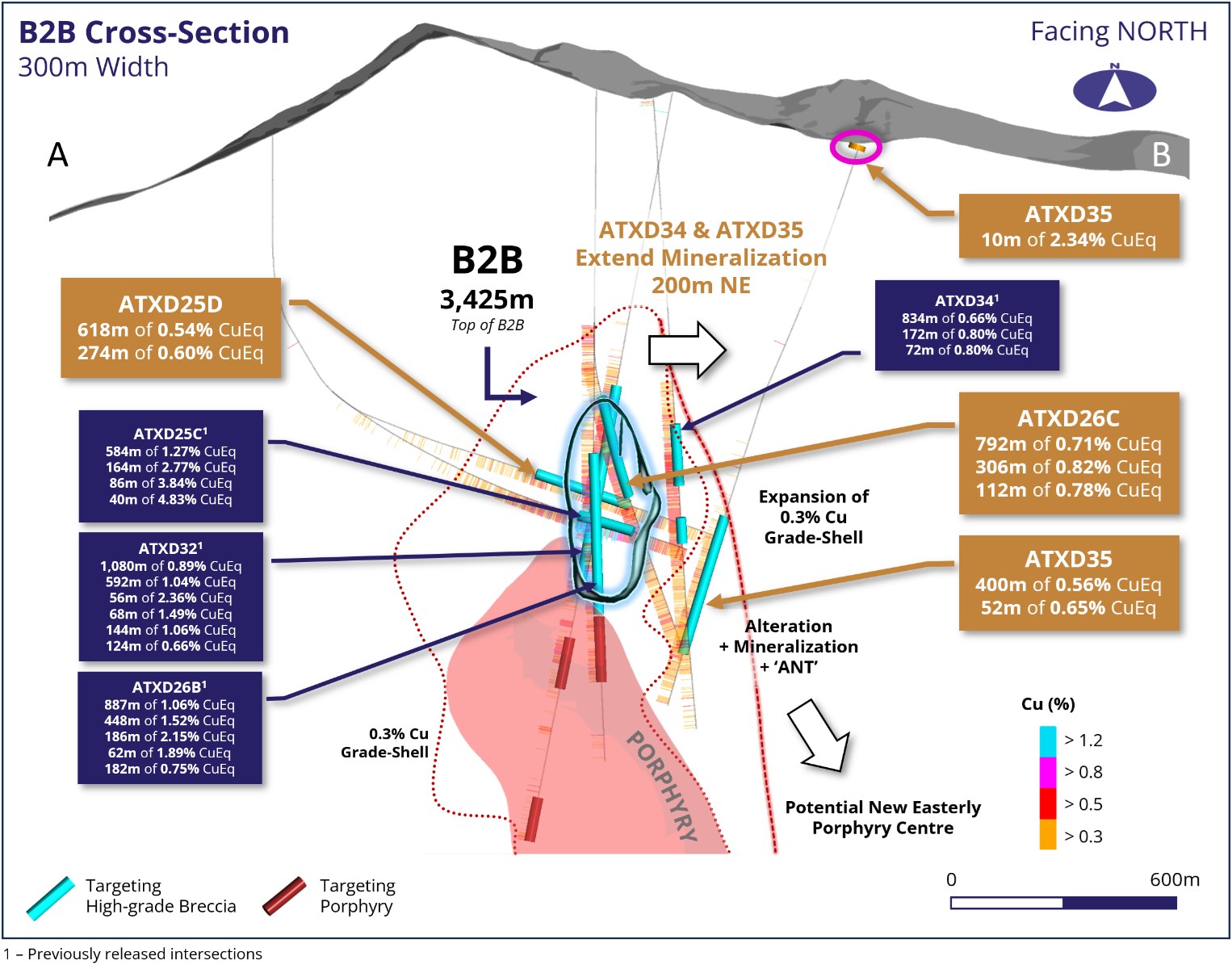
Figure 1. Cross-Section of B2B and Porphyry Modelsi
To view an enhanced version of this graphic, please visit:
https://images.newsfilecorp.com/files/6303/298974_8f4186a3643ba949_001full.jpg
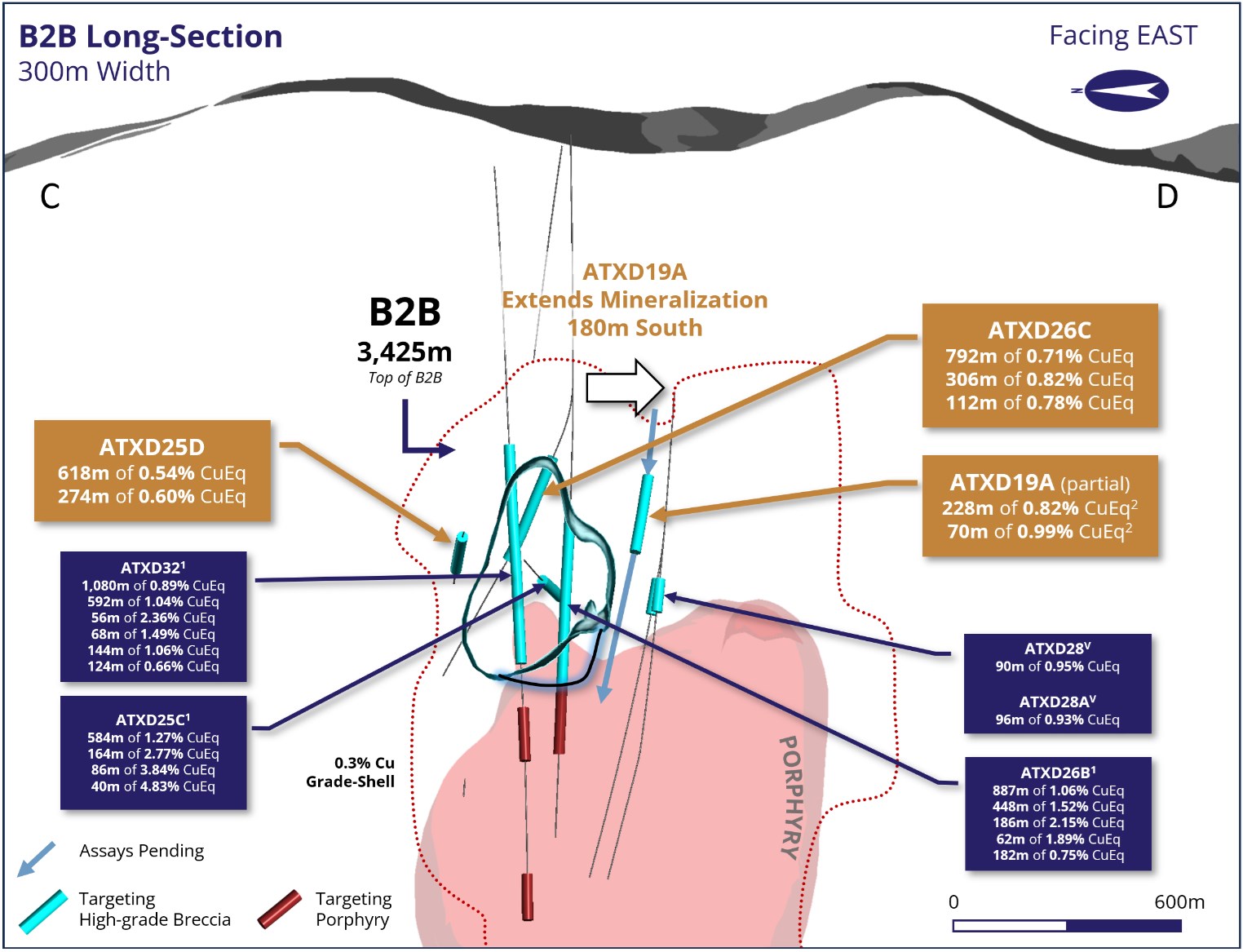
Figure 2. Long-Section of B2B and Porphyry Modelii
To view an enhanced version of this graphic, please visit:
https://images.newsfilecorp.com/files/6303/298974_8f4186a3643ba949_002full.jpg
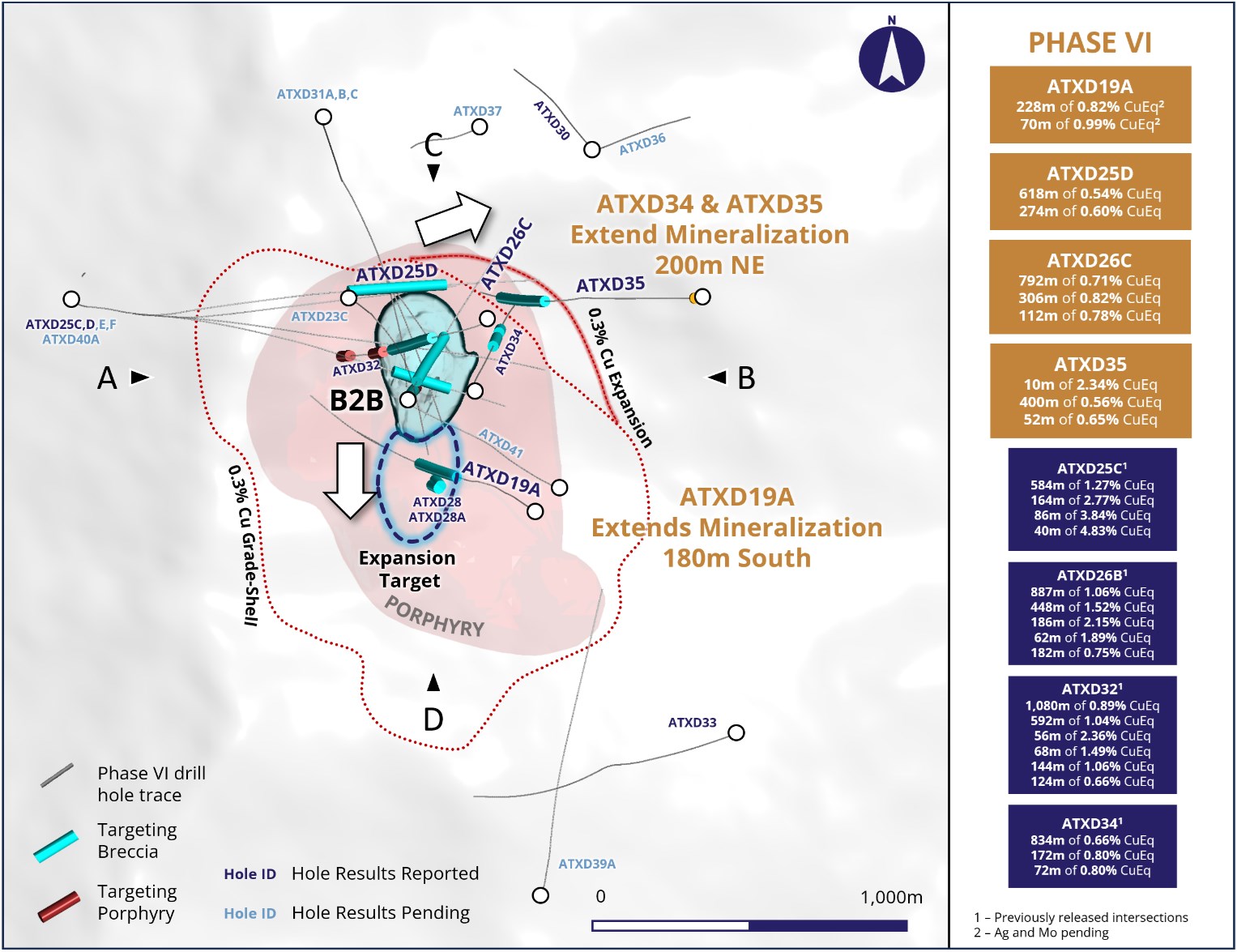
Figure 3. Plan Map of Phase VI Drill Holesiii
To view an enhanced version of this graphic, please visit:
https://images.newsfilecorp.com/files/6303/298974_8f4186a3643ba949_003full.jpg
Technical Highlights:
ATXD19A intersected 70m of 0.99% CuEq (0.64% Cu, 0.29 g/t Au) within a broader interval of 228m of 0.82% CuEq (0.54% Cu, 0.23 g/t Au) from 828m downhole. Results from the remaining 940m of the hole are pending and the drill hole finished in mineralized porphyry.
This drill hole was designed to test a target approximately 200m south of the B2B Zone at a similar elevation, evaluating the north-south continuity of mineralization.
The hole intersected chalcopyrite and bornite mineralization associated with potassic alteration with higher-grade intervals hosted within brecciated porphyry.
The results from this hole represent a significant southern extension of the B2B horizon, highlighting the broader scale potential of the system and remains open for follow-up in Phase VII.
ATXD25D intersected 274m of 0.60% CuEq (0.43% Cu, 0.11 g/t Au, 0.7 g/t Ag, 138.2 g/t Mo) starting at 1,388m depth, within a broader interval of 618m of 0.54% CuEq (0.40% Cu, 0.10 g/t Au, 0.7 g/t Ag, 110.9 g/t Mo) from 1,208m downhole.
This hole was designed to test the northern extension of the B2B Zone.
Mineralized rhyolitic tuff was intersected that underwent potassic and green sericite alteration.
A chalcopyrite-dominant assemblage with subordinate pyrite is suggestive of an extension of porphyry-related mineralization, comparable to that observed in hole ATXD34.
ATXD26C intersected 306m of 0.82% CuEq (0.59% Cu, 0.17 g/t Au, 1.0 g/t Ag, 138.1 g/t Mo) starting at 870m depth, within a broader interval of 792m of 0.71% CuEq (0.51% Cu, 0.15 g/t Au, 1.0 g/t Ag, 114.2 g/t Mo) from 660m downhole.
This hole was designed to test the upper portion of the B2B Zone and to evaluate the eastern extent of the porphyry system.
High-grade mineralization was intersected in the upper portion of the B2B Zone, initially within rock-milled breccia, before the hole continued into well-mineralized rhyolitic tuff host rock.
ATXD35 intersected 10m of 2.34% CuEq (1.99% Cu, 0.27 g/t Au, 8.6 g/t Ag, 1.5 g/t Mo) starting at 48m depth, and 400m of 0.56% CuEq (0.42% Cu, 0.10 g/t Au, 1.0 g/t Ag, 67.1 g/t Mo) from 1,232m downhole.
This hole was designed to test a geophysical target located approximately 200m northeast of the interpreted outer limit of the B2B Zone, at a comparable elevation.
The outer margin of a porphyry system was intersected in rhyolitic tuff that underwent potassic alteration with chalcopyrite-dominant mineralization and with pyrite, transitioning to chalcopyrite with bornite.
A high-grade intercept of 10m of 2.34% CuEq could be indicative of a high-grade conduit that warrants further follow-up to better understand the potential correlation and continuity between these shallow mineralized zones and deeper known high-grade zones.
Table 1 - Partial Results for ATXD19A and Complete Results for ATXD25D, ATXD26C and ATXD35
| Hole ID | From | To | Interval | Cu | Au | Ag | Mo | CuEq % | Target |
| (m) | (m) | (%) | (%) | (g/t) | (g/t) | (g/t) | MRS(1) | ||
| ATXD19A | 828 | 1,056 | 228 | 0.54 | 0.23 | - | - | 0.82 | B2B south extension |
| Incl. | 864 | 934 | 70 | 0.64 | 0.29 | - | - | 0.99 | |
| ATXD25D | 1,208 | 1,826 | 618 | 0.40 | 0.10 | 0.7 | 110.9 | 0.54 | B2B north extension |
| Incl. | 1,388 | 1,662 | 274 | 0.43 | 0.11 | 0.7 | 138.2 | 0.60 | |
| ATXD26C | 660 | 1,452 | 792 | 0.51 | 0.15 | 1.0 | 114.2 | 0.71 | B2B continuity above high-grade intercepts |
| Incl. | 870 | 1,176 | 306 | 0.59 | 0.17 | 1.0 | 138.1 | 0.82 | |
| And incl. | 1,238 | 1,350 | 112 | 0.59 | 0.16 | 1.0 | 53.7 | 0.78 | |
| ATXD35 | 48 | 58 | 10 | 1.99 | 0.27 | 8.6 | 1.5 | 2.34 | B2B northeast extension |
| And | 1,232 | 1,632 | 400 | 0.42 | 0.10 | 1.0 | 67.1 | 0.56 | |
| Incl. | 1,580 | 1,632 | 52 | 0.45 | 0.17 | 1.7 | 30.1 | 0.65 |
Notes:
(1) CuEq calculated using recoveries assumed in 2025 Mineral Resource Estimate (see the Valeriano Technical Report) using the formula: Cu (%) + 1.04991243188302 x Au (g/t) + 0.00824244819238401 x Ag (g/t) + 0.000357909627766355 * Mo (g/t).
(2) CuEq reported assuming metal prices of US$2,750/oz Au, US$3.80/lb Cu, US$27/oz Ag, and US$22/lb Mo.
(3) CuEq reported assuming recoveries of Cu 94%, Au 95%, Ag 80% and Mo 64%.
(4) Drill holes were composited at a cut-off of 0.3% CuEq.
(5) ATXD19A contained internal dilution of 6m for the 828m to 1,056m composite, ATXD25D contained internal dilution of 20m for the 1,208m to 1,826m composite, ATXD26C contained internal dilution of 14m for the 660m to 1,452m composite, and ATXD35 contained internal dilution of 4m for the 1,232m to 1,632m composite.
(6) Ag and Mo are pending for ATXD19A reported composites from 828m to 868m and 1,000m to 1,056m.
(7) True widths are unknown.
Phase VI Drill Program Update
Phase VI drilling has concluded with the demobilization of six rigs due to the onset of the Chilean winter season. To date, drilling has exceeded the initial 25,000m program target, with a record 28,400m completed. Approximately 15,500m has been drilled in the high-grade B2B Zone, 11,750m completed on nearby high-grade breccia targets and 1,025m on porphyry extension. Details of drill holes currently in progress or paused for follow-up drilling during the next drill season are provided below. Assay results will be reported as they are finalized and received from the laboratory.
Table 2 - Progress of Remaining Drill Holes
| Hole | Zone | Status | Description |
| ATXD19B | B2B | Paused | Southern extension of B2B Zone. |
| ATXD23C | B2B | Assays pending | Testing shallower portion of B2B Zone. |
| ATXD25 (E,F) | B2B | Assays pending / paused | Depth extension in central B2B Zone, ATXD25E assays are pending and ATXD25F is paused. |
| ATXD31 (A,B,C) | B2B | Assays pending | NW continuity at lower elevation of B2B Zone, potentially into the HG porphyry core. |
| ATXD35A | B2B | Paused | Test west flank and up-dip extension of B2B and early porphyry extension. |
| ATXD36 | MVI2 | Assays pending | New mag. anomaly, potential breccia body NE of ATXD30. |
| ATXD37 | Porphyry | Assays pending | 480m north of the B2B Zone, in an ANT1 anomaly. |
| ATXD39 (A) | Porphyry | Assays pending | Southern extension of porphyry high-grade trend. |
| ATXD40 (A) | B2B | Paused | Testing ANT1 anomaly. |
| ATXD41 | B2B | Paused | Testing up-dip, high-grade towards surface. |
(1) 'ANT' - Ambient Noise Tomography (passive seismic geophysics)
(2) 'MVI' - Magnetic Vector Inversion
Quality Control & Quality Assurance
Drill holes are collared with a PQ drill bit, reduced to HQ and, sequentially, to NQ as the drill holes progressed deeper. Drill core produced by the drill rigs was extracted from the core tubes by the drill contractor under the supervision of ATEX employees, marked for consistent orientation and placed in core boxes with appropriate depth markers added. Full core boxes were then sealed before being transported by ATEX personnel to the Valeriano field camp. Core at the field camp is processed, quick logged, checked for recovery, photographed, and marked for specific gravity, geotechnical studies and for assays. From camp, the core is transferred to a secure core-cutting facility in Vallenar, operated by IMG, a third-party consultant. Here, the core trays are weighed before being cut using a diamond saw under ATEX personnel oversight. ATEX geologists working at this facility double-check the selected two-metre sample intervals, placing the samples in seal bags and ensuring that the same side of the core is consistently sampled. Reference numbers are assigned to each sample and each sample is weighed. The core trays with the remaining half-core are weighed and photographed. Additionally, core logs are updated, and specific gravity and geotechnical samples are collected. The remaining core is stored in racks at the Company's secure facility in Vallenar.
From Vallenar samples are sent to an ALS preparation facility in Copiapó. ALS is an accredited laboratory which is independent of the Company. The prepared samples were sent to the ALS assay laboratories in either Santiago, Chile or Lima, Peru for gold (Au-AA24), copper (Cu-AA62), molybdenum (Mo-AA62) and silver (Ag-AA62) assays as well as and multi-element ICP (ME-MS61) analysis. The QA/QC program consists of insertion rates of 6% for Certified Reference Material, 2% for certified 'blank' material and 2% duplication of pulp and coarse reject material. No data quality problems were indicated by the QA/QC program.
Qualified Person
Brad Ulry, P.Geo., has reviewed and approved the scientific and technical information in this news release. Mr. Ulry is the Chief Operating Officer of Dahrouge Geological Consulting Ltd., which has been retained by the Company to provide geological consulting services. Mr. Ulry is a "Qualified Person" as defined by National Instrument 43-101 - Standards of Disclosure for Mineral Projects ("NI 43-101") and independent of the Company for purposes of Section 1.5 of NI 43-101.
Mineral Resource Estimate
The mineral resource estimate on Valeriano (the "2025 Mineral Resource Estimate") is supported by the technical report titled "Independent Technical Report for the Valeriano Copper-Gold Project, Atacama Region, Chile" and dated November 3, 2025 (with an effective date of September 23, 2025), which was prepared for ATEX by SRK Consulting (Canada) Inc. in accordance with NI 43-101 (the "Valeriano Technical Report").
About ATEX
ATEX Resources is a mineral exploration company advancing its flagship Valeriano Copper-Gold Project, located in the Atacama Region III of Chile, widely recognized as one of the world's most prospective and mining-friendly jurisdictions. The Valeriano Project is emerging as one of the leading undeveloped copper assets globally and anchors an expanding, globally significant copper district. As such, it is well positioned to play an important role in meeting future demand amid increasingly constrained global copper supply. Valeriano currently has an Indicated Resource of 475 Mt at 0.88% CuEq (0.58% Cu, 0.25 g/t Au, 1.39 g/t Ag and 70.4 g/t Mo) and an Inferred resource of 1,511 Mt at 0.75% CuEq (0.50% Cu, 0.20 g/t Au, 1.16 g/t Ag and 70.6 g/t Mo), as reported on September 23, 2025. For further information please visit the ATEX Resources website at www.atexresources.com.
For further information, please contact:
Chris Beer,
Interim President and CEO
Email: cbeer@atexresources.com
Aman Atwal,
Vice President, Business Development and Investor Relations
Email: aatwal@atexresources.com
1-647-398-9405
or visit ATEX's website at www.atexresources.com.
CAUTIONARY NOTE REGARDING FORWARD-LOOKING STATEMENTS:
This news release contains "forward-looking information" and "forward-looking statements" within the meaning of applicable Canadian securities legislation (collectively, "forward-looking statements"). All statements, other than statements of historical fact, contained in this news release that address activities, events, or developments that the Company expects or anticipates will or may occur in the future constitute forward-looking statements. Forward-looking statements are often, but not always, identified by words or phrases such as "plans," "expects," "is expected," "scheduled," "estimates," "intends," "anticipates," "believes," "potential," "continues," "targeted," "remains open," "in progress," "pending," "underway," or similar expressions, or statements that certain events, actions, or results "may," "could," "would," "might," "should," or "will" occur, be taken, or be achieved.
Forward-looking statements in this news release include, but are not limited to, statements regarding: the potential for further extensions of the B2B Zone and other mineralized zones at the Project; expectations for the Phase VI drill program, including the timing, completion, and results of ongoing and future drilling activities; the potential for resource growth at the Project; the timing of receipt of assay results and laboratory turnaround times; the interpretation of exploration data and mineralization; the geological potential and characteristics of the Project; the potential for discovering additional breccia bodies and mineralization; and the Company's exploration plans and objectives.
Forward-looking statements are based on certain assumptions and analyses made by the Company in light of its experience and perception of historical trends, current conditions, and expected future developments, as well as other factors it believes are appropriate in the circumstances. Although the Company believes that the assumptions underlying these forward-looking statements are reasonable, they may prove to be incorrect, and the Company cannot assure investors that actual results will be consistent with these forward-looking statements. Whether actual results, performance, or achievements will conform to the Company's expectations and predictions is subject to a number of known and unknown risks, uncertainties, assumptions, and other factors.
Such risks and uncertainties include, but are not limited to: general economic, market, and business conditions; uncertainties related to the interpretation of drill results and the geology, grade, and continuity of mineral deposits; the inherent uncertainties in exploration activities; risks associated with exploration, development, and mining operations; risks related to fluctuations in metal prices, including copper, gold, silver, and molybdenum; risks associated with the adequacy of capital and financing; risks inherent in the estimation of mineral resources, including with respect to the assumptions underlying the 2025 Mineral Resource Estimate referred to herein; the potential for significant variations in results from those expected; uncertainties related to laboratory assay turnaround times; operational risks, including risks related to equipment and infrastructure; regulatory and permitting risks in Chile and Canada; political, economic, and social risks in Chile; environmental risks and hazards; title matters and surface rights; competition in the mining industry; the Company's ability to retain key personnel; currency exchange rate fluctuations; risks associated with maintaining adequate insurance; and other risks and uncertainties described in the Company's filings with Canadian securities regulators, which are available on SEDAR+ (www.sedarplus.ca) under ATEX's issuer profile.
Readers are cautioned that the foregoing list of factors is not exhaustive of the factors that may affect forward-looking statements. All forward-looking statements herein are qualified by this cautionary statement. Accordingly, readers should not place undue reliance on forward-looking statements. The Company undertakes no obligation to update publicly or otherwise revise any forward-looking statements, whether as a result of new information, future events, or otherwise, except as may be required by applicable law.
Neither the TSX nor its Regulation Services Provider (as that term is defined in the policies of the TSX) accepts responsibility for the adequacy or accuracy of this news release.
i Please see news titled "ATEX Intersects 146 Meters Of 2.00% CuEq At B2B Zone With Over 600 Meters Of Results Still Pending", reported on December 18, 2025 for ATXD26B partial results and ATXD25C summary results; please see news titled "ATEX Drills New Highest-Grade Intercept In First Phase VI Drill Hole Hitting 164 Metres Of 2.72% CuEq Including 40 Metres Of 4.73% CuEq In The B2B Zone", reported on October 21, 2025 for ATXD25C initial results. Please see news titled "ATEX Extends High-Grade Breccia Mineralization by 100 Meters to the North at the B2B Zone" reported on February 12, 2026, for ATXD32 results.
ii Please see news titled "ATEX Resources Intersects 88 Metres of 1.03% CuEq Within 1,090 Metres of 0.81% CuEq Along High-Grade Porphyry Trend" reported on June 2, 2025, for ATXD28 summary results; please see news titled "ATEX Completes Phase V Program Ending in High-Grade B2B Mineralization - Strategic Objectives Achieved With Resource Update Expected in 2H 2025" reported on July 30, 2025, for ATXD28A summary results.
iii Please see news titled "ATEX Significantly Expands B2B Mineralized Footprint by 135 Meters to the East; Mineralization Remains Open" reported on March 16, 2026, for ATXD34 results.

To view the source version of this press release, please visit https://www.newsfilecorp.com/release/298974
Source: ATEX Resources Inc.